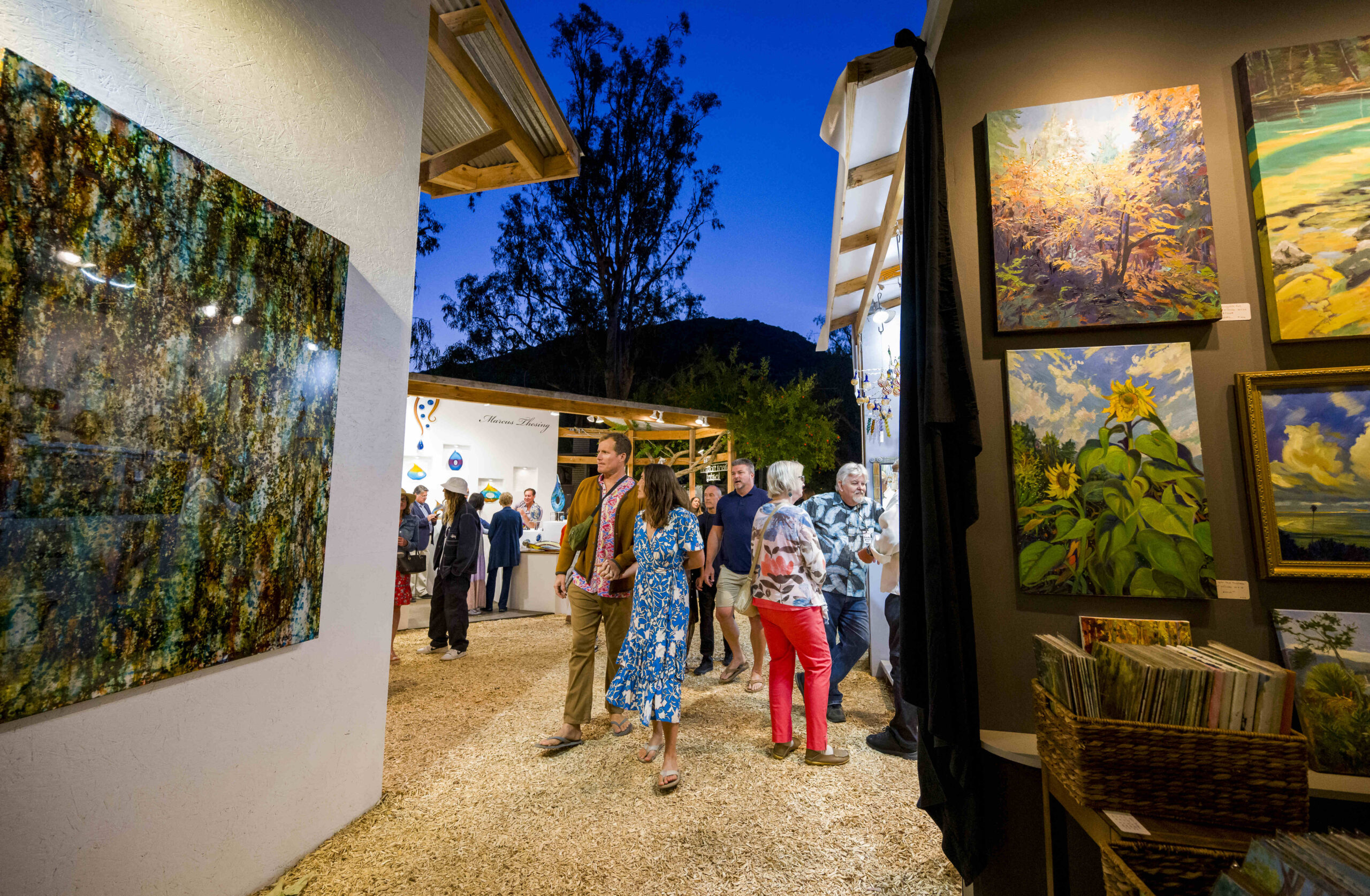
There is a persistent myth about collecting art that has probably kept more people from owning original artwork than almost anything else: the idea that collecting is something wealthy people do. We picture the art collector living in an enormous house with carefully lit paintings hanging on immaculate walls, perhaps with an art advisor making recommendations and an auction catalogue sitting on the coffee table. We hear that a Picasso, Monet, Rothko, or Basquiat has sold for tens of millions of dollars and understandably conclude that the world of art collecting has very little to do with people who worry about mortgages, grocery bills, car payments, and retirement accounts. Yet this confuses two entirely different things. Participating in the international art market may indeed require extraordinary wealth. Living with beautiful and meaningful art does not.
Most of us are never going to own a Rembrandt. We are probably not going to discover a forgotten Vermeer leaning behind a stack of dusty frames in a thrift store, however much fun it may be to imagine doing so. If our great love is Italian Renaissance painting, a Botticelli, Titian, or Raphael is almost certainly not going to find its way onto the wall above our fireplace. But none of this means that original art is beyond our reach. It simply means that we have to stop allowing auction houses, famous galleries, celebrity collectors, and newspaper stories about record-breaking sales to define what it means to collect art. Art collecting does not have to begin with money. It should begin with looking.
The best rule I know for buying art is also the simplest: buy something because you love it. Do not buy a painting because somebody tells you the artist is important. Do not buy it because the gallery owner describes the artist as “emerging” or assures you that the work is a good investment. Do not buy it because a friend recognizes the name, because an interior decorator thinks it belongs above the sofa, or because you imagine visitors will think more highly of you when they see it. Above all, do not convince yourself that you like something simply because you believe sophisticated people are supposed to like it. Buy art because you want to look at it. Buy it because something happens when you stand in front of it. Buy it because you can imagine living with it.
That sounds obvious, but the art world has an unfortunate ability to make otherwise intelligent and confident people suddenly distrust their own eyes. Walk into the wrong gallery and it can feel as though everyone else has been given a vocabulary and a set of instructions that somehow never reached you. People begin looking at labels before they look at paintings. They want to know who the artist is, how much the work costs, which galleries represent the artist, or whether museums have acquired the artist’s work before deciding whether they actually like what is hanging in front of them. Reputation becomes a substitute for response.
There is certainly nothing wrong with learning about art history. Quite the opposite. The more we know, the more deeply we can often see. Understanding Caravaggio’s use of chiaroscuro makes his paintings richer. Knowing something about Cézanne helps us recognize why his landscapes and still lifes mattered so profoundly to later painters. Understanding what the Impressionists were reacting against makes their paintings more than pleasant scenes filled with sunlight. Knowledge can transform looking into seeing. But education should enlarge our response to art, not dictate it. The painting still has to come first.
When you encounter a work of art, try standing in front of it for a moment before reading the label. Forget who painted it. Forget what it costs. Forget whether you are supposed to like it. Simply look. Does it draw you toward it? Does the color affect you? Does something about the composition keep your eye moving? Does it calm you, unsettle you, delight you, confuse you, or make you curious? Is there a gesture, a shadow, a face, a patch of color, or a single line that you keep returning to? When you finally walk away, do you find yourself turning around for another look? That impulse to return is worth paying attention to. It is often the beginning of the relationship between a person and a work of art.
Before worrying very much about what to buy, then, learn what you like. One of the great advantages of doing this is that the education can be remarkably inexpensive. Go to museums. Go repeatedly. Visit commercial galleries even when you have absolutely no intention of purchasing anything. Attend gallery openings, community exhibitions, art fairs, open studios, student exhibitions, and museum shows. Wander slowly. Look at things you think you dislike. Give unfamiliar work a chance. You may go into a museum believing that you love Impressionism and eventually discover that what really attracts you is not Impressionism at all, but color and light. You may be convinced that you dislike abstract art until a particular abstract painting unexpectedly stops you in your tracks. You may discover that drawings affect you more deeply than paintings, or that you have an unexpected affection for woodcuts, etchings, ceramics, sculpture, photography, or watercolor.
Museums are particularly useful because they allow us to travel through centuries of visual thought in an afternoon. You can spend half an hour looking at Renaissance painting, walk into another gallery filled with seventeenth-century Dutch interiors, move through Romanticism and Impressionism, encounter modernism, and eventually find yourself standing before contemporary abstraction. If you do this often enough, patterns begin to emerge. Certain paintings consistently hold you longer than others. Certain colors, subjects, periods, techniques, and moods keep attracting you. Eventually you begin to recognize your own eye. You stop merely knowing what art history tells you is significant and begin understanding what you personally respond to. That is invaluable for a collector.
It also helps to remember that famous is not the same thing as good, and good is not necessarily the same thing as something you want to live with. A familiar name has enormous psychological power. An unsigned painting hanging on a wall may receive barely a glance, while that same painting with the word “Picasso” printed beneath it would suddenly attract a crowd. The painting itself has not changed; our expectations have. Great artists generally became important for legitimate reasons. They changed artistic language, influenced generations of painters, introduced new ways of seeing, or made extraordinary works. Appreciating that achievement, however, does not obligate us to want their paintings in our homes.
You can admire Picasso enormously and have no desire whatsoever to live with a Picasso. You can understand why Jackson Pollock matters to twentieth-century art and still not want one hanging across from your breakfast table. Conversely, you can become completely captivated by a painting made by someone whose name will never appear in an art-history textbook. There is no contradiction in this. A museum and a private home serve different purposes. A museum must concern itself with historical importance, preservation, scholarship, and cultural significance. Your living room does not. When considering a work for your own home, the better question is not, “Is this artist important?” It is, “Do I want to live with this?”
Once you begin thinking that way, local artists become one of the richest sources for building a collection. Nearly every city and town has painters, sculptors, ceramicists, printmakers, photographers, and other artists working quietly outside the machinery of the international art market. Their work appears at community art fairs, cooperative galleries, farmers markets, local exhibitions, cultural festivals, neighborhood galleries, studio tours, and open houses. Much of it is affordable precisely because these artists do not have the marketing structure, gallery representation, or reputation that creates high prices in the commercial art world. None of that tells you whether the work itself is good or whether you will love it.
Buying from local artists also gives collecting a human dimension that can disappear at the upper levels of the art market. You may actually meet the person who made the painting hanging in your home. Perhaps the artist tells you where the landscape was painted, why a particular person became the subject of a portrait, or what led to an unusual choice of material or color. Years later, that conversation becomes part of the painting. You do not simply remember buying an object; you remember meeting its maker. The artwork becomes connected to a place, a person, and a moment in your own life.
There is also something satisfying about knowing that buying from a working artist helps art continue to exist. Your purchase may pay for canvases, paper, paint, clay, studio rent, framing, or entrance fees for another exhibition. It may simply encourage an artist who has spent months making work without knowing whether anyone else will respond to it. You are not engaging in charity; you are receiving something of value in return. But there is nevertheless a meaningful connection between purchasing art from living artists and supporting the culture in which art continues to be made.
College and university art departments are another wonderful and frequently overlooked place to look. Student exhibitions, graduate shows, faculty exhibitions, senior thesis presentations, and open studios can contain remarkable work. Naturally, the quality will vary. Students are learning, experimenting, failing, starting over, and discovering their own voices. Some of what you encounter may leave you completely cold. That is part of the pleasure of going. Then, somewhere in a room filled with work, you may encounter a painting or drawing that makes you stop.
Young and emerging artists often sell their work for relatively modest amounts because they have not yet developed a commercial market. There is a temptation to turn this into speculation—to imagine yourself cleverly discovering the next major artist before anyone else does. Resist that temptation. Buying art because you expect the artist to become famous is simply another way of allowing the market to determine what you value. Buy the student’s painting because you already love the painting. If the artist becomes celebrated twenty years later, wonderful. You will have an excellent story to tell. If the artist graduates, becomes an accountant, and never paints another canvas, you still own the same work that captured your attention in the first place. Nothing essential has been lost.
Some of the greatest fun, however, comes from looking for art in places where nobody is behaving like an art collector at all. Antique stores, estate sales, flea markets, thrift shops, charity stores, and secondhand shops can be marvelous places to explore. Most of the paintings hanging in those places will not be forgotten masterpieces, and anyone who approaches every thrift-store landscape expecting to uncover a million-dollar discovery will probably spend a lifetime disappointed. But financial value is only one kind of value, and often not the most interesting one.
You may discover an unsigned landscape painted seventy years ago by someone whose identity has vanished. You may find a delicate watercolor of a town that no longer looks the same, a surprisingly good charcoal portrait, a mid-century abstraction, an old etching, or a regional painting by an artist who was once locally respected and has since been forgotten. There is something appealing about these works precisely because their histories are incomplete. You begin wondering who painted them, where they originally hung, who chose the frame, and why someone cared enough about the work to preserve it for decades. A painting found at an estate sale has already lived a life before it reaches you. When you bring it home, you become the next custodian of that story.
And sometimes the bargain itself adds pleasure. A painting does not need to be worth thousands of dollars to be a wonderful discovery. If you buy a beautiful little landscape for forty dollars and enjoy looking at it for thirty years, you have done extraordinarily well. The investment was not financial. The return was thirty years of pleasure.
The same principle applies when the art you love belongs to a period whose originals are completely beyond your reach. Perhaps your great passion is the Italian Renaissance. You love Botticelli’s graceful figures, Raphael’s compositional harmony, Leonardo’s subtle modeling, Titian’s color, or the astonishing technical accomplishment of painters whose works now hang in the world’s great museums. You may never own any of those paintings. Almost nobody will. But the artistic language they created did not die when the Renaissance ended.
There are contemporary painters today who study traditional drawing, classical composition, glazing, egg tempera, anatomy, portraiture, and the techniques of the Old Masters. If that is the kind of painting that moves you, find those artists. You do not need to own an Italian Renaissance masterpiece to own a beautiful painting made by someone who has spent years learning from the Renaissance tradition. The same is true of almost every artistic movement. If you love the Hudson River School, there are contemporary landscape painters carrying forward its fascination with nature, atmosphere, and light. If you love Impressionism, artists still work outdoors attempting to capture fleeting changes in color and weather. If Dutch still lifes appeal to you, contemporary realist painters continue exploring that tradition. If you love Japanese woodblock prints, contemporary printmakers continue responding to their techniques and aesthetics. If Abstract Expressionism speaks to you, its visual language continues to echo through contemporary studios.
Art-history periods end in textbooks more neatly than they end in actual artistic practice. Artists continue borrowing, reviving, transforming, and arguing with earlier traditions. That is good news for those of us without Renaissance-prince budgets. We may not be able to own the historical masterpiece, but we can still live with art shaped by the things we love about it.
Nor does collecting have to mean buying large oil paintings. One of the best ways to build an affordable and interesting collection is to broaden your definition of what deserves a place on the wall. Drawings, watercolors, etchings, lithographs, woodcuts, linocuts, screenprints, monotypes, photographs, studies, small sculptures, and works on paper are all genuine art. Some collectors become so fixated on the idea of owning a large unique painting that they overlook entire artistic traditions that may be both more affordable and more suited to their homes.
Drawings can be especially intimate. A few marks made by a confident hand can reveal more directly how an artist thinks than an elaborate finished painting. Prints can combine extraordinary craftsmanship with the advantage of being produced in editions, which often makes them more accessible. Smaller works can possess enormous presence while fitting comfortably into ordinary houses and apartments. There is nothing second-rate about a collection built from modest works. A wall filled with drawings, prints, and small paintings chosen carefully over twenty years can be far more compelling than a single expensive canvas purchased merely because its name impressed somebody.
All of this requires us to separate price from beauty. The price of art is determined by an enormous mixture of factors: reputation, scarcity, historical importance, gallery representation, institutional recognition, collector demand, fashion, speculation, provenance, and sometimes sheer hype. Artistic quality certainly plays a role, but the market cannot tell you how much pleasure you will receive from looking at something. A seventy-five-dollar painting can change the feeling of a room. A seventy-five-thousand-dollar painting can leave you completely unmoved.
This does not mean galleries are somehow dishonest or that dealers should be ignored. A good gallery can be one of the best places to learn. Knowledgeable dealers often understand their artists deeply and can explain techniques, influences, development, and context that would otherwise be difficult to discover. Listen to them. Ask questions. Allow them to teach you. But never confuse their enthusiasm with an obligation to agree. Eventually you must turn away from the explanation and look at the artwork again. You are the one who will be living with it.
Buying art without being wealthy also means learning the difference between spending responsibly and refusing ever to spend money on something beautiful. Art should never become a source of financial distress. Nobody should be sacrificing rent, retirement savings, necessary medical care, or family obligations to purchase paintings. But people sometimes become strangely reluctant to spend money on art even when they routinely spend comparable amounts on things that disappear almost immediately from their lives. We will spend hundreds of dollars on a new phone, a television, a weekend away, restaurant meals, or furniture without much hesitation, then recoil from the idea of spending several hundred dollars on a painting that could remain on the wall for the next forty years.
There are times when the right work costs more than you expected to spend. If you truly love it and can responsibly afford it, there is nothing wrong with deciding that it is worth the money. Affordable collecting does not mean everything must be cheap. It means buying within your means and directing those means toward things that genuinely matter to you. Be careful with money, certainly, but do not confuse prudence with an unwillingness ever to pay an artist properly for something you want to spend years looking at.
Over time, something wonderful happens when you collect this way: the collection becomes autobiographical. It may not have started with any coherent plan. Perhaps the first piece was a landscape purchased at a local art fair. A few years later you bought a drawing from a student show. Then you found an old watercolor at an antique store, purchased a print while traveling, met an artist at an open studio, or brought home a little painting that reminded you of somewhere you once lived. Gradually these unrelated objects begin to tell a story.
The story is not necessarily about art history. It is about you. The paintings remember places you visited, people you knew, interests you developed, periods of your life, and moments when something unexpected caught your attention. Your taste may change dramatically over time, and that too becomes visible. The young person who loved bold abstraction may become fascinated by quiet landscape painting twenty years later. A collector who began with realism may unexpectedly fall in love with contemporary sculpture. There is no need to eliminate these contradictions. They are part of the collection’s history because they are part of yours.
This is why trying to appear sophisticated is such a poor foundation for collecting. Nothing produces a less personal home than purchasing art primarily to impress other people. If you buy whatever you think educated or fashionable people are supposed to admire, eventually you may find yourself surrounded by things that say almost nothing about you. True sophistication is not knowing which paintings you are expected to praise. It is knowing enough about art to appreciate its complexity while remaining confident enough to admit what actually moves you.
You can love Renaissance painting and comic-book art. You can admire Rembrandt and buy watercolors from the painter who lives three streets away. You can understand conceptual art perfectly well and still prefer landscapes. You can hang a nineteenth-century etching beside a contemporary abstraction, a student drawing beside a professionally painted portrait, and a thrift-store landscape beside an expensive work purchased from a gallery. There is no examination at the end. Nobody is grading your walls.
In the end, the great privilege of owning art is not prestige but familiarity. Museums allow us to encounter extraordinary works, but eventually the museum closes and we go home. The relationship we have with art in our homes is different. A painting becomes part of ordinary life. You see it in morning light and again in the evening. You notice something after five years that you somehow failed to notice during the first four. It hangs there through birthdays, arguments, holidays, illnesses, dinners, quiet weekends, and ordinary Tuesday afternoons. Eventually it becomes part of the visual architecture of memory.
That experience does not require wealth. It requires attention, curiosity, and a willingness to trust your own eyes.
So go to museums and learn what you love rather than what you are supposed to buy. Walk into galleries without feeling that you owe anyone a purchase. Visit local exhibitions. Talk to artists. Attend university shows. Wander through antique stores and estate sales. Look through the framed pictures leaning against the wall at Goodwill. Stop at the little gallery you have driven past a hundred times. Look at expensive art and inexpensive art with exactly the same seriousness.
Then every once in a while, something will happen. You will see a painting, drawing, print, photograph, or sculpture and stop. You will look longer than you intended. You will walk away and come back. Perhaps you will think about it later that evening. Perhaps you will find yourself wondering where you could hang it.
Pay attention when that happens.
You may never have heard of the artist. Nobody who visits your home may recognize the name. The work may never increase in monetary value. Fifty years from now, art historians may have nothing at all to say about it.
But if you look at it fifty years from now and still think, I am glad I bought that, then you have succeeded as a collector.
Because the purpose of owning art is not to prove that you can afford something important.
It is to live with something that matters to you.