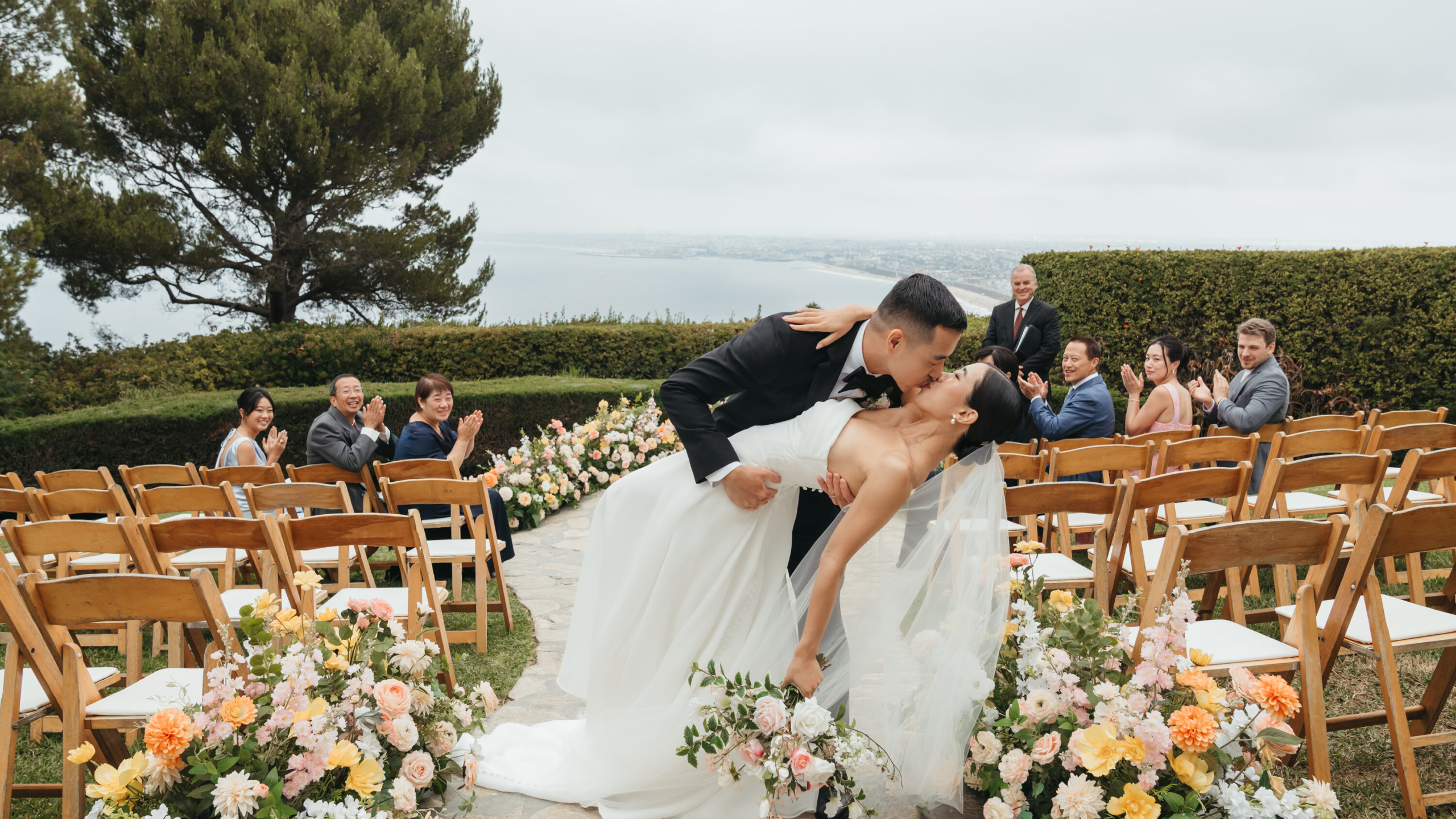
There is something profoundly human about a wedding. Long before we divide ceremonies into religious and secular, traditional and modern, sacred and civil, there is the simple fact that two people have chosen to stand before those they love and say, in one form or another, I choose you. They are marking a transition. They are acknowledging that their lives have become joined, that their future will now be shaped not only by individual hopes but by shared promises. That moment does not require theology to be meaningful. It requires intention, love, witnesses, memory, and the courage to make a promise about an uncertain future.
For humanists, this offers an extraordinary opportunity. A non-religious wedding does not need to be a stripped-down religious ceremony with God removed from the script. It can possess its own beauty, dignity, symbolism, ritual, and sense of transcendence. Indeed, one of the great strengths of a humanist wedding is the freedom to ask what every element of the ceremony actually means. Rather than performing customs simply because they have always been performed, a couple can decide which traditions speak to them, which should be adapted, which should be left behind, and which new rituals might better express who they are.
Religion has never had a monopoly on ceremony. Human beings are ritual-making creatures. We light candles on birthdays, raise glasses at celebrations, wear black at funerals, exchange gifts on anniversaries, keep photographs of those we love, and stand for certain moments because standing somehow seems more appropriate than sitting. Ritual gives physical form to things that otherwise exist only in our minds and emotions. A wedding ring is simply metal until we decide that it represents fidelity, continuity, and commitment. A candle is simply wax and flame until we light it in memory of someone who cannot be present. A doorway is merely architecture until a couple walks through it together as a symbol of entering a new life. Humanism can embrace this language of symbols without pretending that the symbols possess supernatural power.
A beautifully crafted humanist wedding begins, therefore, not with the question, “What are we supposed to do?” but with the question, “What do we want this moment to mean?” That change in perspective opens enormous possibilities. The ceremony can draw from generations of inherited tradition while remaining intellectually honest and personally authentic. It can be ancient and contemporary at the same time.
There is no reason, for example, that a humanist wedding cannot include familiar traditions. Rings remain powerful symbols regardless of theological belief. Their circular shape naturally evokes continuity, wholeness, and a commitment without an obvious beginning or end. A processional can still create the emotional experience of movement from ordinary life into ceremonial space. Flowers, music, special clothing, vows, witnesses, shared meals, dancing, and toasts all have human meanings independent of religion. What matters is not whether a custom originally appeared within a religious culture, but what meaning the couple gives it now.
Traditions from a family’s cultural or religious heritage can also be retained and reinterpreted. A Jewish couple with secular or humanist convictions might still marry beneath a chuppah, understanding it not primarily as a religious requirement but as a symbol of the home they are creating together: open on every side, sheltering yet welcoming. They may break a glass at the conclusion of the ceremony, perhaps speaking about the fragility of happiness, the imperfect world into which every marriage enters, or the truth that even moments of extraordinary joy exist within the larger complexity of human life. Someone raised in a Christian family might retain the lighting of a unity candle, not as an act of divine blessing but as an image of two lives becoming intertwined while neither flame ceases to exist. Celtic handfasting can become a visual representation of promises binding two people together. Traditions from African, Asian, Indigenous, Mediterranean, or other family backgrounds can likewise be incorporated carefully and respectfully when they genuinely belong to the couple’s story.
This blending of tradition and reinterpretation is not a dilution of ceremony. It is what living traditions have always done. Customs survive because generations continue finding meaning in them, sometimes changing that meaning along the way. A humanist wedding simply makes the process more deliberate.
New rituals can be created as well. A couple might pour two wines into a shared cup and drink from it, recognizing that the life they are creating will contain something of both of them. They might plant a tree together, combining soil brought from their childhood homes. They might seal letters to one another in a box to be opened on a future anniversary. They could create a piece of art during the ceremony, place stones gathered from meaningful places into a vessel, exchange books that shaped their lives, or invite their families to add pieces to a quilt that will later hang in their home. None of these rituals needs supernatural explanation. Their power comes from memory, intention, and association.
The possibilities become especially rich when the couple asks what objects already hold meaning for them. Perhaps they met while hiking, and a stone from that trail can be placed on the ceremony table. Perhaps music has defined their relationship, and they choose a song whose lyrics express something no formal vow could say. Perhaps a grandmother’s wedding ring is carried even if it is not worn. Perhaps the ceremony takes place beside an old family tree, on a beach where they spent years together, in a museum, a garden, a library, a mountain clearing, a beloved restaurant, or simply in the backyard where generations of family gatherings have taken place.
The surroundings themselves can become part of the symbolism.
A humanist ceremony can also give greater attention to storytelling. Religious weddings often derive part of their meaning from participation in an ancient sacred narrative. A humanist wedding can instead place the couple’s own story at the heart of the ceremony. The officiant can tell how they met, what drew them together, what they have endured, what they admire in one another, and why they have decided to marry. Humor belongs here as naturally as tenderness. Weddings should not feel like funerals with better clothing. Love contains laughter, ridiculous private jokes, badly planned vacations, burned dinners, missed exits, nervous first dates, and hundreds of ordinary moments that slowly become a shared life.
Those ordinary moments are often where love becomes most visible.
Humanism may actually deepen the significance of vows because it does not need to present marriage as a promise guaranteed by supernatural authority. The couple knows that marriage requires human effort. There is no invisible force that will make them patient, honest, affectionate, or forgiving. They must choose those things repeatedly. Their promises therefore matter precisely because they are human promises.
Traditional vows can be beautiful, but couples should feel free to write their own. They may promise fidelity, companionship, honesty, patience, laughter, mutual growth, or simply the willingness to keep choosing one another through changing circumstances. They might acknowledge that neither person knows exactly who the other will become twenty or forty years from now. A meaningful vow can recognize that marriage is not a promise to remain unchanged but a promise to encounter change together.
There can be remarkable tenderness in saying, in effect, I cannot promise that life will always be easy. I cannot promise that we will always agree. I cannot even know who either of us will become. But I promise to keep meeting you honestly, generously, and lovingly as we discover the future together.
Humanist weddings can also place greater emphasis on community. Marriage may be a commitment between two people, but few marriages exist completely alone. Families, friends, mentors, and communities sustain relationships through difficult seasons and celebrate them during joyful ones. The officiant might therefore ask those assembled to make a promise of their own: to encourage the couple, support their relationship, welcome them into their homes, challenge them when necessary, celebrate their happiness, and remind them of the love that brought everyone together on that day.
Instead of spectators, the guests become witnesses in the fullest sense.
Family participation can take countless forms. Parents might offer brief reflections. Children from previous relationships can be included in vows or rituals that recognize the creation of a blended family. Siblings might present readings. Grandparents may be honored through photographs, heirlooms, or spoken memories. Couples can recognize deceased loved ones without turning the ceremony into something mournful. An empty chair, a candle, a photograph, or a few sentences from the officiant can quietly acknowledge that the people who shaped us remain part of the stories we carry.
Readings provide another opportunity for creativity. A humanist wedding need not be limited to religious scripture, nor does it need to reject scripture merely because it is religious. Poetry, literature, philosophy, letters, songs, scientific writing, family documents, and sacred texts can all be used when their words express something valuable. A passage from Shakespeare may sit beside a line from Carl Sagan. Rumi might appear beside Mary Oliver. A biblical description of love might be appreciated as poetry even by people who do not share its theology. A favorite passage from a novel may communicate more about commitment than anything written specifically for weddings.
The criterion should not be the label attached to the source. The question is whether the words are beautiful, truthful, and meaningful to the people standing before one another.
Even science can contribute its own kind of poetry. Two human beings stand together after billions of years of cosmic history, products of an ancient universe, carrying within themselves atoms forged in stars and inherited through countless generations of life. Out of innumerable possibilities, their paths crossed. They noticed one another. They stayed. They built memories. They chose to make a life together.
Humanism does not have to diminish wonder simply because it does not explain wonder through the supernatural. The improbability and temporary nature of human life can make love more precious, not less. If our time together is finite, then choosing how we spend that time becomes enormously significant.
A humanist wedding can therefore possess something very close to what people traditionally call sacredness, provided we understand sacredness as the recognition that some moments deserve special attention. There are occasions when ordinary time seems to stop, when everyone becomes aware that something important is happening. A parent sees a child begin a new life. Old friends remember younger versions of themselves. Two families become connected. A couple looks at one another and realizes that the words they have spoken privately many times are now being declared publicly.
Nothing supernatural has to occur for such a moment to be profound.
There is also room for playfulness. Humanist ceremony should not become so determined to prove its seriousness that it loses joy. Couples can walk down the aisle to unexpected music. They can incorporate beloved pets. They can serve breakfast instead of dinner, marry at sunrise instead of sunset, have friends surround them in a circle rather than sit in rows, exchange handwritten books instead of conventional gifts, or invite everyone to sing together. A wedding should reflect the personalities of the people being married rather than some imaginary committee of wedding etiquette.
Tradition is most beautiful when it serves people rather than controlling them.
At the same time, creativity benefits from structure. A ceremony made entirely of novelty can sometimes feel less meaningful because ritual gains part of its power through rhythm and anticipation. The most successful humanist weddings often combine familiar architecture with personal content: gathering, procession, welcome, reflection, readings, declaration of intention, vows, symbolic action, exchange of rings, community recognition, pronouncement, celebration. The structure gives the ceremony weight; the individual choices give it personality.
This is where old and new can meet gracefully.
A humanist wedding does not need to define itself by what it lacks. It does not need to announce repeatedly that it is not religious. It is something positive in its own right: a public celebration of human love, human commitment, human hope, and human community. It acknowledges that relationships require kindness, responsibility, patience, humor, sacrifice, forgiveness, and continuing choice. It celebrates two people deciding that whatever the future brings, they would rather encounter it together.
Perhaps that is why weddings move us even when they are not our own. They remind us that amid everything uncertain about human existence, people continue choosing one another. They build households. They make promises. They create families in countless forms. They gather friends around tables. They dance. They laugh. They remember those who came before them and imagine those who may come afterward.
Humanists should never be afraid of beauty, ritual, symbolism, or tradition simply because religions have used them well. These things belong to humanity. We created songs because some emotions are too large for ordinary speech. We invented ceremonies because some transitions deserve more than a signature on a document. We exchange rings because sometimes an object can carry a promise better than words. We gather witnesses because love may be intimate, but marriage also creates a place within a community.
A humanist wedding can honor all of this without pretending to believe something the couple does not believe.
It can be ancient without being archaic, modern without being shallow, symbolic without being superstitious, emotional without being sentimental, and solemn without losing its laughter.
Above all, it can be beautiful.
Because whatever else a wedding may contain—tradition, music, poetry, family, ritual, memory, food, dancing, tears, jokes, flowers, promises—it begins with one of the most enduringly human acts imaginable.
Two people look at one another, surrounded by the people who matter to them, and say:
Of all the lives I might have lived, I choose to build this one with you.