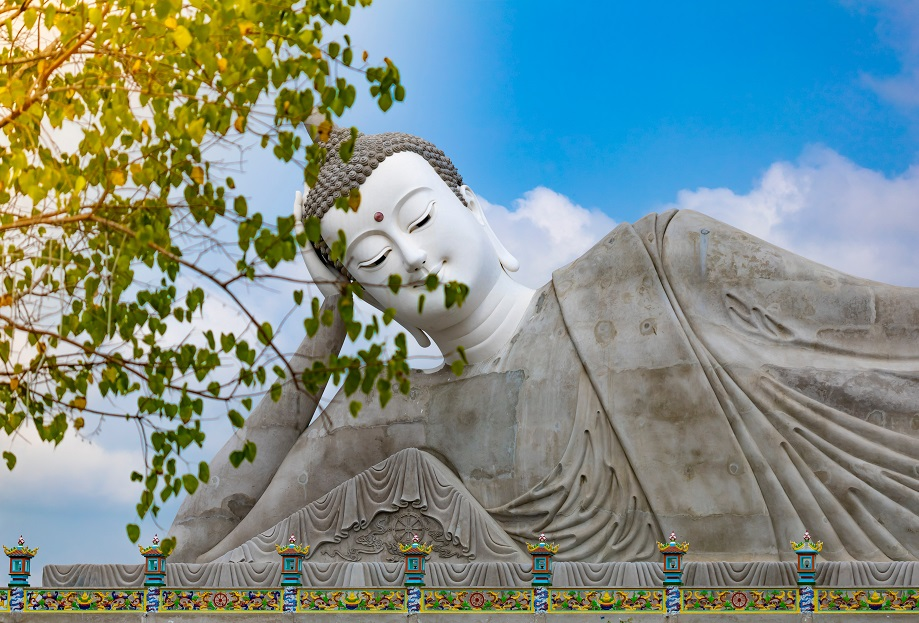
Nehan-e is one of those quiet, sober days on the Zen calendar that doesn’t try to inspire us with brightness. It doesn’t lift us up with celebration. It sits down beside us and tells the truth: the Buddha died. The teacher who walked, begged, taught, argued, laughed, corrected, and endured illness also lay down and did not get up again. In Zen we sometimes speak so much about “deathlessness” and “the unborn” that we can use those words to float above the plain fact of human mortality. Nehan-e refuses that escape. It brings us back to the body, to time, to impermanence, not as philosophy, but as the condition of everything we love. And that is precisely why we do it. We honor the Buddha’s passing not because it was a tragedy we cannot bear to look at, but because it is the same passing that will come for everyone we cherish, and for us as well. In remembering the Buddha’s final hours we remember our own life as something finite and therefore precious, and we remember practice as something not to postpone.
Traditionally Nehan-e recalls the Buddha’s final teaching, his last instructions, the tone of a mind that did not harden or panic as the body failed. Whether one reads the old accounts literally or symbolically, the point lands in the same place: awakened life does not exempt us from change. It meets change without being conquered by it. The deep lesson of Nehan-e is not “everything ends” as a bleak slogan; it is “everything is changing” as a call to intimacy. When we sit zazen on Nehan-e we are not reenacting history. We are letting the truth of impermanence become personal. This breath ends. This thought ends. This grief ends. This joy ends. This body ends. And yet, right here inside the ending, there is the unmistakable aliveness of this moment. That’s not a consolation prize. That’s the gate.
Sesshin belongs naturally to this day because sesshin is the way Zen stops bargaining with reality. A sesshin is an intensive Zen meditation retreat, often a weekend or a full week, where the schedule is built around repeated periods of zazen, walking meditation, chanting, simple meals, and mindful work, all held in noble silence. It’s called sesshin, “to touch the mind,” because it’s meant to gather the scattered heart into one sustained, embodied practice. Most of our lives are negotiated. We negotiate with discomfort. We negotiate with boredom. We negotiate with our own promises. “I’ll practice when things calm down.” “I’ll be kinder when I’m less stressed.” “I’ll face this fear later.” Sesshin is where later runs out. Not because sesshin is heroic, but because it is simple and direct: sit down, return, bow, eat, work, chant, sit again. The schedule is not there to impress anyone. It is there to remove the thousand little exits we habitually take. In everyday life the mind can keep itself entertained with noise and variety. In sesshin the mind discovers how addicted it is to interruption—and then, slowly, how peaceful it is without it.
People sometimes imagine sesshin as a kind of spiritual boot camp, a test of toughness, or a sprint toward breakthrough. In practice, sesshin is more like agreeing to stop leaving your own life. When we remove the usual comforts and distractions, what appears is not some exotic “Zen experience,” but our own heart as it actually is: restless, tender, defensive, needy, generous, frightened, proud, grief-struck, astonishingly busy. Sesshin does not create these things; it reveals them. And in revealing them, it gives us the chance to stop making them into a personal problem and start meeting them as dharma. Thoughts are not enemies. Feelings are not intruders. Pain is not a moral failure. Even resistance is just resistance. Sesshin teaches us how to stay.
This is where Nehan-e and sesshin hold hands. Nehan-e asks: if the Buddha’s body ended, what are you doing with your brief day? Sesshin answers: I am here. Not in the abstract. Here in the knees that ache, here in the mind that complains, here in the breath that keeps arriving, here in the person next to me who is also trying, here in the bell that ends one sitting and begins another. We remember the Buddha’s passing and we practice in a way that refuses to turn “impermanence” into a concept. We let impermanence work on us until it softens the hard places where we hide, until we see that clinging is suffering not because the world is wrong, but because we keep trying to make it stop moving.
There is also a communal reason we do sesshin that is easy to overlook. Zen is not only an individual path of insight; it is a way of life that must be embodied together. Sesshin is where a sangha becomes real. Not by sharing opinions, but by sharing silence. Not by agreeing on beliefs, but by agreeing to show up. When we bow together, eat together, chant together, and keep the same rhythm of practice, something larger than our preferences begins to carry us. We learn that our moods are weather, not commandments. We learn that discipline can be gentle. We learn that care is not sentimental, it is practical, exact, and repeated. On days like Nehan-e, that matters. Because grief and fear are not solved by ideas; they are held by practice, and often by the quiet strength of others practicing beside us.
And so Nehan-e is not a gloomy holiday and sesshin is not a spiritual stunt. Nehan-e is a clear mirror: everything you love will change and pass, so do not live as if you have infinite time. Sesshin is the response of the body: then I will sit down now, wholeheartedly, and stop pretending I can think my way around the truth. This is how Zen honors the Buddha, not by building a shrine to a distant perfection, but by practicing the same trust he demonstrated at the end: that reality, exactly as it is, is workable; that awakening is not elsewhere; that the Way is walked with this life, in this world of endings. When we observe Nehan-e and enter sesshin, we are not trying to escape death. We are learning how to live so fully that even death cannot steal the dignity of this moment.