In Zen, death is not treated as a special case that requires special beliefs. It is treated as the clearest case. A funeral is not primarily a moment to explain what happens “after,” or to guarantee an outcome for the dead, but a moment to enact the Dharma in public: to bow to impermanence, to care for the living, to offer gratitude, and to return a person to the great stream of causes and conditions with dignity. Because Zen is often misunderstood as “minimalist” or “anti-ritual,” people are sometimes surprised by how rich Zen memorial life can be. Yet it makes perfect sense. When words run out, we lean into forms that have carried grief for centuries: chanting, incense, robes, bells, bows, offerings, and the simple gravity of people gathered to do one thing together.
Across China and Japan, Zen memorial and funeral practice grew within cultures that already had strong ancestor traditions. The result is a Zen style that is both recognizably Buddhist and deeply shaped by local family life. In Chinese Chan settings, funerals often include sustained chanting services and merit-dedication rites—commonly with texts such as the Amitabha Sutra, the Heart Sutra, or other liturgies used to support the deceased and comfort the family. Monastics may be invited to the home or funeral hall, and the altar may include a photo, incense, candles, flowers, food offerings, and sometimes a “spirit tablet” bearing the deceased’s name. The emphasis is not on a single “moment” of farewell, but on an arc of rituals: a funeral service, followed by memorial observances at meaningful intervals, and continuing offerings in the home. What looks, from the outside, like prayer “for the dead” is, from inside practice, also training for the living: remembering that the self we cling to is not solid, that love does not end at the edge of a body, and that our actions, our care, matter.
In Japan, Zen funerals became an especially central social and religious function, and they took on a distinctive structure. A priest may give the deceased a posthumous name (kaimyo), robes may be placed or symbolically offered, and the family participates in incense offerings and chanting. Many Japanese households maintain a butsudan (home altar) and the family grave becomes a focal point for ongoing relationship. The memorial rhythm is often marked by set days, traditionally including the seventh-day cycle and larger milestones, culminating in important anniversaries that are both remembrance and re-entry into daily life. These services can feel formal, even “precise,” and that precision is part of their kindness: grief is messy; ritual gives it a safe container. The bell rings, the chant begins, the incense rises, and for a time the heart does not have to improvise.
When Zen traveled to the West, it carried these forms, but it also had to learn new languages of grief. Western students often arrive without strong inherited ancestor practice, and many families are interfaith or not religious at all. So Zen communities in North America and Europe have developed a kind of bilingual memorial life. You might see a traditional service with robes, bowls of incense, and the Heart Sutra chanted in Japanese or Sino-Japanese, followed by eulogies, storytelling, photos on a screen, and a reception with coffee and casseroles. This blending is not a dilution; it is the Dharma meeting actual families. Western Zen memorials also tend to emphasize the sangha as a second family: the community sits together, chants together, and keeps showing up on the anniversaries, not because grief should be prolonged, but because love is not embarrassed to be consistent.
One particularly Zen contribution in the West is how openly practice communities speak about “continuing bonds” without insisting on metaphysical certainty. A teacher may say, in effect: we do not have to resolve the mystery of rebirth today in order to bow fully to this life that has ended. We do not have to turn death into a theory. We can chant as an offering, not as a transaction. We can dedicate merit without pretending we can calculate it. We can grieve without making grief into a problem to solve. And we can remember the dead not as objects in the past, but as conditions still active in the present—through habits, stories, teachings, and the ways a community has been shaped.
If you widen the lens beyond Zen, you can see the shared Buddhist heart and the beautiful diversity of expression. In Theravada countries like Thailand, Sri Lanka, Cambodia, and Myanmar, funerals often include monks chanting protective or blessing suttas, offerings of food, and acts of dana (generosity) done in the deceased’s name. The emphasis is frequently on making merit and dedicating it, and on supporting the monastic community as a living field of practice. These funerals can be communal and extended, sometimes unfolding over days, because death is treated as a major communal event, not a private inconvenience. The mood can be solemn, but it can also include a kind of clear-eyed practicality: yes, we cry; yes, we feed people; yes, we chant; yes, we keep going.
In Tibetan and Himalayan traditions, the funeral imagination is often more explicitly mapped. There may be practices connected with guiding consciousness through the intermediate state (bardo), such as readings and rituals over a period of days, and the funeral forms can include elaborate pujas, mantras, and iconography. Where Zen tends to prefer understatement, Tibetan ritual can be vividly compassionate, as if saying: if mind is traveling through dreamlike territory, then meet it with bright lamps and clear directions. The outer form is intricate; the inner purpose is the same as everywhere, care for the living, beneficial intention for the dead, and a steady reminder that clinging is suffering.
In Pure Land traditions across East Asia, funerals often lean into the power of nianfo/nembutsu (recitation of Amitabha’s name) held within a devotional frame that emphasizes confidence, aspiration, and support. Here the community’s recitation is like building a boat together. Again, whether one reads that literally or symbolically, the function is evident: it gathers scattered hearts into a single current of wholesome intention.
Seen across traditions, a few threads are almost universal. The body is treated with respect. The community gathers. There is chanting, not as performance, but as collective breathing. There are offerings, incense, flowers, food, light, because giving is what humans do when they cannot fix what has happened. There is some form of dedication or wishing well. And there is remembrance over time, because the mind does not grieve on schedule even if calendars do.
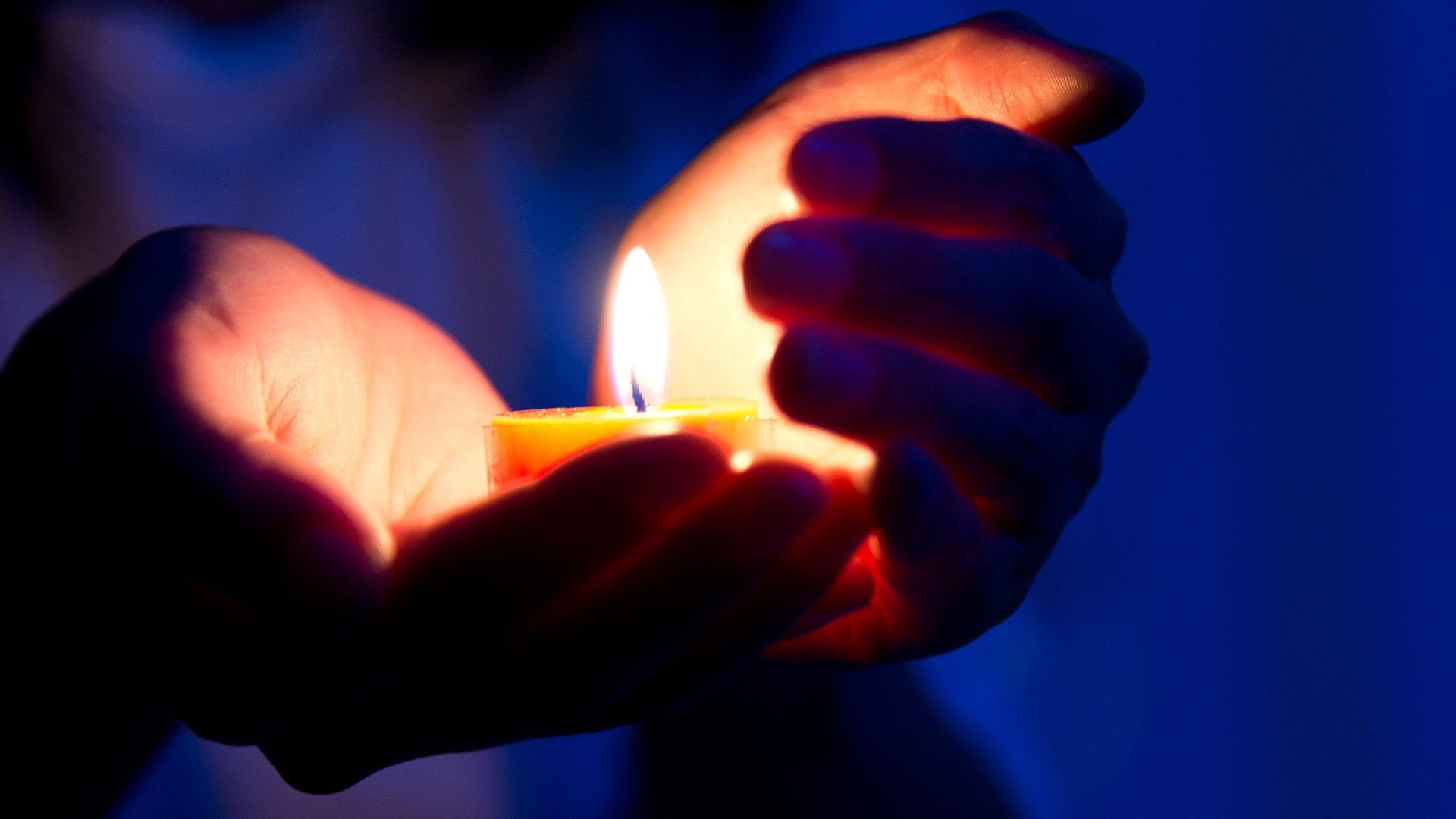
So what should a personal Buddhist response look like, especially for a Zen practitioner in the West who may be navigating hospitals, funeral homes, paperwork, and relatives with mixed beliefs? It can be simpler than people think. Begin with the precepts in their living form: do no harm, speak truthfully and kindly, avoid intoxication and heedlessness, and meet grief without making it someone else’s problem. Then let practice be practical. Sit with the dying if you can. When death comes, create a clean, gentle space. Light a candle. Offer incense if that is part of your practice. Chant a short text you actually know by heart, even if it is only the Heart Sutra, even if your voice shakes. Dedicate the goodness of your life, your practice, your kindness, your imperfect attempts, toward the well-being of all beings, including this one who has died. Then feed people, answer the phone, wash dishes, help with logistics, and let your care be your teaching.
A Buddhist memorial does not need to be “perfectly traditional” to be real. It needs to be sincere, grounded, and kind. Some people will want a fully Zen service with a priest, robes, bells, and chanting. Others will want a quiet home altar for forty-nine days, or a weekly sit dedicated to the deceased, or a simple scattering of ashes with three bows and a vow. The most Zen question is not “What is the correct form?” but “What form will best express awakening and compassion in this exact situation?” Sometimes that means a full liturgy. Sometimes it means silence. Sometimes it means allowing a Christian aunt to read a psalm and then ringing the bell once afterward, not to correct her, but to hold the whole moment without division. Sometimes it means being the one person in the room who does not turn away from grief, who does not rush it, who does not try to win an argument about metaphysics at the worst possible time.
And Zen, at its best, keeps pointing to the same thing: death is not “over there.” It is not only a family event or a religious event. It is the truth of this body, this breath, this tenderness. Memorial practice is not meant to make death less true; it is meant to make love less abstract. We chant because we cannot hold everything alone. We bow because the self is not the center of the universe. We offer incense because everything passes through the air and is gone. We sit because, even here, even now, the Way is not interrupted.