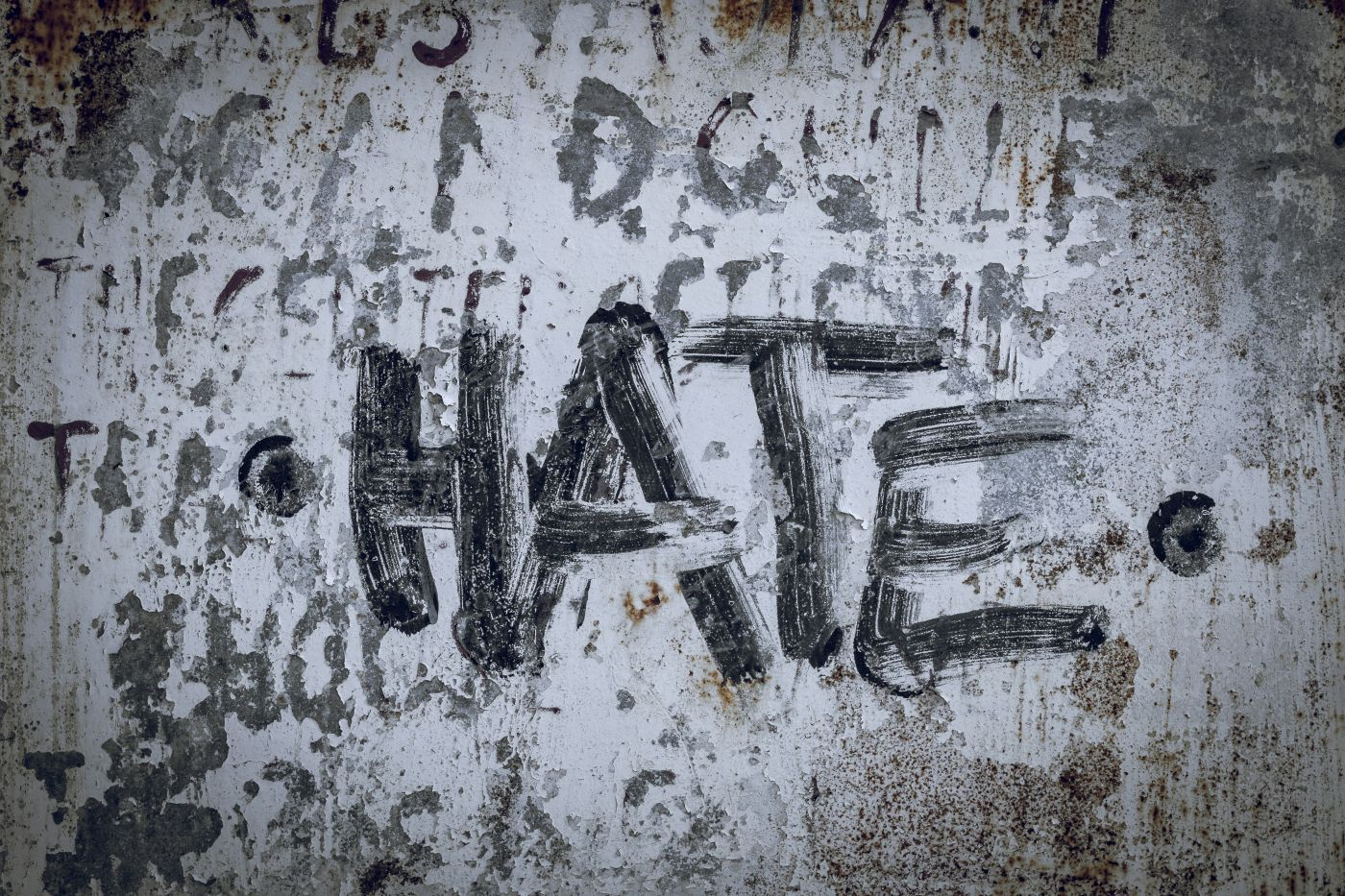
Hate is a strange kind of fire. It feels like power, like clarity, like certainty. It can even feel like righteousness. But it is not a clean flame. It does not warm a house or cook a meal. Hate is the fire that only blackens the lungs of the one who carries it, the kind that turns the mind into a closed room with no windows. And what makes it so dangerous is that, at first, it seems to solve a problem: it simplifies the world. It turns complicated people into a single word. It turns fear into an enemy with a face. It turns pain into a target. For a moment, that can feel like relief.
But hate never builds. It only consumes.
To speak about hate from a Buddhist perspective is to speak about the poisons of the mind, and to speak about it from a human perspective is to speak about the oldest injuries we carry in our bodies and our stories. In Buddhism, hate is often gathered under the umbrella of ill will, aversion, hostility, the refusal of the heart. It is one of the great poisons not because it is “bad” in a moralistic way, but because it reliably produces suffering. It corrupts perception. It tightens the nervous system. It narrows attention until we can only see what confirms the story it is telling. And in that sense, it is not only a spiritual problem. It is also a psychological one, a relational one, a community one, because hate is contagious. It spreads through language, through images, through group identity, through shared outrage. It recruits.
What is hate, really? At its core, hate is not just strong dislike. It is not mere anger. Hate is fixation, an emotional and mental gripping that says, “This thing should not exist,” or, “This person should not be.” It is the mind’s insistence on annihilation, even if it takes polite forms. Sometimes hate is loud and violent. Sometimes it is quiet and sophisticated. Sometimes it hides behind humor or “just being honest.” But the signature is the same: the heart closes, and a living being becomes an object.
And when the heart closes, everything that follows becomes easier.
Hate leads to anger because it constantly produces the sense of threat. It leads to violence because it justifies harm as necessary. It leads to revenge because it cannot tolerate the existence of the one it hates without trying to balance the scales through pain. It leads to destruction because it is interested in removal, not transformation. It does not ask, “How do we heal this?” It asks, “How do we punish it?” And punishment feels like justice until you watch what it does to the punisher.
The evils of hate are not only the obvious ones, the riots, the massacres, the cruelty, the slurs, the broken bodies. The evils of hate include what it does in ordinary life. Hate erodes empathy. It makes us talk about people as if they are insects, parasites, diseases, garbage. It trains the mind to dehumanize, and once that training becomes normal, the threshold for harm drops. Hate also steals time. It hijacks attention. It becomes a private obsession. You can be sitting at a table with people who love you and still be chewing on someone else’s existence like a bone you cannot stop gnawing. You can lose years that way, years that could have been used for love, for craft, for building, for service, for actual change.
And it is not only “the other side” that hates. Hate does not care what your ideology is. Hate will happily wear any uniform. It will sit in any religion. It will quote any scripture. It will talk in the language of virtue and still do the work of poison.
So where does hate come from?
Sometimes it comes from pain that never had a witness. Sometimes it comes from fear, especially the fear of losing status, safety, identity, control. Sometimes it comes from humiliation, which is one of the most fertile soils for cruelty. Sometimes it comes from grief that has hardened into bitterness. Sometimes it comes from a real injury, and the mind’s desperate attempt to ensure it never happens again. And sometimes it comes from something even simpler: the mind loves certainty, and hate offers it cheaply. Hate says, “Here is the villain. Here is the cause. Here is the story.” It replaces the unbearable complexity of life with a single point of blame.
From the Buddhist angle, hate is deeply linked to delusion, the inability to see clearly. When we are caught in hatred, we do not see causes and conditions; we see essence. “They are evil.” “They are trash.” “They are monsters.” That shift is everything. It takes a temporary pattern of behavior and turns it into a permanent identity. It takes a human being—conditioned, wounded, confused, capable of harm and also capable of good—and flattens them into a symbol. Delusion makes hate feel accurate.
But hate is rarely accurate. It is usually a photograph of one moment, waved around like a full biography.
There is also a cost to hate that people often ignore because it is quiet: the mental and spiritual toil. Hatred is heavy. It keeps the body in a state of readiness. It floods the mind with rehearsals: what you should have said, what you want to do, how you want them to suffer, how you’ll prove your point, how you’ll win. This is exhausting. And it changes you. Over time, the mind becomes shaped by what it repeats. If you rehearse contempt, you become contempt. If you rehearse violence, you become closer to violence. If you rehearse dehumanization, you become less human.
This is one of the most sobering truths: hate harms the one who hates even when the hated person never knows your name.
So how do we overcome it? Not with slogans. Not with forced sweetness. Not by pretending we never feel it.
We begin by telling the truth: hate arises. It happens. It is part of the human repertoire. If we treat hate as something that only “bad people” feel, we guarantee we will never see it in ourselves until it has already taken the wheel. Practice begins with honesty. “This is here.” Not “this is who I am,” but “this is here.”
Then we learn to distinguish hate from discernment. You can oppose harm without hating the person who causes harm. You can set boundaries without poisoning your heart. You can name injustice without becoming addicted to contempt. This distinction matters because many people cling to hate out of fear that without it they will become passive, naive, unprotected. But hate is not the same thing as strength. Hate is agitation. Hate is compulsion. Strength is clarity with restraint.
In practice, working with hate often starts at the level of the body. Hate is not just an idea; it is a physical state. Jaw tightens. Chest compresses. Stomach twists. Breath becomes shallow. The mind speeds up. So we meet it where it lives: we pause. We breathe. We feel the heat without immediately converting it into speech, posts, plans, or punishment fantasies. This is not indulgence. It is interruption. It is creating a gap between trigger and action. That gap is where freedom begins.
Next, we investigate, gently, but honestly. What is under the hate? Fear is often there. Grief is often there. Shame is often there. A sense of powerlessness is often there. Hate loves to present itself as a final answer, but it is usually a cover story. If you can find what it is covering, you can actually work with the real wound. Otherwise you will keep feeding hate as a way to avoid feeling what hurts.
Then we practice seeing the human being again. This does not mean excusing, minimizing, or pretending harm isn’t real. It means refusing to let our perception collapse into a single word. A person can be wrong, harmful, dangerous, and still be a person. When we remember that, we protect something precious inside ourselves. We keep our own humanity intact. And that matters because the world does not need more people who have become monsters while fighting monsters.
This is also why we should never embrace hate even when it feels justified, especially then. “Justified hate” is the most intoxicating form because it comes with a halo. It convinces us that our hatred is proof of our goodness. But if hatred becomes the fuel, it will shape the destination. Even victories won through hate are bitter victories. They leave scorched earth. They train the next generation to keep the cycle going. Hate does not end enemies. It manufactures heirs.
So what do we do when we face hate in others, when it is aimed at us, or at those we love, or at people who are vulnerable?
First, we protect. Compassion is not passivity. If someone is in danger, we intervene, we seek help, we create distance, we use the systems we have, we defend. Buddhism does not ask you to offer your body to harm in the name of being “spiritual.” There is a difference between non-hatred and non-action.
Second, we refuse to mirror. Hate wants you to become its reflection. It wants to recruit you into the same small world. When we respond to hate with hate, we confirm its worldview: that the only language that matters is force. When we respond with firmness without contempt, we introduce a different possibility: that power can be clean.
Third, we do not pretend it is simple. Hate often grows in groups because groups offer belonging. People are pulled into hatred not only because they are cruel, but because they are lonely, frightened, humiliated, searching for meaning, desperate for identity. That doesn’t excuse anything. But it tells us what actually weakens hate in the long run: connection, dignity, education, accountability, and communities that offer belonging without requiring a shared enemy.
And finally, we train the heart in the opposite direction, not as performance, but as discipline. In Buddhism, this might look like cultivating goodwill, compassion, sympathetic joy, equanimity, the steady heart that does not tip into hatred even when it must act strongly. In human terms, it looks like practicing small, daily acts that keep the heart supple: listening to someone’s story without rushing to label them, letting complexity be real, refusing to speak about people as if they are not people, noticing when we enjoy contempt and stepping back, apologizing when we have dehumanized someone, choosing language that does not inflame, choosing friendships that do not thrive on shared hatred.
Overcoming hate is not a single heroic moment. It is usually a thousand quiet moments of not feeding it.
And this is the hard teaching: the practice is not to make hate impossible to feel. The practice is to make hate impossible to live from. To let it arise, be known, be held in awareness, and not be obeyed. To be someone who can feel heat and still choose clarity. Someone who can see harm and still refuse to become harmful. Someone who can oppose an enemy without becoming a servant of enmity.
There is a kind of courage in that. Not the courage of domination, but the courage of restraint. Not the courage of the clenched fist, but the courage of the open hand that can still set a boundary. Not the courage of righteous rage that burns hot and fast, but the courage of a steady heart that keeps working, keeps building, keeps healing.
Hate promises you relief. What it gives you is captivity.
The path away from hate is not the path of approving what is wrong. It is the path of refusing to surrender your mind and heart to poison. It is the path of remembering that the world is already full of causes and conditions, full of suffering and confusion, full of beings trying to be safe in clumsy ways. When you can see that, you may still act strongly. You may still say “no.” You may still fight for what is right.
But you will not burn down your own house to feel warm for a moment.