I’ve heard it said so many times that it almost becomes background noise: the Buddha taught that life is suffering. People say it with a kind of solemn certainty, as if Buddhism begins with a bleak verdict. Sometimes they say it with a wry grin, like a dark joke that proves they’re realistic. And sometimes it’s offered as a warning—you might not like Buddhism; it’s pessimistic.
But every time I hear that line, something in me wants to gently take it by the shoulders and turn it toward the light.
Not because the Buddha denied pain. Not because Buddhism is trying to be cheerful. And certainly not because we should soften the Dharma so it’s more comfortable to modern ears. The problem is simpler and deeper: that sentence is not quite what the Buddha meant, and the English word “suffering” doesn’t carry what the Buddha was pointing to. If we start there, if we build our understanding of practice on that mishearing, we can spend years practicing as if the Dharma is a philosophy of gloom, a religion of endurance, or a kind of grim realism that demands we accept misery as ultimate truth. That’s not the First Noble Truth.
The First Noble Truth is dukkha. And I’ve grown to love that phrase, “Noble Truth,” because it’s a reminder that what is being offered isn’t a cynical observation, it’s not a complaint about the world, and it’s not a branding statement for Buddhism. It is a truth that becomes visible when we stop bargaining with reality. Noble not because it flatters us, but because it dignifies our experience enough to look at it plainly. Noble because it is the kind of truth that frees us when we stop turning away.
We often want to skip the First Noble Truth. We want the path without the diagnosis. We want the calm, the clarity, the compassion—without having to sit down in the middle of our own restlessness and admit what is actually happening. But the Dharma begins exactly where we live. It begins in the human heart as it is: loving and afraid, hopeful and grasping, wounded and brave, chasing and resisting, seeking something to stand on in a world that won’t hold still. That felt instability, that friction, is closer to dukkha than the English word “suffering.”
Because when most of us hear “suffering,” we imagine only the obvious: agony, grief, trauma, depression, torment. And yes, dukkha includes those things. The Buddha never looked away from sickness, aging, loss, death. He did not promise us a life insulated from pain. Bodies break. People we love die. The world changes without asking permission. There is heartbreak, and it is real.
But the Buddha’s insight goes farther than naming the obvious pains of life. What he reveals, quietly and insistently, is that there is also a subtler kind of strain running through ordinary experience. A dissatisfaction that can exist even when nothing is “wrong.” A tension that shows up in good moments. A kind of ache in the background of our joy, because we can feel, even if we don’t admit it, that it won’t last. A grasping that can sneak into love and turn it into fear. A clinging that can cling even to peace.
This is why translating dukkha as “suffering” can distort the teaching. It can make Buddhism sound like it’s claiming life is nothing but misery. It can make the Dharma sound like a bleak worldview rather than a liberation teaching. It can make practice feel like an endurance contest instead of a path of awakening.
If you want to feel what dukkha is pointing to, you don’t have to wait for catastrophe. You can find it in the ordinary rhythm of wanting.
We get what we want, and almost immediately the mind moves. It wants more. It worries about losing it. It compares it to something else. It starts negotiating: How do I keep this? How do I get back to this? How do I make sure it happens again? Even pleasure can become a job. Even happiness can come with a little hook in it. And when the thing changes, as everything does, we feel the sting. Sometimes it’s a small sting, like disappointment. Sometimes it’s a deep one, like grief. But it is the same pattern: we reached for something solid in a world that does not stay solid.
That’s not pessimism. That’s just honest. And honesty is where compassion begins.
One of the teachings that has always helped me understand this is the Buddha’s image of the two arrows. The first arrow is the pain that comes with being human: the sickness, the loss, the harsh word, the unexpected change, the physical ache, the wave of sadness. The second arrow is what we add, our resistance, our panic, our stories, our tightening around the experience, our demand that reality be different. The Buddha isn’t telling us we’ll never be hit by the first arrow. He’s telling us we don’t have to keep shooting ourselves with the second.
That second arrow is dukkha made personal. It’s the way the mind turns pain into identity: This shouldn’t be happening. This isn’t fair. I can’t stand this. This means something is wrong with me. This means my life is ruined. It’s the way we grip pleasure and turn it into fear: Don’t leave. Don’t change. Don’t end. It’s the way we grip even the spiritual path and turn it into another possession: my practice, my progress, my calm, my insight.
And this is where Zen becomes very practical.
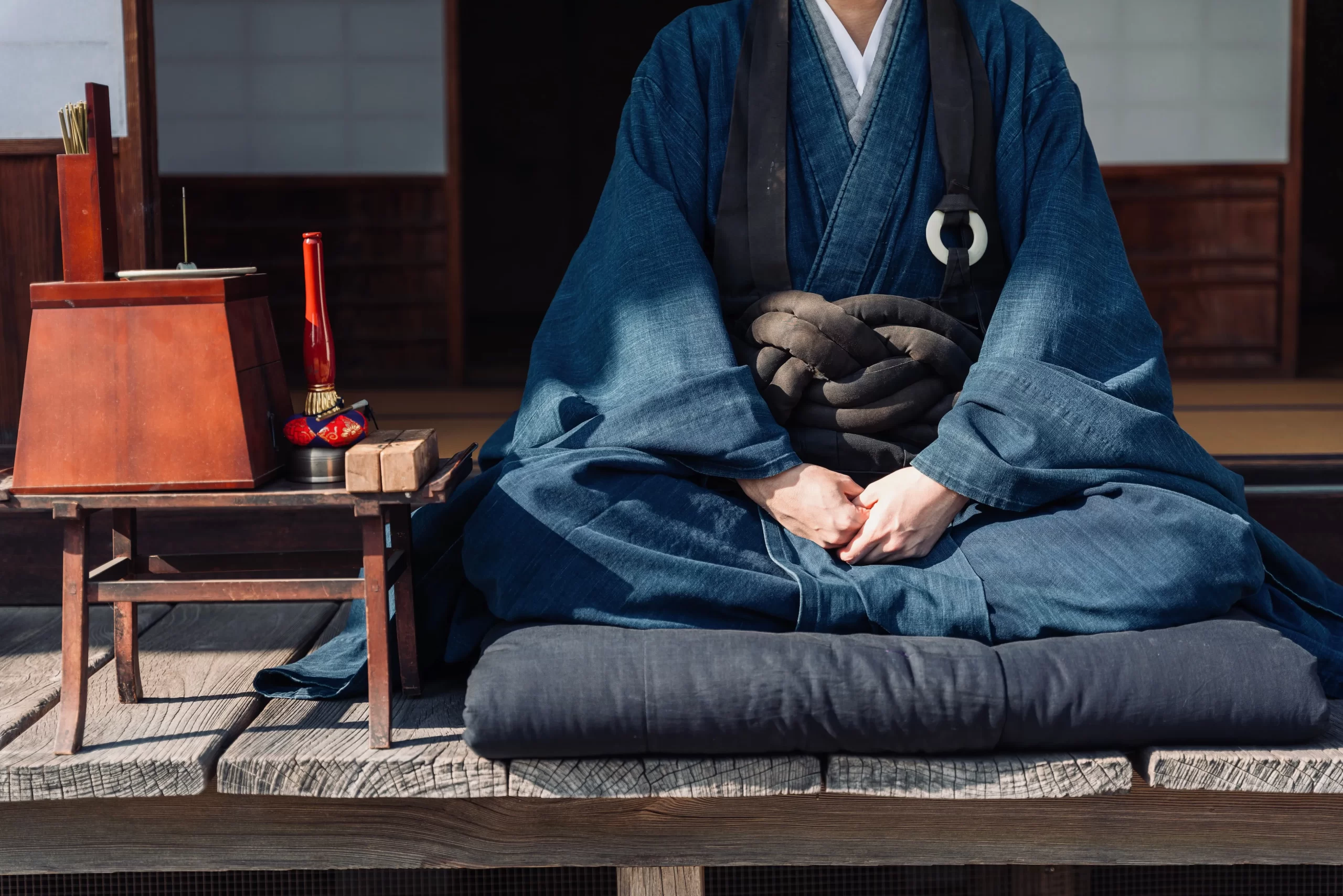
Because Zen doesn’t usually solve this for us by explaining it a thousand ways. Zen brings us to the cushion and asks us to see it directly. It gives us just enough structure, just enough stillness, just enough silence, that our usual strategies become visible. In zazen, we see how the mind tries to manage everything. We see the urge to push away unpleasantness and cling to ease. We see how quickly we create a self out of the weather of the moment. And if we keep sitting, we also begin to see something else: the possibility of letting the moment be the moment without making it into a verdict.
This is the gentle revolution of the First Noble Truth.
Not “life is suffering.” Not “everything is terrible.” But: there is dukkha, and it can be known. Known not as a concept, but as a lived texture. Known well enough that we stop being ruled by it. Known well enough that we can stop feeding it. Known well enough that we can discover freedom in the very place we used to struggle.
And when we understand the First Noble Truth this way, something surprising happens. It doesn’t make life smaller. It makes life truer.
We stop needing joy to be permanent in order for it to be real. We stop needing love to be guaranteed in order for it to be love. We stop treating impermanence like a threat and begin to treat it as the natural breath of existence. We still feel pain, but we don’t have to collapse around it. We still experience loss, but we don’t have to turn it into a prison. We still face change, but we don’t have to meet it with bitterness.
The First Noble Truth is not meant to darken the world. It’s meant to stop us from lying to ourselves about how we suffer, especially about how we add suffering. It’s meant to help us see the hidden mechanics of dissatisfaction so we can stop being dragged around by them. It’s meant to make the path honest.
This is why we shouldn’t rush past it.
Because if we skip the First Noble Truth, we can turn Buddhism into a kind of spiritual entertainment—comforting ideas, calming practices, little islands of peace—while the deeper currents of grasping and aversion keep running our lives. We can learn to speak Buddhist words without touching the Buddhist insight. We can sit in meditation while still demanding that life behave. We can wear the costume of serenity while still being quietly at war with reality.
But if we embrace the First Noble Truth, we begin at the beginning. We begin with what is real. We begin with the human heart exactly as it is. And that beginning is not bleak—it is bracing, compassionate, and profoundly hopeful, because it means liberation isn’t reserved for some other life, some later time, some perfected version of ourselves. Liberation begins here, in the honest recognition of dukkha.
So perhaps a better way to say it—if we insist on a sentence—is something like this:
Life contains pain, and pain is real. But the deeper strain the Buddha points to is the stress of clinging—the friction of demanding permanence from what changes, demanding certainty from what is uncertain, demanding a fixed self from what is always in motion. That is dukkha. And seeing it clearly is the first gate of freedom.