Every so often someone asks this in a way that feels almost innocent—like a sincere hope. Can’t I just sit down, read a few good books, watch a couple teachers online, and get started? And if Zen keeps saying enlightenment is right here, right now, why would I need anyone else involved at all?
I understand that question. In fact, I think it’s the kind of question that comes from a good place. It’s the voice in us that doesn’t want to turn the Dharma into an exclusive club, or a maze of gatekeepers, or a dependency. It’s the part of us that hears “nothing to attain” and thinks, Good. Then I can do this simply. Quietly. Honestly. Without making it complicated.
And there’s truth in that. You really can begin right where you are. No one needs permission to sit down. No one needs a certificate to breathe, to listen, to face themselves for ten minutes and then twenty, and then a little longer. If you’re waiting for the perfect temple or the perfect teacher before you take your first real step, you may be waiting for the rest of your life. Zen is not opposed to starting alone. Zen is opposed to never starting.
But Zen is also very clear-eyed about something else: the mind is slippery. And it will gladly turn even the most beautiful teachings into another way to protect itself.
This is the part people often miss. When Zen says awakening is immediate, it isn’t saying the human heart is straightforward. When Zen says the truth is “right here,” it isn’t saying we’re automatically able to recognize it. Sometimes the fact that it’s so intimate—so close—makes it easier to overlook. We keep looking for fireworks when the real work is learning to stop flinching in the ordinary.
The old Zen stories are full of people who practiced hard and still got lost. Not because they didn’t sit enough, but because they sat in a way that strengthened their habits. They used meditation as control. Or as self-improvement. Or as a way to become special. Or as a way to become numb. They learned how to look calm while remaining tangled inside. And if you’re honest with yourself, you can feel how easily that could happen. We’re all capable of using practice as a costume.
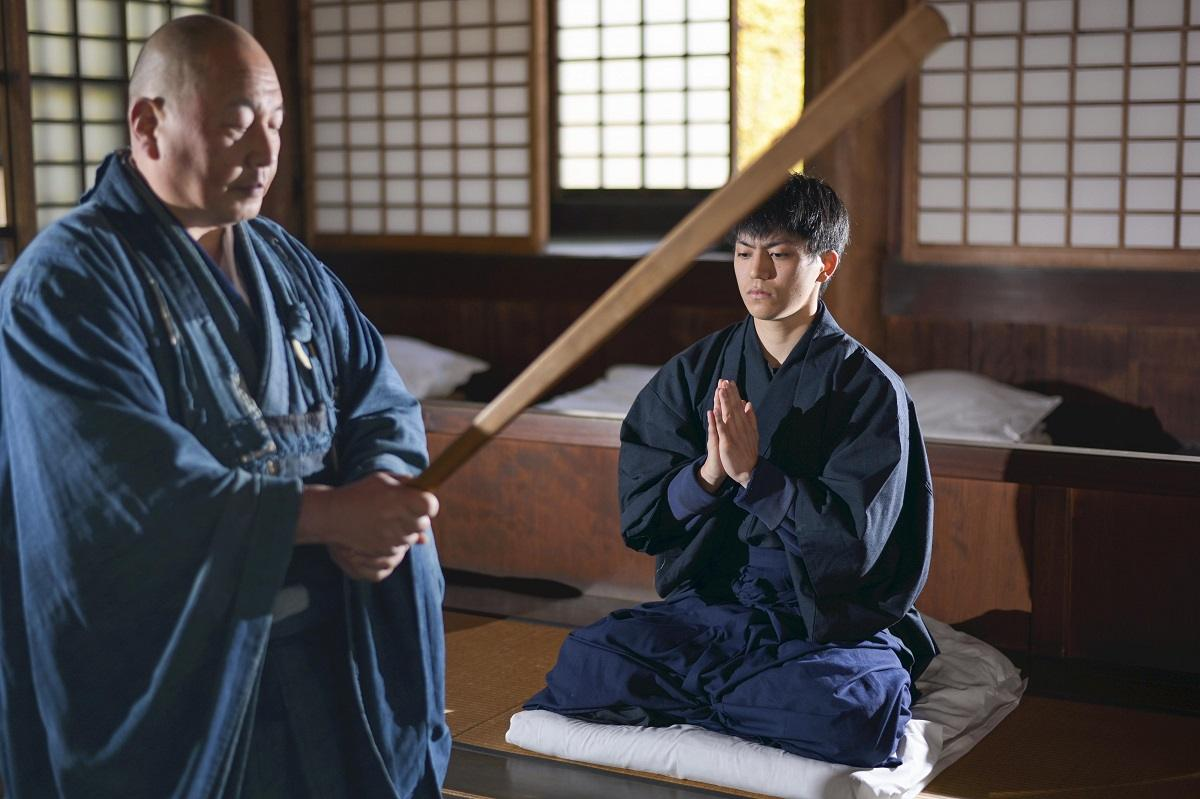
That’s one of the places a teacher matters—not as an authority figure handing out enlightenment, but as someone who can see what you can’t see. Not because you’re bad, but because you’re human. We all have blind spots. We all have the gift of rationalizing. We all have moments where our sincerity gets hijacked by our fear.
This is why “direct pointing” is such a telling phrase in Chinese Chan. The language itself suggests relationship. Someone points. Someone listens. Someone gets stopped mid-stride and turned around. Zen is not an abstract philosophy where you simply agree with the correct ideas. Zen is something embodied. It has texture. It has friction. It has the awkwardness of being corrected and the humility of beginning again.
If you look at the Chinese masters, you’ll notice how unsentimental they are about private spirituality. They don’t hate meditation. They hate self-deception. They warn against practices that turn into suppression. They challenge the way we chase a certain kind of stillness and call it awakening. They call out the subtle hunger to “get something” from practice—peace, power, identity, superiority, safety. They don’t do it to shame anyone. They do it because they’re trying to free us from traps we can’t even feel as traps.
The Korean Seon masters carry the same clarity, but often with a particular kindness: they affirm the suddenness of awakening while also insisting on what comes afterward. Yes—awakening is right here. And also—our habit patterns run deep. The moment of seeing is not always the end of the story. It may be the beginning of a more honest story.
That’s where a teacher becomes something like a steady lamp. Not a savior. Not a magician. A lamp. Someone who helps you keep walking when you’re dazzled by your own experience, or discouraged by your own confusion, or stuck in the subtle pride of “I can do this alone.” The teacher’s role is often less about giving answers and more about preventing you from settling for substitutes.
And then there’s Japan, where Zen becomes very explicit about form—about bowing, ritual, schedules, and the ways practice is held in a container bigger than your mood. Dōgen, especially, has a way of turning the question back onto us with gentle severity: If you seek a teacher but only accept what agrees with your opinions, what are you actually doing? It isn’t that teachers are always right. It’s that the self that insists on staying the final judge in every moment rarely opens. It negotiates. It edits. It selects. It makes sure it remains in control.
And control is one of the most convincing illusions in spiritual life.
Now, none of this is a call to blind obedience. Zen has enough history—like every human tradition—to remind us that teachers can fail, communities can fail, institutions can fail. A teacher is not automatically trustworthy because they wear robes. A lineage is not automatically healthy because it is old. Discernment matters. Boundaries matter. Your own conscience matters.
But here’s what I’d say pastorally, as a simple encouragement rather than a hard rule:
Start. Sit. Study. Practice as you are. Don’t wait.
And also—if you’re serious, if this is not just a hobby but the great matter of your life—eventually find living guidance. Find a teacher, or at least a community of practice, where you can be seen. Where you can be corrected without being crushed. Where your sincerity can mature into steadiness, and your steadiness into compassion.
Because the teacher doesn’t give you enlightenment. Zen is not a transaction like that.
A true teacher helps you stop bargaining with your life. Helps you stop turning Dharma into a project that props up the self. Helps you return—again and again—to what is simple, what is honest, what is embodied, what is kind.
And that, in the end, is why Zen has kept the teacher-student relationship so close to its heart: not because the truth is far away, but because we are very good at looking right at it—and still missing it.