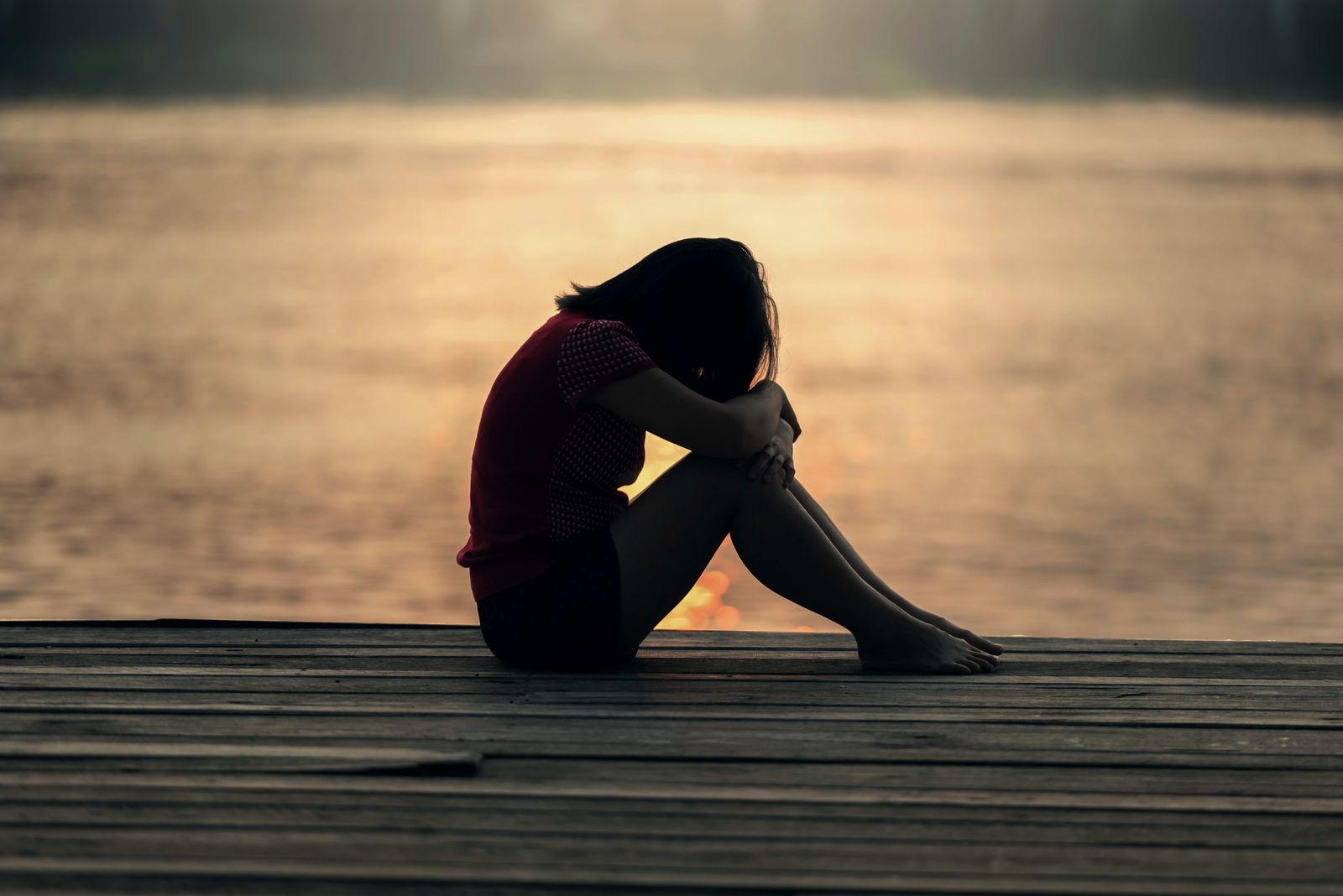
One of the hardest questions humanism has to face is also one of the oldest questions human beings have ever asked: What do we do with death when we do not believe there is anything beyond it? Religion has traditionally offered answers that can be enormously comforting. The dead are not really gone. We will see them again. Death is a doorway rather than an ending. Somewhere beyond the limits of our sight there is heaven, resurrection, reincarnation, paradise, or another existence in which separation is temporary and justice is finally made complete. Humanism cannot honestly make those promises. If we do not believe there is sufficient reason to think consciousness survives the death of the brain, then we must confront the possibility that death really is death. The person we love is gone, and one day we will be gone as well.
That can sound bleak. It does not have to be.
Humanism does not answer death by pretending it is something other than death. Instead, it asks whether a finite life can still be beautiful, meaningful, and worthwhile precisely because it is finite. The humanist response to mortality begins not with another world, but with this one. We have this life. We have these people. We have this afternoon, this conversation, this meal, this embrace. Their impermanence does not make them meaningless. In many ways, impermanence is what gives them their extraordinary value.
A sunset does not become worthless because it lasts only a few minutes. A piece of music does not lose its beauty because eventually the final note is played. We do not refuse to love a dog because its life will probably be shorter than our own. We do not dismiss childhood because it ends. Much of what we treasure is precious precisely because it cannot be kept forever. Human life is no different. Its ending does not invalidate what came before.
This matters especially when someone we love dies.
There is no philosophical argument capable of making grief painless. Nor should there be. Grief is not an intellectual error that needs to be corrected. It is love responding to absence. When someone has occupied a place in our life—at our table, in our bed, on the other end of the telephone, inside our routines and memories—their disappearance leaves a space that cannot simply be reasoned away. Humanism does not require us to be stoic about this. We are allowed to weep. We are allowed to be angry. We are allowed to experience moments when the universe seems profoundly unfair.
In fact, grief tells us something important about the humanist understanding of life. We grieve because relationships matter.
The depth of sorrow often reflects the depth of connection. The pain is terrible because something wonderful existed there. We loved someone, and they loved us. We shared years or perhaps only months, conversations and arguments, birthdays and ordinary Tuesdays, private jokes, disappointments, victories, meals, vacations, illnesses, frustrations, reconciliations, and countless moments that seemed insignificant when they happened but become precious when they can no longer happen again.
To say that a person no longer exists is not the same as saying that their life no longer matters.
The dead continue to shape the living in very real ways. They exist in the consequences of having lived. A parent survives in the habits they taught their children. A teacher survives in the minds they helped awaken. A friend survives in stories that are repeated twenty years later. An artist survives in a painting. A carpenter survives in the table around which another family gathers. A nurse survives in people who remember being treated gently when they were frightened. A grandfather survives in a recipe. A spouse survives in expressions, routines, tastes, jokes, and ways of looking at the world that quietly became part of the person who loved them.
This is not immortality in the supernatural sense. Eventually memories fade as well. Generations pass. Names are forgotten. Even civilizations disappear. Humanism does not need to disguise that truth.
But neither should we underestimate what it means to have affected the world at all.
Every human life enters into a network of other lives. We influence people who influence other people, often in ways we will never know. A kindness given to one person may alter how that person treats another. Something taught to a child may become something that child teaches their own children decades later. Our actions ripple outward through communities and generations. We do not remain as conscious spirits watching the world from somewhere beyond it, but portions of what we were are woven into what the world becomes.
There is something profoundly human in the simple recognition that they were here—that they existed among us, laughed and loved, suffered and endured, and in doing so mattered deeply to someone, leaving subtle but real changes in the world simply through their presence. And now, though they are gone, we remember them.
Humanist grief therefore depends heavily upon remembrance. Funerals, memorials, graves, photographs, anniversaries, stories, inherited objects, and family traditions need not depend upon belief in an afterlife. Ritual is not the exclusive property of religion. Human beings have always needed ways of marking the great transitions of existence. There is nothing irrational about gathering around a coffin, lighting a candle, saying a loved one’s name aloud, planting a tree, scattering ashes somewhere meaningful, cooking a dead parent’s favorite meal on their birthday, or sitting together and telling stories until grief gives way temporarily to laughter.
These rituals are not performed for the dead.
They are performed because the dead mattered to the living.
A humanist funeral therefore need not be sterile or clinical. It can be extraordinarily beautiful. Music can be played. Poetry can be read. People can speak about love, gratitude, regret, humor, and memory. The person’s life can be told honestly rather than turned into an artificially flawless biography. Their accomplishments can be celebrated, their eccentricities remembered, their flaws acknowledged tenderly, and their influence recognized. A funeral can say something both simple and profound: this human being existed among us, and our world is different because they did.
Perhaps the hardest part of a naturalistic understanding of death, however, is not grieving someone else. It is facing our own extinction.
Most of us can imagine the world without almost anyone except ourselves. We understand intellectually that billions of years passed before we were born. Yet imagining a universe continuing without our consciousness is strangely difficult. We picture our own funeral as though we are somehow standing invisibly in the corner watching it. Consciousness tries to imagine non-consciousness and discovers that it cannot.
But there is an important distinction between dying and being dead.
Dying can frighten us, and reasonably so. We may fear pain, helplessness, the loss of independence, unfinished responsibilities, separation from people we love, or the process by which our bodies fail. These are real concerns, and a humane society should do everything possible to make dying gentler. Medicine, hospice care, pain management, companionship, advance directives, honest conversations with family, and respect for individual autonomy are profoundly humanist concerns precisely because this life matters so much.
Being dead is different.
If consciousness ends with brain function, then there is no experience of being dead. There is no darkness in which we sit forever. There is no loneliness, boredom, fear, or awareness that the universe has continued without us. There is simply no experience at all. The terror we sometimes imagine after death belongs entirely to the living mind attempting to picture its own absence.
In this respect, death resembles the countless ages before our birth. We do not mourn the year 1200 because we were not alive to experience it. We were not trapped somewhere waiting to exist. There simply was no “us.” If death is the permanent cessation of consciousness, then what follows may be understood in much the same way.
The difficult part is leaving.
We do not want to leave because life contains things worth staying for.
And perhaps that is exactly the point.
Knowing that there may be no second life should not make this life smaller. It should make it larger. If there is no celestial reunion waiting for us, then reconciliation should happen here. If there is no cosmic ledger that will automatically correct every injustice, then justice becomes our responsibility. If there is no supernatural force guaranteed to comfort the lonely, feed the hungry, shelter the homeless, or hold the hand of someone who is dying, then human beings must do those things for one another.
Mortality gives life a kind of urgency that cannot be ignored. It reminds us that time is limited, and that what we often postpone may never come again. In that awareness, the simplest actions become more important than they first appear: telling people we love them while we still can, forgiving when forgiveness is possible, and offering apologies while there is still someone alive to receive them. It means reaching out—calling our parents, listening fully to our children, and making the trip we keep promising ourselves we will one day take.
It also means choosing presence over delay in quieter, everyday ways. We write the book we have been putting off, plant the garden we have imagined, and learn the instrument we have always wanted to try. We watch the sunset instead of assuming there will always be another. We sit beside hospital beds when it matters most, hold hands when words are not enough, and express gratitude now rather than reserving it for a eulogy that may come too late to be heard.
The humanist awareness of mortality can become a philosophy of presence. We cannot guarantee ourselves more time. That is precisely why the time we possess deserves our attention.
There will still be moments when this answer feels inadequate. When someone we desperately love dies, we may wish with every part of ourselves that there were more. Philosophy does not eliminate longing. A humanist can stand beside a grave and wish heaven were real. We can understand exactly why human beings have imagined worlds in which parents find their children again and lovers separated by death are reunited. There is nothing foolish about wanting such a thing.
But wanting something to be true and believing it to be true are different matters.
Humanism asks us to have the courage to live without certainty where certainty cannot honestly be claimed. It asks us to resist replacing painful truth with comforting assurance merely because the assurance is easier to bear. At the same time, it reminds us that truth does not rob life of wonder.
Quite the opposite.
Consider how astonishing it is that we existed at all.
From the unimaginably long history of the universe came stars. Within stars were forged the elements that eventually became planets, oceans, living cells, forests, animals, human beings—and somehow, eventually, us. For a brief interval, matter became conscious. The universe produced creatures capable of looking at the stars from which their atoms came and asking what it all means. We became capable of music and mathematics, poetry and compassion, curiosity and friendship. We became capable of knowing that we would die and choosing to love anyway.
There is something quietly magnificent in that realization, a kind of awe that does not depend on eternity to feel complete. To understand that we are here at all—briefly, improbably, as conscious fragments of a vast and indifferent universe—is to stand in the presence of something both fragile and extraordinary. Humanism does not soften this truth by promising that we will continue beyond death or that consciousness will somehow persist untouched by the ending of the body. It does not offer an escape from finitude, nor does it ask us to pretend that loss is not final.
Instead, it turns our attention back toward what is undeniably present. It proposes something more immediate, and in its own way more demanding: that the meaning of life is not deferred to another realm or another time, but is found in the act of living itself. To live while we are alive is to recognize that every moment of awareness, every relationship, every act of care or curiosity or creation, is occurring within a limited and unrepeatable span. There is no second draft of existence waiting beyond the final page.
And yet this limitation is not a diminishment of life’s value. It is what gives life its urgency, its texture, and its depth. Because we are not promised forever, attention becomes precious. Because nothing is guaranteed to return, love becomes more deliberate. Because time cannot be stored or reclaimed, even the most ordinary moments—conversation, laughter, silence shared with another person—take on a quiet significance. Humanism asks us to inhabit this reality fully, not with despair, but with a kind of grounded reverence for the only life we can be certain of having.
And when someone we love dies, perhaps the most human thing we can do is neither deny their death nor allow death to become the final definition of their life. Their story is not simply that they died. Their story is that they lived.
For however long they were given, they participated in this extraordinary human experience. They saw things. They knew people. They touched lives. They were loved.
Then their portion of the journey ended.
Ours continues.
So we carry them with us—not as invisible spirits hovering beyond the world, but as memory, influence, story, gratitude, and love. We speak their names. We repeat their jokes. We teach what they taught us. Sometimes we cry because they are gone. Sometimes we smile because they were here.
And eventually we too will disappear.
That knowledge need not make life meaningless. Rather, it can remind us of just how precious it is.