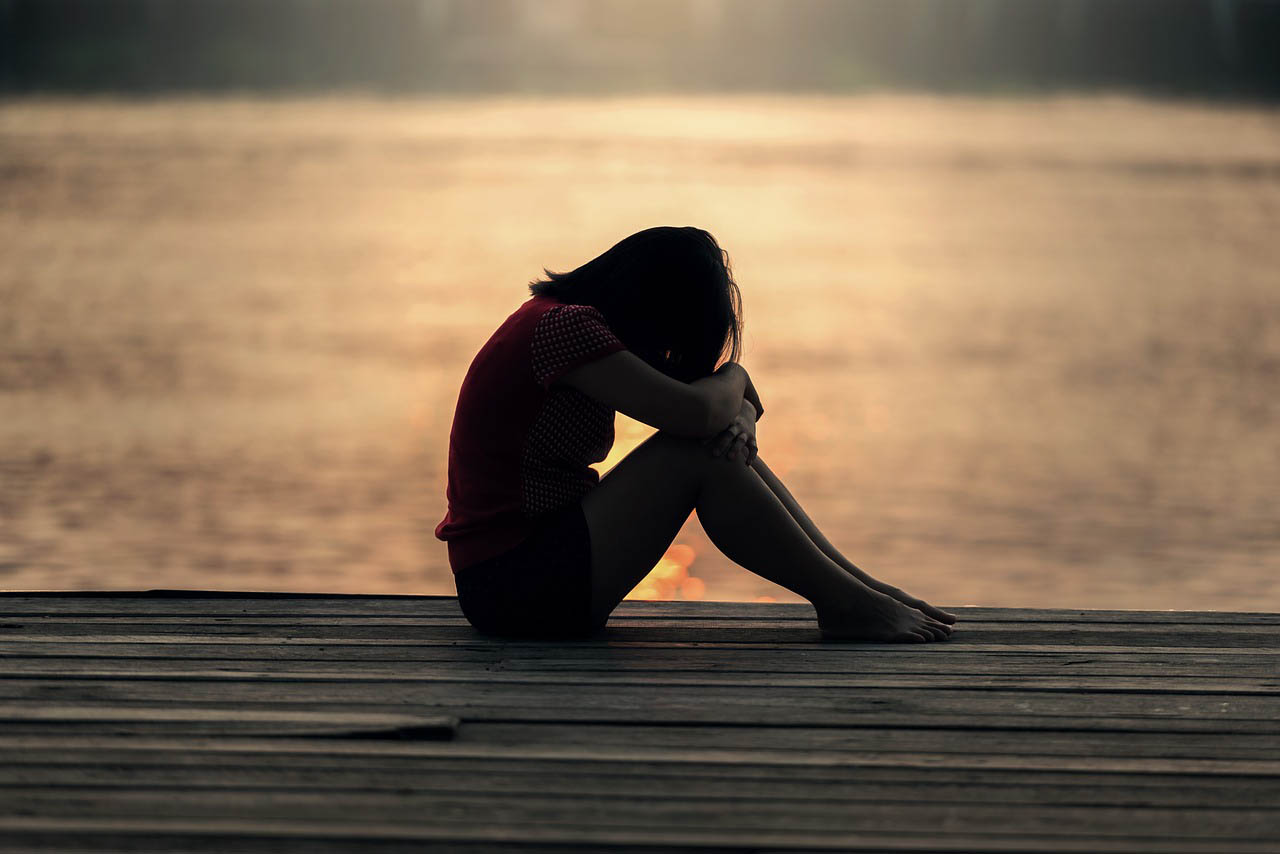
When death first moved from an idea to a fact in my life, I learned something I didn’t expect: grief doesn’t arrive as a single emotion. It arrives as a landscape. One day it’s numbness, another day it’s anger, another day it’s a tenderness so sharp it feels like it has edges. And underneath all of it is a strange, almost childlike refusal—some part of me insisting that the world should not be this way, that this person should still be here, that love should count as a kind of shield.
If you practice Buddhism long enough, you hear about impermanence until it becomes familiar language. You nod at it in a dharma talk. You meet it in small ways—seasons changing, friendships shifting, the body aging, plans falling through. But when someone you love dies, impermanence stops being a teaching and becomes a room you have to live in. It changes the air. It changes the light. It changes the meaning of ordinary things. And it demands a new kind of honesty.
The first thing I want to say, as plainly as I can, is that grief is not a spiritual problem to solve. It isn’t a failure of practice. It isn’t evidence that you “don’t get it.” Grief is love meeting reality. If you loved deeply, you will hurt deeply. I don’t think Buddhism asks us to deny that (I hope that no religion or philosophy does). I think it asks us to stop turning that hurt into a second, unnecessary kind of suffering.
There’s an old image from the Buddha’s teachings that has helped me more than almost anything else. It’s the image of two arrows. The first arrow is the pain that life delivers—loss, illness, aging, death. The second arrow is what we add: the stories, the resistance, the self-blame, the demand that reality be different. When grief is fresh, the mind is unbelievably creative in its second-arrow work. It says, This shouldn’t have happened. It says, I can’t bear it. It says, If I had done one thing differently, the universe would have rearranged itself. It says, I will never be okay again. And sometimes it says the cruelest thing of all: I’m failing at grief; I’m failing at being Buddhist.
In practice, I’ve learned that the first arrow is not optional. The heart will feel what it feels. But the second arrow is something I can begin to notice. Not perfectly, not all at once, and certainly not on a neat timeline, but gradually—like learning to hear a subtle instrument in a loud song. When I see the second arrow forming, I try to do something very simple: I return to what is actually here. Not the imagined past. Not the negotiated alternate endings. Not the courtroom of regret. Just this breath, this body, this moment, this ache.
Zen has a plainness that I love for this. When I sit in grief, I’m not sitting to become calm. I’m sitting because it’s the one place I stop running. I let the body be heavy. I let the mind be loud. I let the tears come if they come, and if they don’t, I don’t demand them. I learn, over and over, that thoughts are not commands. They are weather (one of my favorite analogies). They arrive and pass. And the practice is simply not to chase them into the endless hallways where they want to lead me.
There’s a line from Dōgen that comes back to me often in the season of loss: “Flowers fall even though we love them; weeds grow even though we dislike them.” I don’t hear that as pessimism. I hear it as a compassionate truth. Love does not grant control. Aversion does not prevent what we fear. The world is not arranged around my preferences, no matter how sincere they are. Seeing this doesn’t remove grief, but it does soften the clenched fist around it. It invites the heart to unclench just enough to breathe.
In grief, my instinct is often to be harsh with myself. I notice how quickly the mind turns sorrow into judgment. I judge how I’m feeling. I judge how long it’s taking. I judge the moments when I feel almost normal, and then—because the mind can’t resist—judge myself for feeling normal. The Dharma, at its best, interrupts that spiral with a gentler way of relating to pain. It asks: can you meet this moment without adding cruelty to it? Can you treat your own suffering the way you would treat the suffering of someone you love?
That sounds simple, but it’s a real training. There have been days where grief makes me small, and on those days I try to practice small compassion. I try to let the heart say, Of course this hurts. I try to let my breath be a kind of hand on my own shoulder. I try to remember that tenderness is not weakness. It’s the natural expression of love. And love, in Buddhism, is not sentimental. It’s honest. It doesn’t pretend.
Sometimes grief comes wearing the mask of guilt. It replays old conversations. It brings up moments I wish I had handled differently. It presents evidence like a prosecutor. And to be fair, sometimes it points to something real—something I can learn from, something I can make amends for with the living, something that can shape how I show up now. But a lot of grief-guilt is not that. A lot of it is the mind trying to purchase a different past through self-punishment, as if suffering hard enough could rewrite the ending. When I see that, I try to shift from punishment to sincerity. I try to let the lesson be a lesson, not a sentence.
There’s also a quiet truth I’ve learned the hard way: grief needs a container. People sometimes imagine Buddhism as pure formlessness, as if ritual and ceremony are distractions. But when someone dies, form can be merciful. Lighting a candle. Bowing. Sitting quietly with a photograph. Saying their name out loud. Speaking to them in the only way left—through memory, through prayer, through simple words whispered into the air. I have found that these small gestures do not deny emptiness; they honor love. They give the heart somewhere to place what it carries.
And yes, I know the questions that hover around the edges: Where did they go? What happens after death? Will I see them again? Buddhism contains many ways of speaking about this, and I’m not convinced that certainty is always the medicine we think it is. Sometimes certainty is just another form of grasping, another attempt to control what we can’t control. What has helped me more is humility—making room for mystery while committing to what is clearly wholesome: to live kindly, to live honestly, to live awake.
One line that has stayed with me—because it is so blunt and so true—is the old saying: “All conditioned things are impermanent.” When grief is fresh, that can sound cold. But over time I’ve heard something warmer inside it. I’ve heard a call to stop postponing my life. To stop saving love for later. To stop assuming I’ll have endless chances to say what matters. To let death, instead of making me bitter, make me more direct.
The strange thing is that grief does change shape. It doesn’t vanish, at least not for me, but it becomes less like a constant storm and more like weather that moves through. There are days it arrives unexpectedly, like a scent in the air or a song on a grocery store speaker, and the heart is suddenly back in that other room where the person is missing. On those days, I try not to fight it. Fighting grief often turns it into something harder. I try to let it wash through, and I remind myself: this wave is love. This wave is human. This wave will pass.
If there’s a Buddhist way of dealing with the death of loved ones that I trust, it is not a technique. It is a relationship. It is learning to stay present with what is here without making it into a story of exile. It is letting sorrow be sorrow, while refusing to turn sorrow into hatred—hatred of life, hatred of oneself, hatred of reality. It is remembering, again and again, that cutting ourselves off does not protect us. It only narrows us. And practice, at its heart, is the slow widening of the heart.
I don’t practice Buddhism to become untouched. I practice to become more intimate with this life, including the parts that break me open. Death is one of those parts. It asks for everything: our honesty, our humility, our tenderness, our willingness to feel what we would rather not feel. And if we can meet it—even imperfectly, even tearfully—something in us becomes a little less afraid. Not because death is less real, but because we discover we can stand in reality without closing our heart.
That, to me, is the real refuge: not escape from grief, but a way of holding it that doesn’t destroy us. Not the denial of love, but love maturing into something steadier. Love that can grieve, and still breathe. Love that can miss, and still bless. Love that learns—slowly, painfully, beautifully—to let go without turning away.