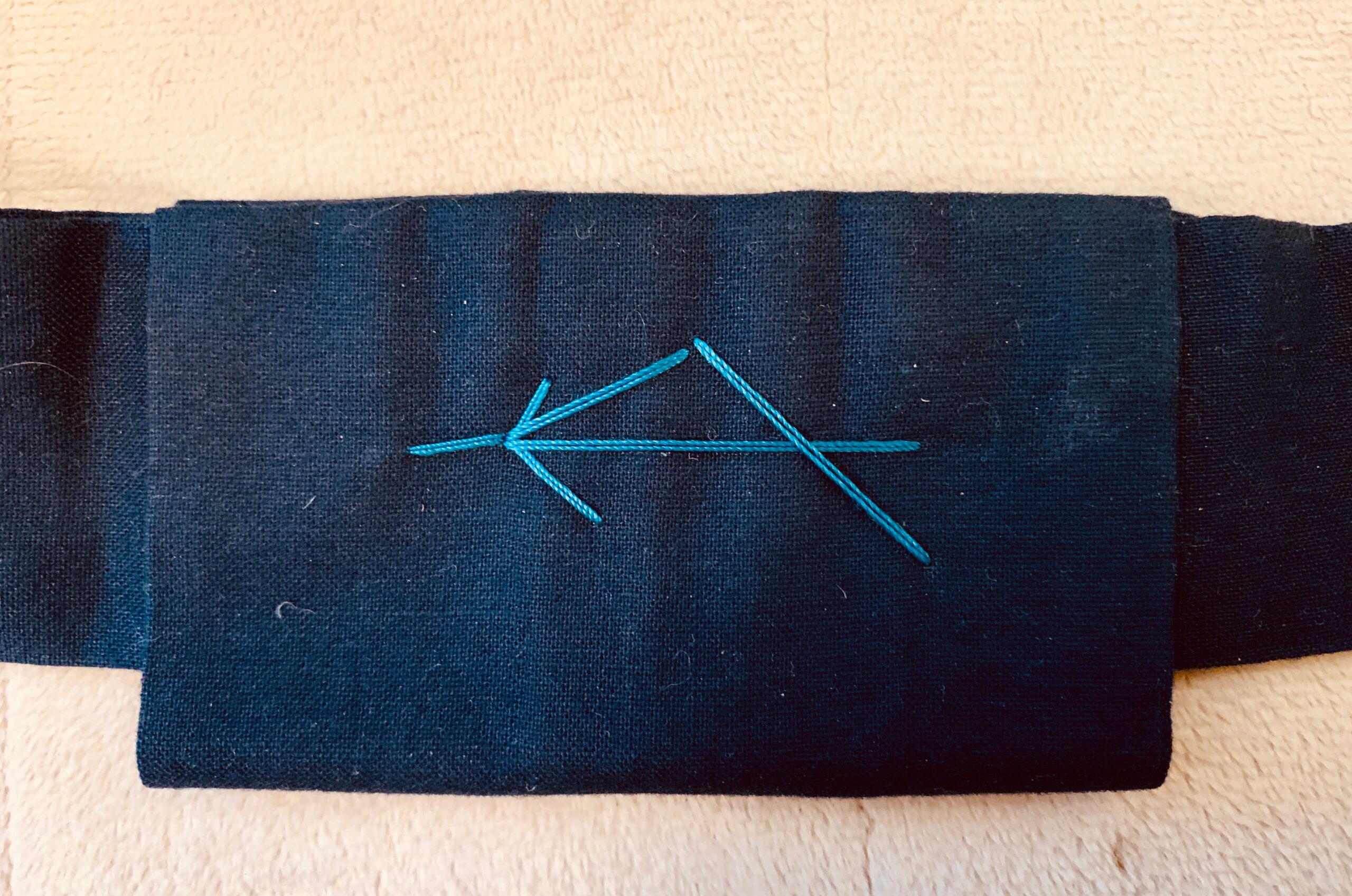
A year ago I knelt in a room that felt both ordinary and impossibly charged, and I received Jukai. On paper it was simple: a ceremony, vows, a rakusu, a name, a lineage document, a teacher’s hands moving with practiced care. But a year later, I can say plainly that what happened wasn’t a one-day event. It was a turning. It was a way of letting the dharma step out of books and talks and ideas, and step directly into my life—into my habits, my speech, my relationships, my private corners, and my very ordinary Tuesday afternoons.
When people ask what Jukai “means,” they often want an explanation that fits on a napkin. They want it to be either a graduation or a membership card: Now you’re officially a Zen Buddhist. Or they want it to be a kind of spiritual credential: Now you’re serious. But the older I get, the more suspicious I become of anything that can be captured in a slogan. If Jukai is real, it has to be real in the places where slogans fail—when I’m tired, when I’m irritable, when I’m afraid, when I’m lonely, when I’m certain I’m right, when I’m sure someone else is wrong. If it can’t meet me there, it’s just another nice day with incense.
A year later, what stands out most is not the romance of the ritual, but the quiet weight of it. Jukai did not make me pure. It did not make me calm. It did not make me wise. It did not edit my personality into something more agreeable. What it did—slowly, stubbornly—was make it harder to hide from myself. There is a strange mercy in that. I can still fail, of course. I do fail. But failing as someone who has taken vows is different than failing as someone who has only admired vows from a distance. Before, I could rationalize a hundred things and call it “being human.” Now, I’m still human, but the precepts stand there like a clear mirror. Not accusing. Not condemning. Just reflecting.
That, for me, is the real shift: the precepts have become a mirror rather than a measuring stick. Early on it’s easy to treat them as rules you either keep or break, as if the whole point is to rack up a perfect score. But a year of actual life has taught me that the precepts are less like a fence and more like a path through thick fog. They don’t exist to shame me. They exist to help me see. “Not killing” is not only about literal harm; it’s also about the ways I cut down living things with impatience, sarcasm, contempt, or the refusal to listen. “Not stealing” is not only about property; it’s about taking credit, taking time, taking attention, taking the last word, taking more than I need from a conversation. “Not misusing sexuality” is not a crude purity pledge; it’s a vow to treat bodies and hearts with reverence, to refuse manipulation, to refuse to make someone else’s desire or affection into my entitlement. The precepts, practiced sincerely, are not a set of spiritual handcuffs. They are a set of lamps.
And that has made my practice more intimate. Sitting is still sitting—breath, posture, wandering mind, returning again and again. But Jukai stitched a thread between the cushion and the rest of my day. It became harder to compartmentalize: This is my “Zen time,” and this is everything else. The rakusu hanging in my space doesn’t feel like decoration. It feels like a small, persistent question: What do you do now? How do you respond now? Are you willing to be awake here, too? Some days that question is comforting. Some days it is deeply inconvenient.
There is also a particular kind of humility that arrives after the ceremony glow is long gone. In the beginning, Jukai can feel like a peak experience. Then you discover that the mountain has weather. You still get sick. You still get stressed. You still have bad moods. You still carry old conditioning. You still step in it. And there’s a temptation—especially for earnest people—to turn that into secret shame: If I were really doing this right, I wouldn’t be like this. A year later I’m less interested in that kind of self-punishment. Jukai didn’t make me a saint; it made me accountable. And accountability, in the dharma sense, isn’t about self-hatred. It’s about confession and repair. It’s about returning. It’s about not using spirituality as a costume to hide a wounded heart.
I’ve also come to appreciate how communal Jukai really is. Even if the ceremony is small, even if the sangha is scattered, Jukai is not a private self-improvement project. It is a vow taken in the presence of others, and that means something. It means my practice isn’t only measured by my inner experiences—how peaceful I feel, how deep my meditation is, how inspired I am by a passage of Dōgen. It is also measured by how I show up. Do I keep my word? Do I speak truthfully and kindly? Do I make space for others? Do I practice right speech when it would be easier to perform cleverness? Do I admit when I’m wrong without needing to dramatize it? The sangha, for all its imperfections, is one of the places where vows become real. You can’t hide in community the way you can hide in ideas.
And then there’s the part I didn’t expect: grief and gratitude braided together. A year later I feel gratitude for having been allowed into this lineage stream—into something older than me, wider than my tastes, and far more patient than my ambitions. But I also feel grief for how often I want the dharma to be on my schedule. How often I want awakening to be efficient. How often I want practice to reward me for being sincere. Jukai doesn’t bargain with me that way. It simply hands me my life and says, Practice here. That can be maddening. It can also be the deepest relief.
If I had to name what Jukai has meant to me after a year, I’d say this: it has made my relationship with practice less romantic and more faithful. Less about inspiration, more about vow. Less about chasing experiences, more about learning how to live. Not perfectly—just honestly. And maybe that’s the point. Not to become “better” in a way I can brag about, but to become more available: to my own mind, to the people in front of me, to the suffering and beauty of this world, to the ordinary miracle of being able to choose—again and again—what kind of person I will be today.
A year later, I don’t feel like I “completed” Jukai. I feel like Jukai has begun completing me, in the slow way that vows do: one breath, one choice, one repair, one return at a time. I still wear the precepts awkwardly some days, like new clothing that doesn’t quite fit. But I keep putting them on. I keep sitting down. I keep bowing—not because I’m trying to prove anything, but because there is something here worth giving myself to.
This year has not made me certain about everything. It has made me more committed to the one thing that matters: to keep returning, and to let my vows shape the return.