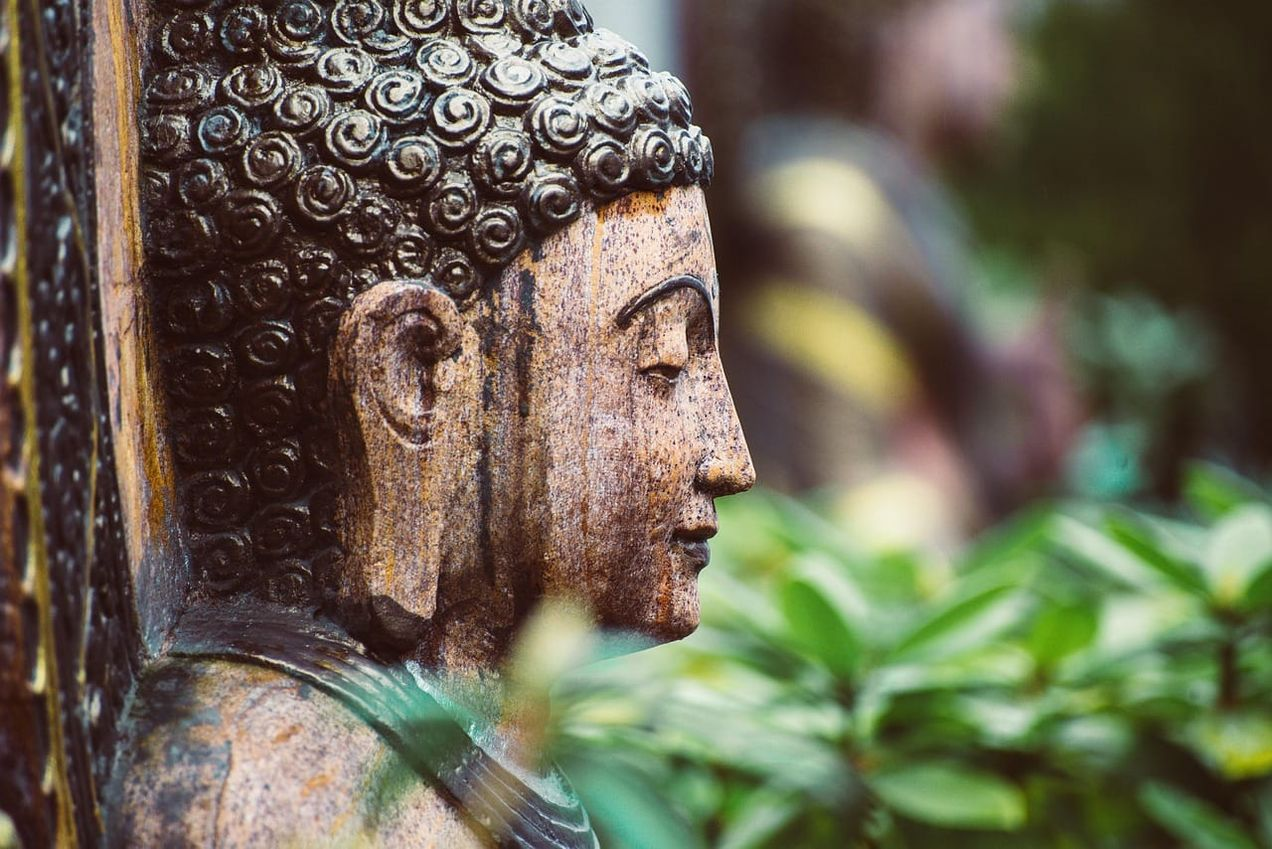
At first glance, humanism and Zen Buddhism may appear to come from very different worlds. Humanism is often described in modern, philosophical, and sometimes secular terms. It is concerned with human dignity, human flourishing, reason, compassion, ethical responsibility, and the improvement of life in this world. Zen Buddhism, on the other hand, comes from the Buddhist tradition, shaped by centuries of meditation practice, monastic discipline, paradoxical teaching, direct experience, and the relentless questioning of self, suffering, and reality.
Yet beneath the surface, humanism and Zen Buddhism meet in a remarkably deep way. They are not identical, but they often point in the same direction. Both turn us away from abstract speculation and toward lived experience. Both ask us to take responsibility for the life directly in front of us. Both are suspicious of empty dogma. Both place the transformation of the human being at the center of the path. In many ways, humanism and Zen are flip sides of the same coin: one begins with the dignity and potential of the human person, while the other begins by deconstructing the illusion of the separate self. But both arrive at a life of compassion, presence, humility, and responsibility.
Humanism begins with the human being. It says that this life matters. Human suffering matters. Human freedom matters. Human creativity, love, reason, and moral responsibility matter. Humanism does not look away from the world in search of a distant heaven or an abstract salvation beyond life. It asks how we can live better here and now. How can we reduce suffering? How can we create justice? How can we build meaningful lives? How can we become wiser, kinder, more honest, and more fully alive?
Zen Buddhism also begins here and now, but it approaches the matter differently. Zen does not begin with a doctrine about human greatness. It begins with direct experience. Sit down. Breathe. Look. What is this life before we explain it? What is the self before we defend it? What is suffering before we turn it into a story? Zen strips away our illusions, not because life is meaningless, but because life is too immediate, too intimate, and too sacred to be buried beneath concepts. Zen does not ask us to believe in human dignity as an idea. It asks us to wake up and experience reality so directly that compassion becomes unavoidable.
This is where the two traditions intersect most strongly: both are deeply concerned with suffering. Humanism sees suffering as something we are morally obligated to respond to. Hunger, injustice, loneliness, ignorance, cruelty, poverty, sickness, oppression, and despair are not merely spiritual metaphors. They are real conditions experienced by real people. A humanist approach says we must use reason, empathy, community, science, ethics, and social action to lessen suffering wherever we can.
Zen agrees that suffering is real, but it also looks closely at how suffering is constructed in the mind. We suffer because we cling. We suffer because we mistake impermanent things for permanent things. We suffer because we build an identity out of fear, craving, memory, resentment, ambition, and comparison. We suffer because we want reality to obey the self’s demands. Zen does not deny social or material suffering, but it insists that even when outward conditions change, the mind must still be understood. Without insight, we reproduce suffering again and again, even inside better circumstances.
This gives us two necessary dimensions of compassion. Humanism reminds Zen that hunger must be fed, injustice must be challenged, and suffering bodies must be cared for. Zen reminds humanism that the roots of suffering also live in greed, hatred, delusion, ego, fear, and attachment. Humanism turns compassion outward into ethical responsibility. Zen turns compassion inward into awakened perception. Together, they form a fuller response to the human condition.
Humanism and Zen also share a strong suspicion of dogma. Humanism resists the idea that moral truth must come from unquestioned authority, sacred decree, or inherited doctrine. It asks us to think, examine, test, revise, and take responsibility for our beliefs. A humanist does not accept something simply because a priest, scripture, institution, or tradition says it must be so. Truth must be lived, reasoned, tested against experience, and measured by its effect on human flourishing.
Zen has its own version of this same impulse. Though Zen exists within Buddhism, it has always had a fierce distrust of mere words and concepts. Zen teachings often point beyond scripture, beyond doctrine, beyond philosophical explanation. Not because teachings are useless, but because teachings are fingers pointing at the moon. The mistake is clinging to the finger and never seeing the moon. Zen asks: What do you actually know? What have you directly seen? What are you when the borrowed answers fall away?
In this sense, Zen is profoundly experiential. It is not anti-intellectual, but it refuses to let intellect become a substitute for awakening. Humanism says, “Do not surrender your mind to dogma.” Zen says, “Do not mistake your thoughts for reality.” These are not opposing statements. They are complementary warnings. One guards against external authority becoming tyranny. The other guards against internal narrative becoming illusion.
Another point of intersection is ethics. Humanism grounds ethics in human well-being, empathy, mutual responsibility, and the shared conditions of life. We do not need fear of divine punishment to know that cruelty harms. We do not need heavenly reward to practice kindness. We do not need supernatural command to recognize that honesty, compassion, justice, and responsibility make human life better. Humanism insists that morality belongs to us. It is something we must embody, not outsource.
Zen ethics arise from interdependence. When the illusion of the isolated self begins to soften, compassion becomes natural. If I am not separate from the world, then harming others is not merely a violation of a rule; it is a misunderstanding of reality. The hungry person, the grieving person, the enemy, the stranger, the tree, the river, the animal, the ancestor, the child not yet born — none of these are truly outside the field of my life. Zen does not simply command compassion. It reveals the delusion that made compassion seem optional.
Humanism says we should care because people matter. Zen says we care because there is no separate self standing outside the web of life. Again, these are two sides of the same coin. Humanism affirms the person. Zen dissolves the illusion that the person exists alone. Humanism protects dignity. Zen reveals interbeing. Humanism defends the human. Zen empties the ego. Both can lead to tenderness, humility, and responsibility.
This is especially important when thinking about the self. Humanism often emphasizes the value, freedom, and agency of the individual. This is necessary, especially in a world where people are often crushed by oppressive systems, rigid traditions, authoritarian religion, or social control. Humanism says the individual has worth. The individual has rights. The individual must not be sacrificed to superstition, tyranny, or collective cruelty.
Zen, however, challenges the individual at a deeper level. It asks: What is this “I” that wants to be defended? Is the self fixed? Is it independent? Is it permanent? Or is it a flowing process of body, memory, sensation, thought, relationship, and condition? Zen does not deny the person in a practical sense. It does not say we do not exist. Rather, it says we do not exist in the rigid, separate, self-contained way we imagine. The self is real enough to suffer, love, choose, and awaken, but not real in the absolute way ego believes.
This means humanism and Zen correct each other. Humanism prevents Zen from becoming cold, abstract, or dismissive of individual suffering. Zen prevents humanism from becoming ego worship, shallow individualism, or naive confidence in the rational self. Humanism says, “The person matters.” Zen says, “Do not turn the person into an idol.” A mature life needs both truths.
Both traditions also share a commitment to this world. Zen is sometimes misunderstood as world-denying, but true Zen is radically intimate with ordinary life. Washing the dishes, drinking tea, sweeping the floor, caring for the sick, sitting in silence, chopping vegetables, walking in the rain — these are not distractions from spiritual life. They are spiritual life. Zen does not require us to flee the world in order to find awakening. It asks us to wake up within the world.
Humanism likewise refuses to treat this life as a mere waiting room for another realm. This world is not disposable. Human lives are not practice objects for a future paradise. Our relationships, bodies, communities, ecosystems, and daily choices matter now. Humanism and Zen both reject the spiritual laziness that says the real meaning of life is somewhere else. The place of practice is here. The time of practice is now. The person in need is in front of us. The breath is this breath.
This shared emphasis on the present gives both humanism and Zen a practical spirit. Neither is satisfied with belief alone. A humanist who believes in compassion but does nothing for others has missed the point. A Zen practitioner who speaks beautifully about emptiness but remains selfish, cruel, or indifferent has also missed the point. The test is life. How do we treat people? How do we meet fear? How do we respond to suffering? How do we handle anger, grief, desire, uncertainty, and death? What kind of presence do we bring into the room?
Death is another place where humanism and Zen meet. Humanism often approaches death by saying: this life is precious because it is finite. We should not waste it. We should love deeply, think clearly, create meaning, and reduce suffering while we can. Death gives urgency to compassion. It reminds us that every human life is fragile and irreplaceable.
Zen also looks directly at death, but it does so by asking us to examine the self that fears death. What exactly are we afraid of losing? The body changes moment by moment. Thoughts arise and vanish. Identity shifts. The person we were at five, twenty, forty, or eighty is not fixed. Life is already a continuous appearing and disappearing. Zen does not necessarily remove grief, but it changes our relationship to impermanence. Death is not an interruption of life’s nature. It is one expression of it.
Humanism teaches us to cherish life because it ends. Zen teaches us to stop clinging to the illusion that anything was ever fixed. Humanism gives death moral urgency. Zen gives death existential clarity. Together, they help us face mortality without denial and without despair.
In the end, humanism and Zen Buddhism are not the same path, but they are deeply compatible. Humanism begins with the human need for dignity, freedom, compassion, and flourishing. Zen begins with direct awareness, the deconstruction of illusion, and awakening to reality as it is. Humanism builds an ethic of responsibility from the value of human life. Zen builds an ethic of compassion from the insight that no life exists separately.
One speaks in the language of humanity. The other speaks in the language of awakening. One protects the person. The other frees the person from clinging to the false self. One asks us to improve the world. The other asks us to see the world clearly. But a clear seeing that does not lead to compassion is incomplete, and a compassion that does not see clearly can become confused, sentimental, or ego-driven.
That is why humanism and Zen Buddhism can be understood as flip sides of the same coin. Humanism says: human beings matter, suffering matters, and we are responsible for one another. Zen says: look deeply, and you will see there is no separate self apart from the suffering and liberation of others. Humanism gives us the moral courage to act. Zen gives us the stillness and clarity from which wise action can arise.
Together, they form a path of awakened humanity: fully present, deeply compassionate, undogmatic, responsible, and rooted in this life. Not a flight from the world, and not a worship of the ego, but a clear-eyed devotion to becoming more human by awakening beyond the small self.