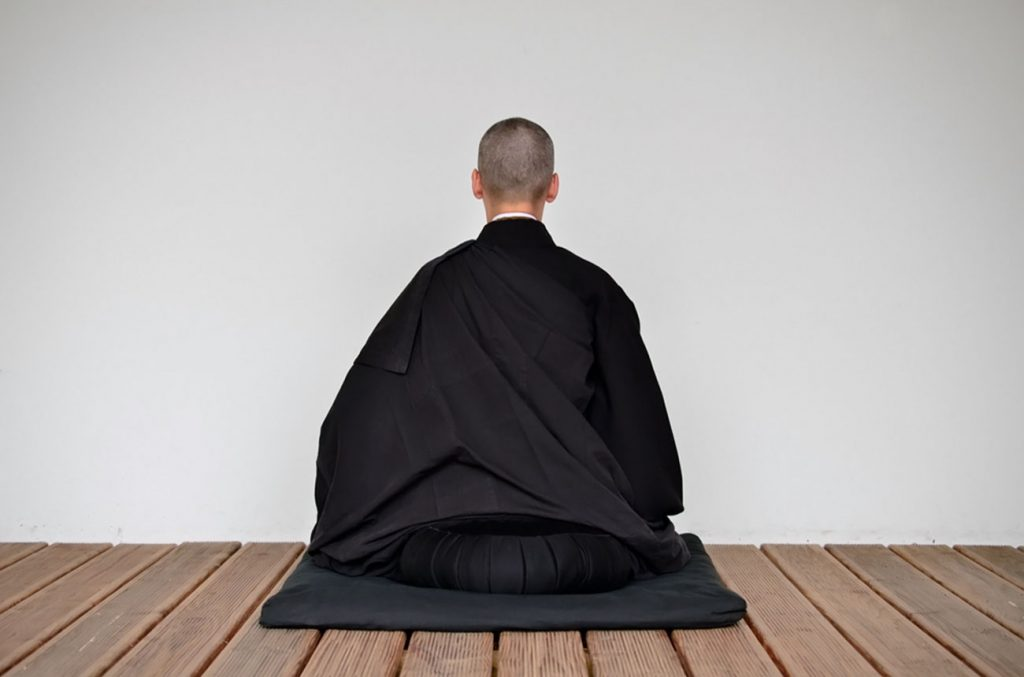
Consistency is the quiet power behind zazen. Not because Zen is a self-improvement program, and not because sitting every day earns you points with the universe, but because the mind we bring to the cushion is slippery, brilliant, and endlessly persuasive. It will give you good reasons to skip. It will tell you you’re too busy, too tired, too unworthy, too distracted, or not “spiritual enough” today. It will bargain: “Tomorrow I’ll sit longer.” It will dramatize: “This isn’t working.” And sometimes it will flatter you: “You’ve already got it.” Discipline in zazen is simply the refusal to negotiate with that voice. You sit anyway. You bow, you take your seat, you let the body settle, and you practice being unmoved by the mind’s weather.
In Zen, we don’t sit to manufacture special states. We sit to meet reality as it is—this breath, this ache in the knee, this swarm of thoughts, this dullness, this tenderness, this ordinary moment. The trouble is that we only want reality on our terms. We prefer it interesting, peaceful, meaningful, and rewarding. Consistency dismantles that preference. When you sit only when you feel like it, your practice becomes a kind of consumer spirituality: you’re shopping for a mood, a result, a confirmation. When you sit whether you feel like it or not, zazen stops being something you do and becomes something you keep—like a home you return to. The steady returning is the practice.
Discipline, in this sense, is not harshness. It’s devotion to what’s simple. It is choosing one small daily act over the endless hunt for novelty. Most of what makes zazen transformative is not dramatic insight; it’s the slow erosion of avoidance. You learn—over months, over years—that you can be bored without needing to fix boredom, restless without needing to obey restlessness, sad without turning sadness into a story, anxious without having to flee anxiety. That’s not glamorous, but it’s freedom. And it only becomes clear through repetition, the way a path appears in a field only because you keep walking it.
There’s also something very human we have to admit: we are trained by our conditions. If we practice only when life is calm, then zazen becomes dependent on calm. If we practice only when we have time, it becomes dependent on time. If we practice only when we’re inspired, it becomes dependent on inspiration. Consistency cuts the cord. It trains the body-mind to understand: sitting is not a luxury for ideal days—it is a way of being intimate with whatever day you actually have. Ten honest minutes on a chaotic morning can be deeper than an hour on a perfect retreat day, not because it feels better, but because it’s real practice: meeting the moment you’d rather avoid.
A consistent practice also protects you from the two classic traps: discouragement and ambition. Discouragement says, “I’m not getting anywhere, so why bother?” Ambition says, “I’m getting somewhere, so I should push harder.” Discipline answers both with the same response: sit. Not as a blunt command, but as a steadying gesture. Sit when it’s dry. Sit when it’s sweet. Sit when it’s dull. Sit when it’s luminous. Let practice be wider than your opinion about practice. Over time, this creates a kind of spiritual resilience: you stop needing the cushion to confirm you, and you stop using it to escape you.
None of this requires heroic effort. In fact, “heroic” usually burns out. The discipline that lasts is modest and kind: a regular time, a regular place, a minimum you can keep even on bad days. If you miss a day, you don’t spiral into guilt or grand recommitments—you just return. Zen is full of people who have learned that the real enemy isn’t failure; it’s the story we build around failure. Consistency is how we keep the story small. You miss a sit, you bow, you sit again. The practice continues.
And then, without fanfare, something shifts. The cushion becomes less a battleground and more a refuge—not a refuge from life, but a refuge within life. You begin to trust yourself in a new way: not because you feel strong, but because you keep showing up. Discipline becomes a form of compassion. Consistency becomes a vow you live with your body. Day after day, you practice the simplest thing: to stop running, to stop grasping, to stop making an argument with reality. You sit down, you breathe, and you let the day be the day. That is how the path is walked—quietly, repeatedly, and on purpose.