Zen is famous for a certain kind of iconoclasm. We tell stories about Bodhidharma staring at a wall. We repeat lines about “a special transmission outside the scriptures,” and we nod along when someone says practice is “dropping off body and mind.” If you’re drawn to Zen in the modern West, it’s often because you suspect that the trappings of religion—robes, chants, bowing, incense, forms—are exactly what you’re trying to get away from. You came looking for something clean, direct, and real.
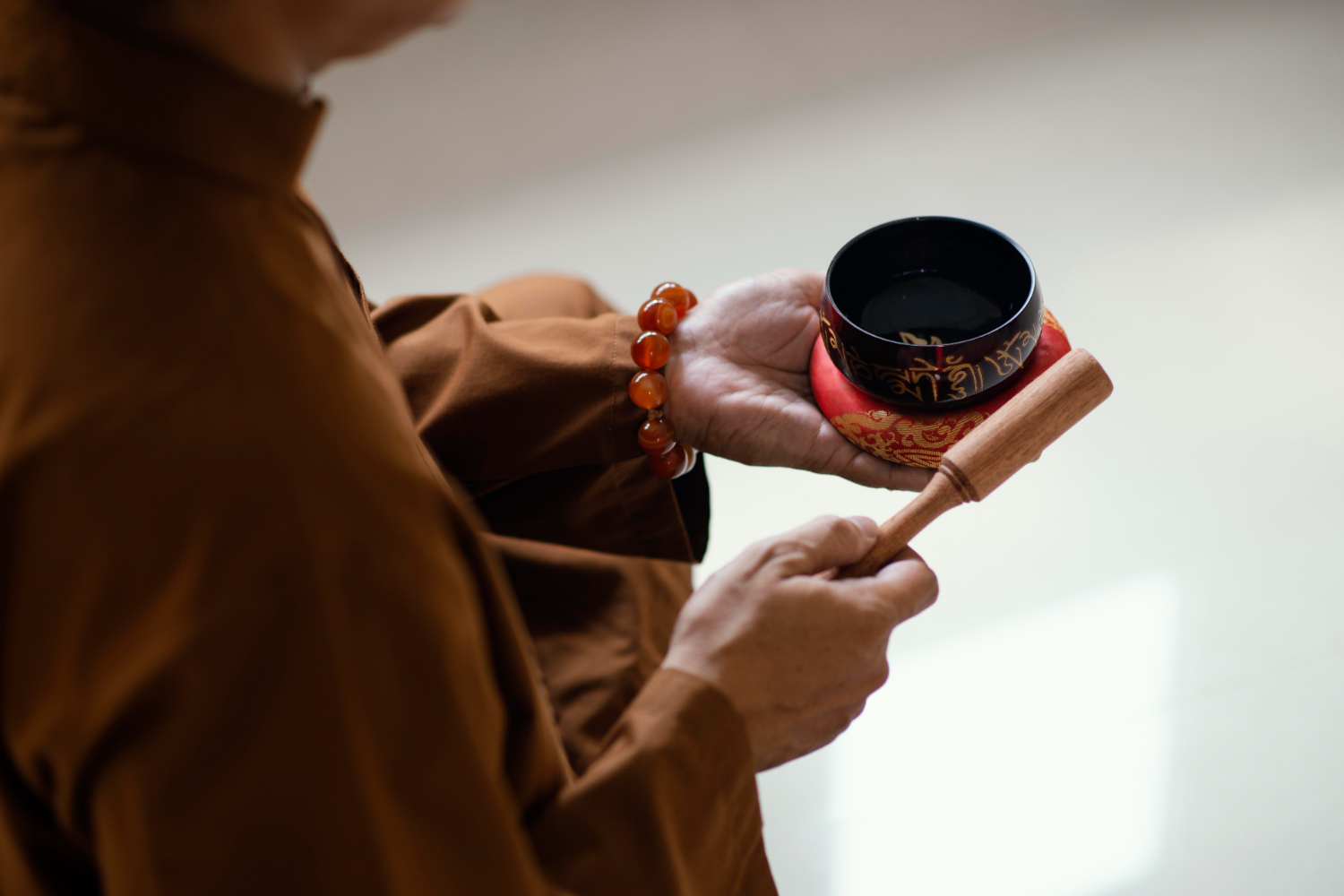
And then you walk into a zendō and find a schedule. You find bells, and chanting, and people bowing to the cushion, bowing to the room, bowing to each other. You find liturgy: the Heart Sūtra, the Four Vows, meal chants, dedications. You find ceremony: taking refuge, receiving precepts, memorial services, rites of repentance, festivals. Sometimes it’s beautiful. Sometimes it’s alien. Sometimes, if you’re honest, it feels like the very “form” Zen is supposedly dropping.
So why does it persist? If Zen is about emptiness, why do we keep doing all these very something things?
The simplest answer is that Zen never meant “get rid of form.” Zen meant “see through form”—and then inhabit form without being trapped by it. The drop is not a demolition; it’s a release. It’s the loosening of the compulsive grip that turns everything—ideas, identities, even spiritual practice—into something we cling to. When that grip loosens, forms don’t vanish. They become transparent. They become usable. They become alive. Ceremony and liturgy matter because they’re not a contradiction of Zen. They’re one of Zen’s most practical ways of teaching what Zen is actually pointing to.
A lot of modern people hear “emptiness” and imagine a kind of spiritual minimalism: strip the room bare, remove all symbolism, reduce practice to pure meditation, and you’ll finally have the real thing. But emptiness doesn’t mean “nothing exists.” It means nothing exists on its own, fixed and separate, immune to relationship. Everything is interdependent, contingent, relational—made of conditions. “Form is emptiness” is not an insult aimed at form; it’s a description of how form truly is.
When we misunderstand emptiness, we tend to make a new idol out of “formlessness.” We start clinging to the identity of being the person who doesn’t need rituals, the person who is beyond religion, the person who is too modern or too rational to bow. That’s still clinging—just clinging with better marketing.
Zen forms are meant to expose clinging in both directions. If you cling to tradition, the forms will reveal your tightness. If you cling to formlessness, the forms will reveal your aversion. Either way, the practice is the same: meet what’s here without grasping, without pushing away. Bowing is not worshiping an object; it’s practicing non-importance. Chanting is not magic; it’s practicing intimacy with language and breath without turning either into a self-project. The point isn’t “forms are sacred, never change them.” The point is “what happens in you when you meet them?”
Zen is not primarily a philosophy. It’s a training. And training happens in the body. You can understand interdependence intellectually and still live as if you’re the center of the universe. You can agree that “self is empty” and still spend your entire day defending an image of yourself. You can read about compassion and still snap at the person you love when you’re tired. That doesn’t make you a hypocrite; it makes you human. The body-mind learns through repetition, rhythm, and relationship—not just through insight.
This is where ceremony quietly does its work. When you bow, you interrupt the habitual posture of self-assertion. When you chant, you entrain breath and voice into a shared stream. When you follow a liturgy, you surrender the constant need to improvise your identity. The structure holds you long enough for something else to show up: steadiness, humility, gratitude, grief, devotion, resolve.
It’s not that Zen believes you can “perform” your way into awakening. It’s that the body has to be included. If we leave practice in the realm of private interior experience, we risk turning Zen into a lifestyle accessory—something we do to feel a certain way. Ritual drags practice out of the purely personal and back into the full human animal: hands, knees, voice, timing, attention, restraint. A bell doesn’t care about your opinions. It rings, and you return. Over and over, you return. That returning is the training.
Zen is not just a method for calming down. It is, at its heart, a vow-shaped life. We take refuge. We receive precepts. We recite bodhisattva vows. We dedicate merit. We repent. We begin again. These words aren’t there to make us sound religious. They’re there because life erodes intention. Your best insights fade. Your heartfelt commitments get buried under errands, stress, conflict, and the sheer velocity of modern life. Even sincere practitioners forget what they’re doing and why.
Liturgy is a way of remembering out loud.
When a community chants the Four Vows—however you phrase them—you’re not merely reciting poetry. You’re re-entering a moral and spiritual orientation. You’re saying, together, “This is the direction.” The vows don’t describe your current state. They describe your north star. They are deliberately larger than you. They are meant to break your heart open a little, the way a vast horizon does. Not to shame you—but to unshrink you.
Here in the West we often treat spirituality as self-improvement: become calmer, more productive, more resilient. Zen can certainly make you calmer and more resilient, but its deepest question is not “How do I optimize my life?” It’s “How do I live in a way that relieves suffering for beings—including the ones I don’t like—and that doesn’t abandon reality?” Vows keep that question close.
One of the most subtle dangers for Western Zen is the assumption that practice is primarily private: my sitting, my insight, my healing, my journey. Community becomes optional—nice if it fits your schedule, unnecessary if it doesn’t. But Zen is relational all the way down. You can sit alone and practice sincerely, yes. Yet the sangha is not just a support group. It is one of the places where the fiction of separateness gets challenged in real time. Other people interrupt your preferences. They reveal your impatience. They ask you to be considerate. They don’t revolve around you. This is not a flaw in sangha; it’s part of the medicine.
Ceremony is a concentrated form of that relational practice. Moving together, chanting together, bowing together, holding silence together—these are not aesthetic extras. They train a community in synchronization without coercion, in unity without erasing difference. You learn how to belong without disappearing, and how to stand alone without isolating. Even very simple rituals—entering the room, acknowledging the space, beginning and ending practice intentionally—teach something our culture is starving for: the ability to share attention. In a distracted age, shared attention is a kind of compassion.
Human beings have always used ritual for a reason: there are experiences that don’t fit in ordinary speech. Grief, awe, gratitude, remorse, reconciliation, the trembling wish to live differently—these things can be spoken about, but they are not fully handled by discussion. We need containers. We need gestures that let the heart speak without turning everything into analysis.
Zen ceremonies are often simple, and that simplicity is part of their power. Lighting incense. Offering a bow. Chanting a dedication for the sick. Participating in a memorial service. Receiving precepts. These are ways of saying: “This matters.” Not in the abstract, but in the body, in time, in community.
And notice what ritual does in moments of difficulty. When your life is falling apart, it can be hard to meditate. It can be hard to read. It can be hard to think straight. But you can often still bow. You can still chant a few lines. You can still light a candle and offer a name. This is not childish. It’s human. It’s a way of keeping the path close when the mind is overwhelmed.
There’s another reason liturgy and ceremony still matter: they’re tools. They were designed—over centuries—to do something.
A common Western mistake is to imagine that forms are either sacred relics you must preserve exactly, or meaningless cultural artifacts you should discard. Zen’s own attitude is often more pragmatic. The question becomes: does this form help awaken practice here and now? Does it cultivate attention, humility, compassion, and steadiness? Does it support ethical life? Does it help a sangha cohere? Does it point beyond itself?
If the answer is yes, keep it. If the answer is no—or if the form is harming people—then it must be examined, adapted, or let go. This is not disrespect; it’s fidelity to the purpose. The point of a boat is to cross the river. You don’t worship the boat. You also don’t sneer at it while you’re still in midstream.
This is also why Zen can “become more Western” without dissolving into pure individualism. A Western Zen community can translate chants into accessible language. It can simplify ornate procedures. It can be trauma-informed and consent-aware. It can avoid authoritarian theater. It can teach the meaning behind forms instead of demanding blind compliance. All of that is adaptation. But adaptation is not the same thing as abandonment.
The deeper function remains: forms train the heart-mind, not by argument, but by enactment.
Of course, none of this means ceremony is automatically good. Ritual can become empty in the more ordinary sense: rote, performative, status-driven. It can become a way to hide from real practice. It can become a shield for hierarchy. It can become aesthetic addiction—Zen as vibe.
But that critique isn’t a reason to discard liturgy. It’s a reason to wake up inside it.
The danger is not form; it’s unconsciousness. Unconscious meditation is just daydreaming. Unconscious chanting is just noise. Unconscious bowing is just calisthenics. The invitation is to bring practice into the forms so the forms can bring practice into you.
A good teacher doesn’t treat ritual like a test of loyalty. They treat it like a language. At first you’re just learning the alphabet. You stumble. You feel awkward. You don’t know what you’re “supposed” to feel. Then, gradually, it becomes a way of speaking—sometimes quietly, sometimes powerfully—about what is most real. If you stay with Zen long enough, you may notice that ceremony begins to work on you in ways you didn’t anticipate.
It teaches patience: the willingness to do what needs to be done without demanding novelty.
It teaches modesty: the willingness to be one person among many, not the star of the show.
It teaches reverence: not for objects, but for the immediacy of life and the reality of suffering.
It teaches responsibility: the sense that practice is not only about your inner state, but about how you show up in relationship.
It teaches continuity: the feeling that your little life is connected to something older and wider than your preferences.
And in a world that constantly tells you to curate your identity, ritual teaches a gentler truth: you don’t have to invent yourself every morning. You can step into a practice that has held countless people through fear, joy, grief, boredom, and love. You can let it hold you, too—without surrendering your discernment, without giving up your Western mind, without pretending to be Japanese.
If you want a simple, grounded approach—one that respects Zen’s directness without turning ceremony into a stumbling block—try this:
Don’t ask first, “Do I like this?”
Ask, “What does this train?”
When you bow, notice what resists. Is it embarrassment? Defiance? Fear of looking foolish? Past religious trauma? A need to be in control? Bowing doesn’t need to be forced, but it can be informative. It shows you where you tighten.
When you chant, don’t strain to “believe” the words. Treat chanting as practice in attention, breath, and intention. Let the meaning be a companion, not a doctrinal demand. If a line bothers you, don’t immediately discard it—hold it up to the light. Ask why. Then, if your community revises language, do it carefully and openly, as practice, not as branding.
And most of all: let forms be forms. Don’t inflate them into superstition, and don’t flatten them into mere culture. Use them the way Zen uses everything—directly.
Zen does not ask you to become less human. It asks you to become more intimate with being human—without the constant self-obsession that makes us brittle. Liturgy and ceremony matter because they give your intimacy a shape. They teach the body. They carry vows. They weave community. They make room for what can’t be reduced to explanation.
Dropping away doesn’t mean leaving the world behind. It means letting the world arrive without the extra weight of “me and mine” sitting on top of it.
In that spirit, Zen ceremony is not a contradiction. It’s a kind of gentle proof. You can bow and be free. You can chant and not be trapped. You can light incense and still know emptiness. You can honor forms without clinging to them, and you can adapt forms without despising what came before.
And perhaps, in a time when so much feels disposable, it’s worth saying plainly: some things deserve to be done carefully, together, on purpose.