Most people don’t arrive at Zen looking for ceremonies. They arrive because something in life has become loud enough that they need a different kind of listening. They sit down, they follow the breath, they discover the mind’s restlessness, and they discover—sometimes quietly, sometimes with a jolt—that there is also a steadiness underneath it all. Over time, the practice stops being an experiment and starts feeling like a home. And that is usually when the question of ceremony appears, not as a demand but as a natural human impulse: how do I mark this turning? How do I name the moment when Zen is no longer just something I do, but something I belong to?
In some Zen communities—especially those that offer a clear “practice path” with distinct thresholds—you may encounter two ceremonies that can look similar from the outside but carry a different inner weight: Sanbō Tokudō (often named Kie Sanbō Tokudō, “taking refuge in the Three Treasures”) and Jukai (sometimes framed as Jukai Tokudō, “receiving the precepts”). The names are not universal, and the details vary widely by lineage, teacher, and local culture. That variety matters, because Zen is both deeply traditional and remarkably adaptive. What matters more than terminology is the intention the sangha is holding: one ceremony is often offered as a simple, formal recognition of refuge—I am choosing this path—while the other is often understood as a deeper vow—I am choosing to be shaped by this path in conduct, speech, and relationship.
A helpful place to begin is with a gentle honesty: Zen does not require you to take vows in order to sit. You can practice wholeheartedly without ever formally receiving anything. And yet, it is also true that, for many practitioners, a ceremony becomes meaningful precisely because it makes practice public and embodied. You don’t just feel devoted; you speak devotion aloud. You don’t just admire the precepts; you take them into your own mouth as vows. That is why ceremonies endure: not because Zen needs paperwork, but because human beings need a way to say, “This matters enough that I am willing to be seen.”
Kie Sanbō Tokudō is typically presented as a refuge-centered ceremony. “Kie” is often explained as devotion or taking refuge; “Sanbō” is the Three Treasures—Buddha, Dharma, Sangha. In communities that use this form explicitly, it is described quite plainly as a ceremony that accepts a student as a Zen Buddhist through taking refuge in the Three Treasures.
If you’ve practiced for a while, you may recognize the human moment this ceremony meets. At first, practice can feel like something you try on—like learning an instrument or joining a gym. You go because it helps. You’re curious. You don’t want to overcommit. But eventually the practice starts to work on you in a deeper way. You notice you’re less interested in “getting something out of meditation” and more interested in living from what meditation reveals. Refuge is the moment you stop circling the edge and step in—not dramatically, not dogmatically, but sincerely.
That sincerity often carries a quiet relief. A refuge ceremony says, in effect: I don’t have to keep shopping for the perfect path. I can practice here. I can let this tradition teach me. For some people, that is precisely what they want to mark: not a moral overhaul, not a new identity, but a simple, grounded recognition that they have chosen a direction. And because it is “basic” in the best sense—simple, foundational—Sanbō Tokudō is often treated as a formal recognition of becoming a Buddhist (or a Zen Buddhist) in that community, without implying anything about rank, purity, or spiritual achievement.
Many communities also connect refuge with a broad ethical aspiration—often expressed in language that echoes the Three Pure Precepts: refraining from harmful action, cultivating good, and living for the benefit of beings. You’ll sometimes see this explicitly tied to Kie Sanbō definitions in Zen glossaries and practice-path descriptions. The point here isn’t to overwhelm someone with rules. It’s to name the obvious truth that refuge isn’t merely an inward feeling. If we take refuge in awakening, we also begin—imperfectly, gradually—to live in a way that protects awakening.
It can help to say this out loud, because many people carry religious bruises. Refuge can sound like conversion. Zen tends to mean something gentler and more practical: refuge is trust. Trust in the possibility of waking up. Trust in the teachings as a compass. Trust in community and lineage as supports that keep us honest. Dōgen, writing within the Soto Zen tradition, treats taking refuge in the Three Treasures as a fundamental beginning-point of the Buddha Way.
And so, for many practitioners, Sanbō Tokudō becomes a ceremony of belonging—a way of saying, “I’m no longer just visiting. I’m practicing from the inside.”
If Sanbō Tokudō often feels like a clear, simple threshold, Jukai is often experienced as a deeper crossing. “Jukai” is commonly glossed as “to receive the precepts,” and many Zen centers describe it as an initiation into the Zen Buddhist community in which one formally receives vows and often receives symbols of connection such as a rakusu, a dharma name, or lineage documentation—though the exact details vary.
In many Zen lineages, particularly those influenced by Soto forms, Jukai is connected with receiving the Sixteen Bodhisattva Precepts, which are commonly organized as the Three Refuges, the Three Pure Precepts, and the Ten Grave Precepts. This “sixteen” structure is presented plainly in many Zen teaching materials and precepts pages. Zen Mountain Monastery, for example, lays out the Sixteen in exactly this way, beginning with refuge, then the Three Pure Precepts, then the Ten Grave Precepts. San Francisco Zen Center likewise frames the Sixteen as an essential part of Zen practice, taken not only in ordinations but also in other contexts and renewed regularly in ceremonies.
This is one reason Jukai is often seen as “more”: it does not merely affirm refuge; it explicitly binds refuge to an ethical life that reaches beyond the obvious. The first five of the Ten Grave Precepts will look familiar to anyone who knows the classic Five Precepts—non-harming, non-stealing, sexual responsibility, truthful speech, and avoiding intoxicants that cloud the mind. But the Ten also press into the subtler territory where sanghas—and relationships, families, workplaces—actually fracture: gossip and slander, self-exaltation at the expense of others, withholding and grasping, ill will, disparaging the Three Treasures. You can live without murdering anyone and still do immense damage with contempt, factionalism, or spiritual superiority. The additional precepts are Zen’s way of saying, gently but firmly: we will practice where it really counts.
In practice, Jukai is often preceded by a period of reflection and study, and it frequently includes some form of repentance verse or confession. In Zen this is not meant to create shame. It’s meant to cultivate a sane relationship with the truth: we acknowledge harm, we acknowledge delusion, and we vow to return. That vow to return is the real engine of precepts practice. The ceremony is not a declaration that you have become morally flawless; it’s a declaration that you are willing to be taught by your failures without hiding.
Many communities also link Jukai with receiving a rakusu—a small “mini-robe” symbolizing the Buddha’s robe—and with receiving a dharma name. Upaya Zen Center describes Jukai as a rite signified by receiving a rakusu, a symbolic robe worn in zazen, acknowledging a commitment to take up the Buddha Way as articulated in precepts of non-harming. Other sanghas similarly describe Jukai as a lay ordination ceremony in which one may receive a rakusu, dharma name, and lineage paper, making the connection to the living family of practice explicit.
All of that can feel “more,” not because it confers spiritual superiority, but because it carries a particular kind of accountability. When someone takes Jukai, they are often saying: I am willing to let Zen shape my conduct, not just my interior life. For people who have practiced for years, that can feel like the natural next vow—less a promotion, more a deepening.
Given that Jukai often includes refuge anyway, why do some communities offer Sanbō Tokudō as a distinct earlier ceremony?
Because people ripen differently.
Some people have a clear, steady love for Zen early on. They want to say “yes” to this path without feeling pressured to make promises they don’t yet understand. For them, a refuge ceremony is not a half-measure; it’s an honest one. It lets them acknowledge what is true—this is my path—without pretending they can already live the precepts with maturity.
Others come with complicated histories. If someone has been harmed by dogmatic religion, the idea of “precepts” can sound like returning to a moralistic system where you are always failing, always judged. A refuge ceremony can be a gentle bridge: it tells the nervous system that this is not coercion. It is choice.
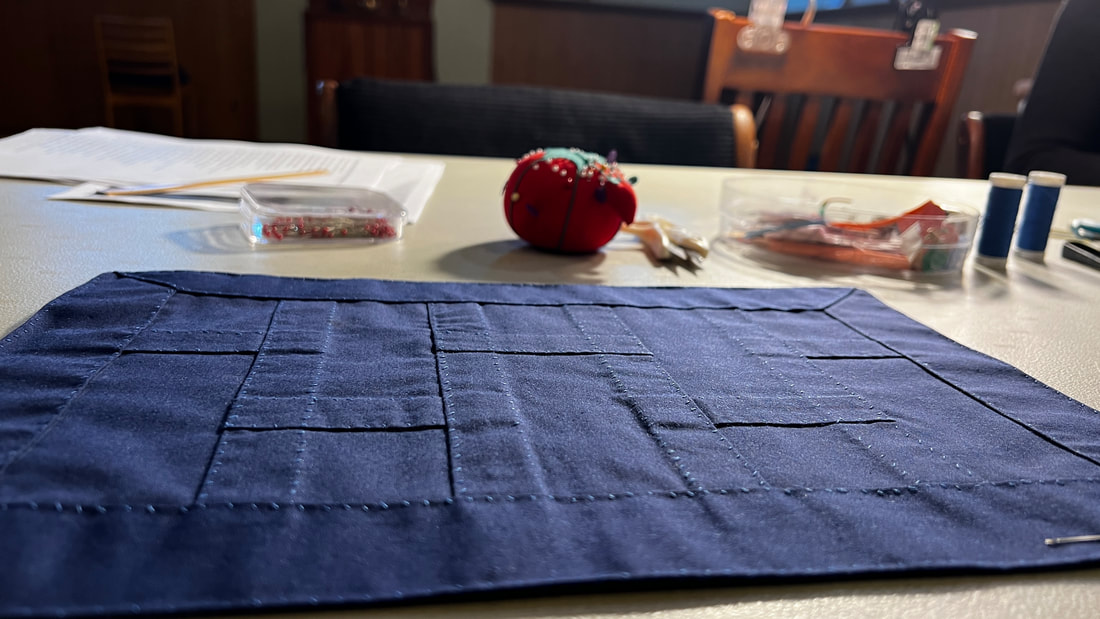
And for some people, the difference is simply practical: Jukai often involves more preparation—classes, reflection, sewing a rakusu in some lineages, one-on-one conversations with a teacher, learning the ceremony forms. Some sanghas want a clear on-ramp that says, “You can formally join us in refuge now, and you can take up the longer precepts training when you’re ready.” Bright Way Zen, for example, speaks of practicing for years before sewing a rakusu and receiving Jukai and a dharma name, while also noting that the formality and sequencing of these steps differs across Western Soto lineages.
In this way, Sanbō Tokudō can function as a clean, foundational threshold, while Jukai is held as a deeper vow—“something more”—not in status, but in scope.
One reason these conversations get tangled is that the word tokudō is used differently. In Soto contexts, tokudō is often used for ordination, and some communities distinguish between shukke tokudō (home-leaving/priest ordination) and zaike tokudō (lay ordination). Some Western teachers and sanghas speak of Jukai as a form of lay ordination, sometimes even saying “the correct name for Jukai is zaike tokudō”—“staying at home and entering the way.” Other organizations and practice-path documents use “zaike tokudō” in their own ways as well.
Rather than trying to force one universal meaning onto the terminology, it’s usually more useful to ask one grounded question: What changes after this ceremony in this sangha? Does anything change besides your own vow? Are there new responsibilities, expectations, or roles? Or is it primarily a public declaration of commitment and ethical training?
Zen is a tradition of forms, but it’s also a tradition of realism. The labels matter less than the lived vow.
If you’re discerning which step fits you—or if you’re simply trying to understand why a sangha offers both—it can help to frame the two ceremonies in the language of the heart rather than the language of achievement.
Sanbō Tokudō often answers the question: Where do I turn when I am lost? It gives you a home base. It says, “Buddha, Dharma, Sangha—this is where I return.” It can feel like becoming a Buddhist because it is the moment you stop hovering outside the gate.
Jukai often answers a different question: How will I live this, in the places where my ego is most clever? It takes the refuge vow and extends it into speech, sexuality, money, power, resentment, and the quiet ways we hurt each other. It can feel like “something more” because it asks for more honesty, more repair, and more willingness to be shaped over time.
And it is worth saying plainly: people sometimes take refuge and never take Jukai, and their practice is deep and sincere. People sometimes take Jukai and later realize they need to renew it again and again, because vows are not trophies; they are living commitments. Some Zen communities formally renew the precepts regularly for that reason.
In the end, both ceremonies—when they are healthy—are not about becoming impressive. They are about becoming trustworthy. Trustworthy to yourself, trustworthy to others, trustworthy to the Way you say you love. Not perfect. Not polished. Just willing to return.