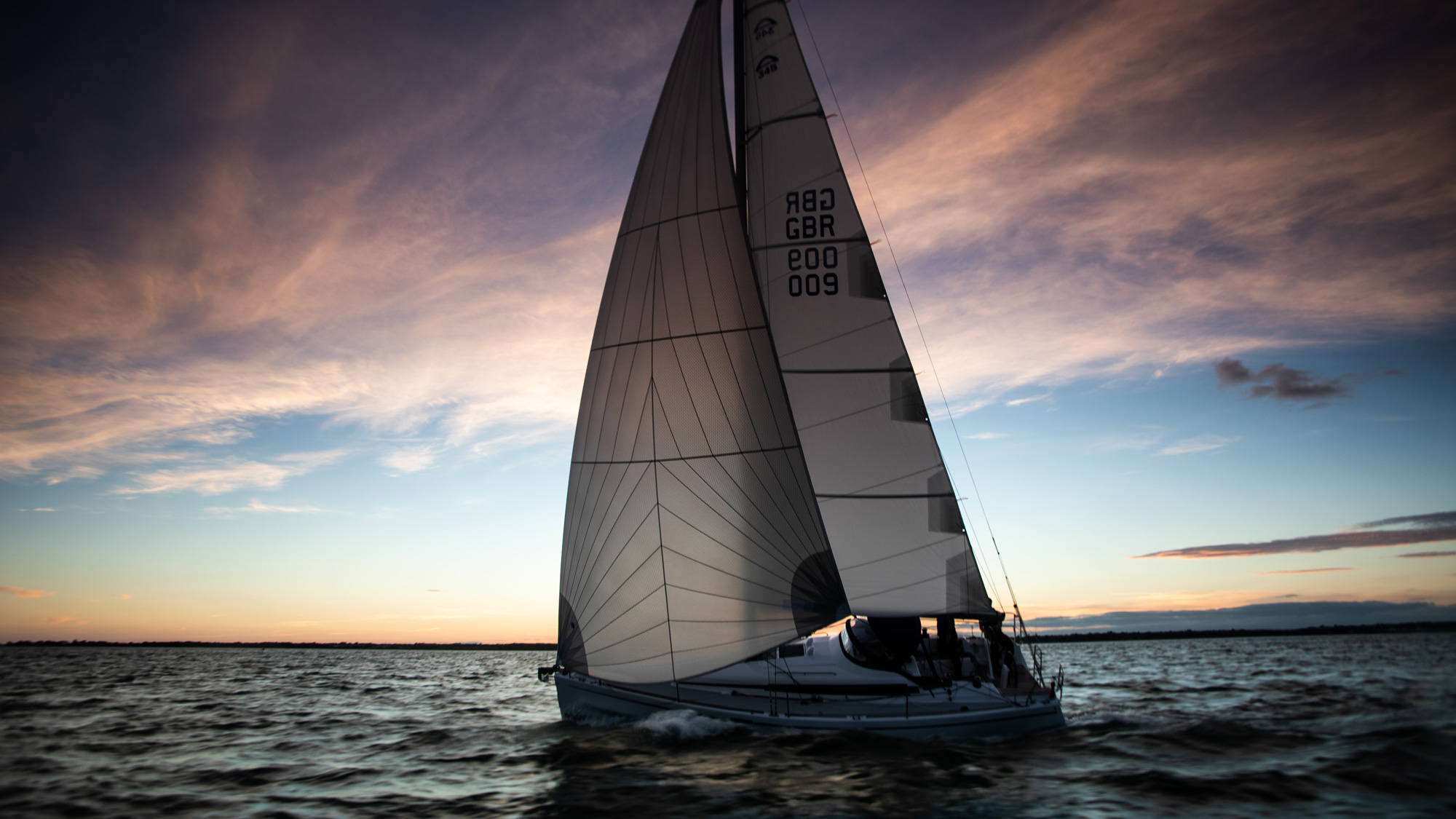
Sailing has its own language. At first, that language can seem strange, old-fashioned, and even a little intimidating. A sailor does not simply say “front,” “back,” “left,” and “right.” Instead, the front of the boat is the bow, the back is the stern, the left side is port, and the right side is starboard. A rope may not be called a rope once it has a job aboard the boat; it becomes a line, a sheet, a halyard, or a dockline depending on how it is used. The wind does not simply come “from over there”; it determines whether the boat is close-hauled, on a beam reach, running, tacking, or jibing.
For the new sailor, this can feel like learning a foreign language. In a way, it is. Sailing terminology developed over centuries, shaped by practical necessity. On a boat, clear words matter. When the wind rises, the boat heels, sails flap, waves build, and several people need to act quickly together, there is no time for vague directions. If a skipper says, “Ease the main,” “Ready about,” or “Watch the boom,” everyone aboard needs to understand what that means. Sailing language is not just tradition; it is a tool for safety, teamwork, and seamanship.
The good news is that sailing terminology becomes much easier once you understand that most of it is practical. The words describe parts of the boat, directions aboard the boat, how the sails are controlled, how the boat moves in relation to the wind, and what the crew should do during maneuvers. You do not need to memorize everything at once. A new sailor can begin with a small set of essential terms and build from there through experience on the water.
The most basic place to start is with the boat itself. The bow is the forward end of the boat. The stern is the aft, or rear, end. When you are facing forward toward the bow, the left-hand side is port and the right-hand side is starboard. These terms stay the same no matter which way you are facing. That is why sailors use them instead of left and right. If someone is looking aft while another person is looking forward, “left” and “right” can become confusing. Port and starboard do not change.
The centerline of the boat runs from bow to stern. Anything toward the center of the boat may be described as inboard, while anything toward the outside may be called outboard. Moving toward the bow is moving forward. Moving toward the stern is moving aft. The widest part of the boat is called the beam, and when something is beside the boat, roughly at a right angle to the centerline, it is said to be abeam.
The lower main body of the boat is the hull. On many sailboats, beneath the hull is a keel or centerboard, which helps the boat resist sideways drift and provides stability. The rudder is the underwater steering surface, usually located near the stern. It is controlled by a tiller or a wheel. The cockpit is the area where the crew usually sits and controls the boat. The deck is the top surface of the boat, and the cabin, if the boat has one, is the enclosed space below or partly below deck.
The sails are the engine of a sailboat. The most important sail on most boats is the mainsail, usually attached to the mast and boom. The mast is the vertical spar that supports the sails. The boom is the horizontal spar attached to the bottom of the mainsail. It swings from side to side as the sail changes position, which is why new sailors are often warned to watch their heads. A smaller sail set forward of the mast is commonly called a jib. If that forward sail is larger and overlaps the mast, it may be called a genoa. A large, lightweight downwind sail is often called a spinnaker.
The edges and corners of a sail also have names. The forward edge is the luff. The back edge is the leech. The bottom edge is the foot. The upper corner is the head. The forward lower corner is the tack, and the aft lower corner is the clew. These terms may seem overly specific, but they help sailors understand how a sail is set, trimmed, repaired, reefed, or adjusted.
Lines control the sails. A halyard is a line used to raise or lower a sail. The main halyard raises the mainsail; the jib halyard raises the jib. A sheet is a line used to control the angle of a sail to the wind. The mainsheet controls the mainsail. The jib sheets control the jib. To trim a sail means to pull in the sheet and bring the sail closer to the centerline of the boat. To ease a sail means to let the sheet out, allowing the sail to move farther away from the centerline.
One of the most important ideas in sailing is that the boat is always moving in relation to the wind. The side of the boat facing the wind is the windward side. The side away from the wind is the leeward side. If the wind is coming over the starboard side of the boat, the boat is on a starboard tack. If the wind is coming over the port side, the boat is on a port tack. These terms are especially important for right-of-way rules and for understanding how the boat will behave.
Sailors also describe the boat’s course by its point of sail, meaning the angle between the boat’s direction and the direction of the wind. When a boat is sailing as close to the wind as it can, it is close-hauled. When the wind is coming over the forward quarter of the boat, the boat is on a close reach. When the wind is coming directly from the side, the boat is on a beam reach. When the wind is coming from behind at an angle, the boat is on a broad reach. When the boat is sailing with the wind almost directly behind it, it is running.
A sailboat cannot sail directly into the wind. The area too close to the wind for the sails to work is called the no-sail zone or irons. If a boat points too directly into the wind and loses forward motion, it may be said to be in irons. To travel toward a destination that lies upwind, a sailboat must sail a zigzag course, turning its bow through the wind from one tack to the other. This maneuver is called a tack or tacking. Before tacking, a skipper may call, “Ready about?” The crew prepares, and once ready, the boat turns through the wind.
The opposite kind of turn is a jibe or gybe, where the stern of the boat passes through the wind. Jibing is often done while sailing downwind. Because the boom can swing across the boat quickly and with force during a jibe, it requires attention and care. A controlled jibe is a normal sailing maneuver. An accidental jibe can be dangerous, especially in stronger wind.
Another important term is heeling. A sailboat heels when the wind pushes against the sails and causes the boat to lean. Some heel is normal and expected. Too much heel may mean the boat is overpowered, the sails are trimmed too tightly, or there is too much sail up for the wind conditions. Sailors can reduce heel by easing the sheets, changing course, moving crew weight, or reducing sail area.
Reducing sail area is called reefing. To reef the mainsail means to make it smaller so the boat is easier to control in stronger wind. Reefing is not a sign of weakness or poor sailing. Good sailors reef early when conditions call for it. A comfortable, balanced boat is usually faster and safer than one being overpowered by too much sail.
Sailors also use terms to describe whether the sails are working properly. When a sail is trimmed correctly, it fills smoothly with wind. If the sail flaps, it is said to be luffing. Luffing may happen because the boat is pointed too close to the wind or because the sheet is eased too far. Small pieces of yarn or ribbon attached to the sail, called telltales, help show airflow across the sail. Telltales are simple but valuable guides for learning how to trim sails well.
Docking and anchoring bring another set of terms. A boat is secured to a dock with docklines. The line from the bow is a bow line, and the line from the stern is a stern line. Spring lines help keep the boat from moving forward or backward along the dock. Fenders are cushions placed between the boat and the dock to prevent damage. An anchor holds the boat in place away from the dock, and the line or chain connecting the boat to the anchor is called the rode.
Even basic commands aboard a sailboat have specific meanings. “Come about” means the boat is going to tack. “Ease the sheet” means let the sail out. “Trim the sheet” means pull the sail in. “Head up” means turn closer toward the wind. “Bear away” or “fall off” means turn away from the wind. “Man overboard” is an emergency call meaning someone has fallen into the water and immediate recovery action is needed.
For new sailors, the goal is not to sound salty or old-fashioned. The goal is to communicate clearly and understand what is happening aboard the boat. Sailing terminology gives names to the forces, equipment, movements, and decisions that make sailing possible. Once you know the language, the boat begins to make more sense. You start to see how the hull, sails, lines, wind, and crew all work together.
The best way to learn sailing terminology is to connect each word with a real action. A halyard makes sense when you use it to raise a sail. A sheet makes sense when you feel the sail fill as you trim it. Windward and leeward become obvious when spray hits one side of the boat and the sail draws on the other. Tacking, jibing, reefing, luffing, and heeling are not abstract vocabulary words; they are lived experiences on the water.
Every sailor begins as a beginner. No one steps aboard already knowing all the terms, traditions, maneuvers, and judgments that seamanship requires. The language of sailing is learned one word, one line, one sail, and one outing at a time. What seems confusing at first soon becomes familiar. Before long, the new sailor who once wondered why sailors did not simply say “left” and “right” begins instinctively saying “port” and “starboard,” not because it sounds nautical, but because it works.
Sailing terminology is the doorway into seamanship. It helps new sailors understand the boat, communicate with the crew, respond to the wind, and participate safely in the life of the vessel. Learn the words patiently, use them often, and let experience give them meaning. The more you understand the language, the more confidently you will move aboard, and the more deeply you will begin to understand the art and craft of sailing.