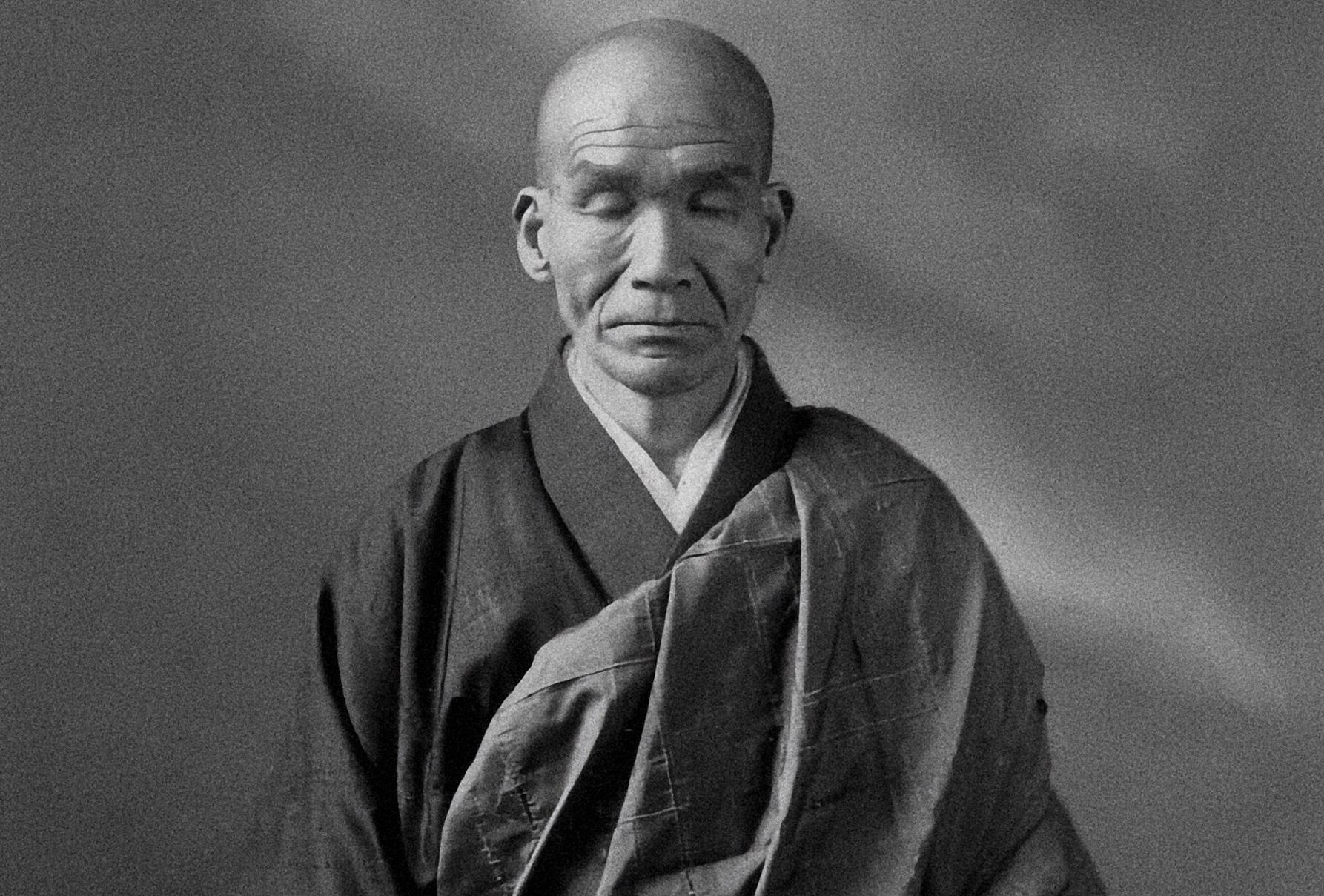
When you first hear the word priest, it’s almost impossible not to import a whole set of assumptions from other religions. In the West especially, “priest” tends to mean a professional religious specialist: someone set apart, invested with sacramental authority, tasked with mediating between ordinary people and God. So when someone walks into a Zen center and sees robes, bows, incense, chanting, and a person called “priest,” the mind naturally reaches for the closest familiar template.
That template will mislead you.
A Zen Buddhist priest is not primarily a spiritual “higher-up,” and not a necessary intermediary between you and awakening. A Zen priest is, at heart, a vowed practitioner who has been trained and entrusted to help carry the forms, teachings, and care of the sangha forward—so that practice can be lived, not merely discussed.
Priesthood in Zen isn’t a promotion
In Zen, priesthood is not a guarantee of realization, not a badge of being a “better Buddhist,” and not a certificate of spiritual superiority. It’s closer to a vow-shaped life—making practice public, accountable, and service-oriented. If you want a simple way to hold it: priesthood is less “I have attained something” and more “I have agreed to be responsible for something.”
That responsibility includes preserving the practice forms that support awakening, caring for the community that gathers around those forms, and continually submitting oneself to training and correction. In healthy communities, priesthood is not a pedestal; it’s a set of obligations.
Not a mediator, not a gatekeeper
One of the biggest differences between Zen priesthood and priestly roles in many theistic religions is the question of mediation. In traditions where clergy are understood as necessary channels of grace—authorized to confer sacraments, absolve sins, or act as official intermediaries—priesthood can function like a spiritual gate.
Zen doesn’t work that way.
Zen practice points again and again to direct seeing: Buddha-nature is not owned by an institution and not dispensed by clergy. No one “hands you” awakening. No one can do your sitting for you, digest your life for you, or meet impermanence on your behalf. The priest’s role is not to stand between you and reality; it is to help protect the conditions in which you can meet reality yourself.
That’s why Zen priesthood can look paradoxical from the outside. Zen insists on emptiness, non-attainment, and the dropping away of self—yet it also maintains precise forms, rituals, and lineage. The forms are not there to mystify you or control you. They are there to steady the mind, harmonize the group, and make practice workable in real human life. The priest is not the owner of those forms; the priest is their steward.
A different kind of authority
Zen does have authority structures—teachers, preceptors, lineages, training roles—but the ideal foundation of authority is not “power over souls.” It is practice and accountability. A priest is someone who has been trained in a tradition, entrusted by a teacher and lineage, and recognized by a community as capable of helping hold the practice container.
This authority is supposed to look like trustworthiness more than charisma: steadiness in conduct, emotional maturity, humility, follow-through, ethical clarity, and the willingness to be corrected. A priest’s credibility is not meant to come from titles or robes, but from how they show up when things are difficult—conflict, grief, community strain, their own mistakes.
That doesn’t mean Zen communities are immune to ego, dysfunction, or abuse of authority. They are not. But Zen has a built-in critique of spiritual inflation: the constant returning to beginner’s mind, the emphasis on not-knowing, the insistence that words and roles are secondary to lived embodiment, and the relentless exposure of self-deception through practice.
So what does a Zen priest actually do?
In a Zen Buddhist community, the priest is often the person who helps make the practice real and sustainable. Not by being “more spiritual,” but by taking responsibility for the structure that supports practice.
That can include leading zazen periods, offering instruction to beginners, and guiding forms in the zendo—how to enter, bow, walk, chant, and sit. It often includes liturgy and ceremony: chanting services, refuge and precepts ceremonies, memorials and funerals, house blessings, and the many simple rituals that help a community mark time, loss, joy, and transition.
It also includes the unromantic work: organizing schedules, maintaining practice space, training doan and ino roles, welcoming newcomers, handling logistics, mediating conflicts, maintaining boundaries, and safeguarding the health of the sangha. In other words, the priest helps hold the container so the sangha can practice without the whole thing collapsing into improvisation, personality, or chaos.
And then there is pastoral care, which often surprises people. Zen is sometimes sold as “just meditation,” but communities are made of human lives—illness, divorce, addiction, death, depression, crises of meaning, and long seasons of doubt. A Zen priest is often called to sit beside people in those seasons, not as a therapist, but as a presence trained in non-avoidance: someone who can stay close to suffering without needing to fix it, preach at it, or run away.
What it takes to become a Zen priest
The path differs by lineage, but generally it begins with years of committed practice as a layperson: steady zazen, participation in retreats, study, and active involvement in sangha life. Priesthood is not meant to be a shortcut into belonging; it usually grows out of belonging that has already proven itself over time.
Training typically includes learning and embodying forms: chants, services, bowing, temple etiquette, the rhythm of practice periods, and the “how” of Zen life that you only learn by doing it. There is study too—sutras, Zen ancestors, basic Buddhist teachings, ethics, and often the historical and cultural context of Zen traditions.
But the most important training is not merely knowledge. It is formation. You are trained to be reliable. You are trained to be corrected without collapsing or retaliating. You are trained to see your own mind not as an abstraction but as a living field of habit—especially in leadership, where your blind spots become everyone else’s problem.
This is one reason Zen priesthood is not “a better Buddhist.” It is often a more exposed Buddhist.
Does priesthood make you a better practitioner?
Not automatically.
It can deepen practice because it removes certain forms of escape. You can’t always practice only when it feels good. You can’t always vanish when you’re discouraged. You can’t always reshape the Dharma into a private self-improvement project. You have obligations—to liturgy, to the sangha, to your teacher, to the vows themselves—and those obligations can become a powerful kiln that matures practice.
But the robe can also become armor. The role can become identity. The community can project holiness onto someone who is still human, still vulnerable, still capable of harm. That’s why healthy Zen priesthood must include humility, transparency, clear ethical standards, and community accountability. The vow is not “I am above you.” The vow is “I will continue to train.”
Why the commitment?
Because the Dharma doesn’t survive on inspiration.
Many people practice earnestly for a time, then life swells: work, family, illness, grief, boredom, distraction, the slow erosion of intention. Priesthood is one way a person says: I will build a life that does not depend on my moods. Practice becomes the spine of the day, not the accessory.
It’s also a way to let practice stop being only personal. If practice is always “for me,” it can become another possession: my peace, my insight, my identity as a spiritual person. Priesthood tilts the axis outward. You take on the responsibility to help others practice, and that will inevitably challenge your preferences, your comfort, and your story about yourself.
East and West: one term, different realities
Here we need to be honest about context. “Zen priest” in Japan, Korea, China, or Vietnam can mean something shaped by centuries of temple culture and social expectation. Training pathways may be clearer, temple roles more established, and community relationships with clergy more culturally assumed. In many places, priesthood may also be intertwined with family temple life, institutional roles, and long-standing systems of formation.
In the modern West, Zen arrived as a transplant. Many communities are relatively young, financially modest, and built largely by volunteers. Western priests often train while holding jobs, raising children, and living in lay society. Some do residential training; many do not. “Temple life” may exist, but it is often smaller, less culturally supported, and more improvised.
So the Western Zen priest can become a kind of hybrid: part ritual leader, part organizer, part caretaker, part translator of Asian forms into Western culture, part guardian against two opposite dangers—discarding the forms too quickly because they feel foreign, or fetishizing them because they feel exotic.
At the same time, Western Zen has been forced—sometimes painfully—to develop modern approaches to things older temple cultures often handled more privately: power dynamics, boundaries, trauma awareness, consent, and institutional accountability. This is not a matter of East “bad” and West “good.” It’s simply the reality that Zen in the West has had to learn how to be a religion in a new cultural ecosystem, under a bright light, with different expectations and different vulnerabilities.
What you should expect from a Zen priest
If you are new to practice, here is the most useful way to relate to a Zen priest: not as someone who stands between you and truth, but as someone tasked with helping you meet truth directly.
A good Zen priest will teach you forms without making you feel stupid. They will correct you without humiliating you. They will take practice seriously without becoming rigid. They will embody reverence without becoming theatrical. They will be human without making their humanity your burden. And when they make mistakes—as all humans do—they will repair them plainly.
They will point you back to your own practice again and again: back to the breath, the posture, the precepts, the daily life where the Dharma is either alive or it isn’t.
The heart of the role
So what does it mean to be a Zen Buddhist priest?
It means taking vows to carry something larger than your personal spiritual journey. It means preserving a practice stream so others can drink from it. It means showing up reliably, training continually, and serving quietly—often without applause—because awakening is too important to be left to whim.
If you remember nothing else, remember this: Zen priesthood is not about being higher. It is about being bound—to practice, to community, and to the vow to keep the Dharma alive in this world.