Equanimity is often misunderstood as emotional distance, passivity, or detachment from life. To some, the still mind appears cold. To others, silence looks like withdrawal. But in Buddhist practice, and especially in Zen, equanimity is not the refusal to care. It is the ability to care without being consumed. It is the capacity to love without clinging, to grieve without being shattered, to rejoice without becoming intoxicated by joy, and to meet life fully without being thrown endlessly from one extreme to another.
Equanimity does not ask us to become stones. It asks us to become clear water.
A person who mistakes equanimity for indifference may say, “Nothing matters.” But this is not the Buddha’s way. The Buddha did not teach that suffering is unreal, that love is meaningless, or that the world should be ignored. He taught that suffering arises, that suffering has causes, that suffering can cease, and that there is a path of practice leading beyond bondage to suffering. This is not indifference. It is profound concern. Buddhism begins not with apathy, but with compassion.
To be equanimous is not to turn away from the cries of the world. It is to hear them without being drowned by them.
In ordinary life, we often confuse caring with agitation. We think that if we are not anxious, we do not care. If we are not angry, we are not serious. If we are not overwhelmed, we are not loving enough. But this is one of the great confusions of the untrained mind. Anxiety is not compassion. Rage is not wisdom. Panic is not love. These states may arise naturally, and we need not hate ourselves for having them, but they are not the highest form of caring. They are often signs that the mind has become entangled.
Equanimity allows compassion to become effective. When the mind is frantic, we react. When the mind is still, we respond. The difference is enormous. Reaction comes from fear, habit, ego, memory, wound, and impulse. Response comes from presence. A still person can act more clearly because they are not merely defending themselves from discomfort. They can see what is needed. They can speak when speech is useful, remain silent when silence is wiser, and act without needing to turn the action into a performance of self.
This is why equanimity belongs together with love. Without equanimity, love easily becomes possession. We cling to those we love and call it devotion. We fear losing them and call it care. We try to control their lives and call it protection. We demand that they remain who we need them to be and call it loyalty. But love rooted in grasping becomes suffering for both lover and beloved. Equanimity does not lessen love. It purifies it.
To love with equanimity is to love another being as they are, not merely as an extension of oneself. It is to wish for their freedom, not only their nearness. It is to care for their well being without believing we own their path. This kind of love is not weak. It is stronger than possessive love because it does not collapse when life changes. It can bless, release, forgive, mourn, and continue.
Nor does equanimity mean the rejection of joy. There is a strange suspicion among some practitioners that spiritual maturity must be solemn. But Zen is not a gray path. The sound of rain, the warmth of tea, the laughter of a child, the color of autumn leaves, the quiet companionship of a friend, the satisfaction of honest work, the taste of simple food after hunger—these are not obstacles to awakening. They are life itself.
The problem is not joy. The problem is clinging to joy.
When joy comes, we may receive it fully. We may smile, laugh, dance, sing, embrace, celebrate, and give thanks. Equanimity does not forbid delight. It only teaches us not to demand that delight remain forever. A flower is beautiful because it blooms. It is also beautiful because it fades. The awakened heart does not refuse the flower because it will die. It receives the flower completely, without pretending it can possess it.
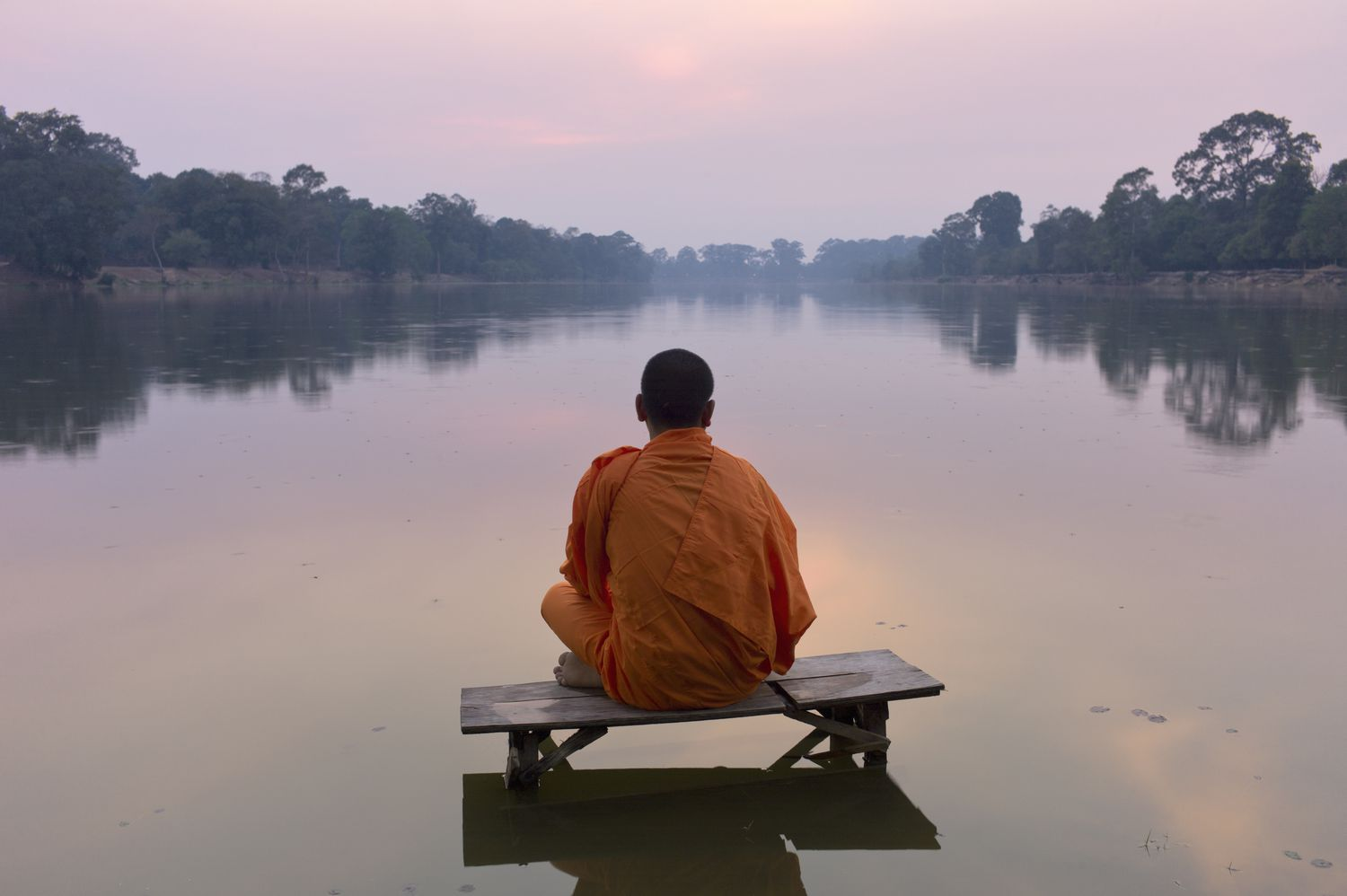
This is also the heart of stillness. Stillness is not the death of feeling. It is the settling of turbulence. A pond filled with waves cannot reflect the moon clearly. When the pond becomes still, the moon appears. The moon was not created by the stillness; it was always there. In the same way, compassion, wisdom, and joy are not manufactured by practice. They are revealed when the mind stops thrashing.
Silence works in the same way. Silence is not emptiness in the negative sense. It is not the absence of life. It is the space in which life can finally be heard. Much of our ordinary speech is defensive. We explain ourselves, justify ourselves, entertain ourselves, distract ourselves, and reinforce the fiction of a solid separate self. In silence, this machinery begins to slow. We begin to notice what is beneath our opinions, beneath our stories, beneath our constant reaching outward.
At first, silence may feel like deprivation. Then it becomes a mirror. Eventually, it becomes a gate.
Through stillness and silence, the practitioner begins to see the movements of the self. Desire arises. Fear arises. Irritation arises. Memory arises. Pride arises. Grief arises. Joy arises. None of these need to be hated. None need to be worshiped. They arise, remain for a time, and pass away. The practitioner learns to see without immediately becoming what is seen. This is the beginning of freedom.
Equanimity is this freedom in the midst of arising and passing away.
Satori, awakening, is not found by rejecting human life. It is not found by becoming numb, superior, or untouched. The Zen path does not ask us to float above the world like a ghost. It asks us to wake up within this very world. Chopping wood, carrying water, washing dishes, comforting the grieving, enjoying a meal, holding the hand of someone we love, sitting in silence, walking beneath the trees—this is the field of awakening.
Equanimity allows us to live in the world without being owned by the world. Stillness allows us to act without being driven by compulsion. Silence allows us to hear without immediately imposing ourselves on what is heard. Satori is not somewhere else. It is the clear seeing of this moment before the mind divides it into gain and loss, self and other, success and failure, sacred and ordinary.
This does not mean that the awakened person never feels pain. The Buddha grieved. Zen masters aged, became ill, lost friends, endured hardship, and died. Practice does not remove impermanence. It removes our illusion that impermanence is a personal insult. Things change because all conditioned things change. What is born will die. What is gathered will scatter. What is praised will be criticized. What is pleasant will pass. What is painful will also pass.
Equanimity is the mind that knows this and still loves.
Indeed, only such a mind can love deeply. When we deny impermanence, we love anxiously. When we accept impermanence, we love gratefully. We no longer waste the present moment trying to secure eternity. We no longer demand that life become fixed before we allow ourselves to enter it. We understand that the person before us is changing, that we are changing, that this moment will never come again. And because of that, we are more present, not less.
Equanimity is not a wall around the heart. It is the strength of the open heart.
The indifferent person says, “I do not care what happens.” The equanimous person says, “I care deeply, but I will not let fear, grasping, or hatred decide my actions.” The indifferent person withdraws from responsibility. The equanimous person enters responsibility with clarity. The indifferent person avoids pain by avoiding love. The equanimous person accepts that love includes vulnerability, and still chooses love.
This distinction matters. Without it, spiritual practice can become avoidance disguised as wisdom. A person may say, “I am detached,” when they are merely afraid. They may say, “I am peaceful,” when they are unwilling to confront injustice, grief, intimacy, or change. They may say, “I am beyond desire,” when they have only buried desire beneath spiritual language. True equanimity does not hide from life. It meets life directly.
The test of equanimity is not whether we can sit quietly when nothing is happening. The test is whether we can remain present when life touches us.
Can we love without trying to possess? Can we lose without becoming bitter? Can we succeed without becoming arrogant? Can we fail without collapsing into shame? Can we experience joy without clinging to it? Can we experience sorrow without making an identity from it? Can we act firmly without hatred? Can we rest without guilt? Can we be silent without being absent?
These are the living questions of practice.
Zen stillness is not escape from the river of life. It is learning to sit so completely that the river may flow without sweeping us away. The stone in the river does not deny the water. It feels the water constantly. Over time, the river shapes the stone, and the stone remains itself. This is not resistance in the hard sense. It is presence. Life moves, touches, wears, polishes, and reveals. The practitioner does not need to chase every current. Nor does the practitioner need to flee the river. Sitting still, they are shaped by reality.
Equanimity, then, is not the opposite of love. It is love freed from panic. It is joy freed from clinging. It is grief freed from despair. It is action freed from ego. It is silence freed from withdrawal. It is stillness freed from avoidance. It is the spaciousness in which life can be fully received.
To practice equanimity is to become intimate with the world without being enslaved by it. To practice stillness is to become steady enough to see clearly. To practice silence is to become quiet enough to hear what is true. To awaken is not to abandon the human heart, but to discover its original vastness.
We can care. We can love. We can laugh. We can mourn. We can work, create, serve, protect, celebrate, and embrace the fleeting beauty of this world. And we can do all of this while walking the path of equanimity.
The lotus does not bloom by rejecting the mud. It blooms through the mud, unstained by it.
So too the practitioner does not awaken by rejecting life. The practitioner awakens by entering life completely, without clinging, without hatred, without illusion, and without turning away. This is equanimity. This is stillness. This is silence. This is the open gate to satori.