- The Art and Science of Keeping a Reef Aquarium at Home
- The Physics of Light in Reef Aquariums
- The Chemistry of Seawater: Understanding the “Big Three” and Beyond
- The Nitrogen Cycle — Not What You Learned in School
- Microbiomes of the Reef Tank: The Invisible World Running Everything
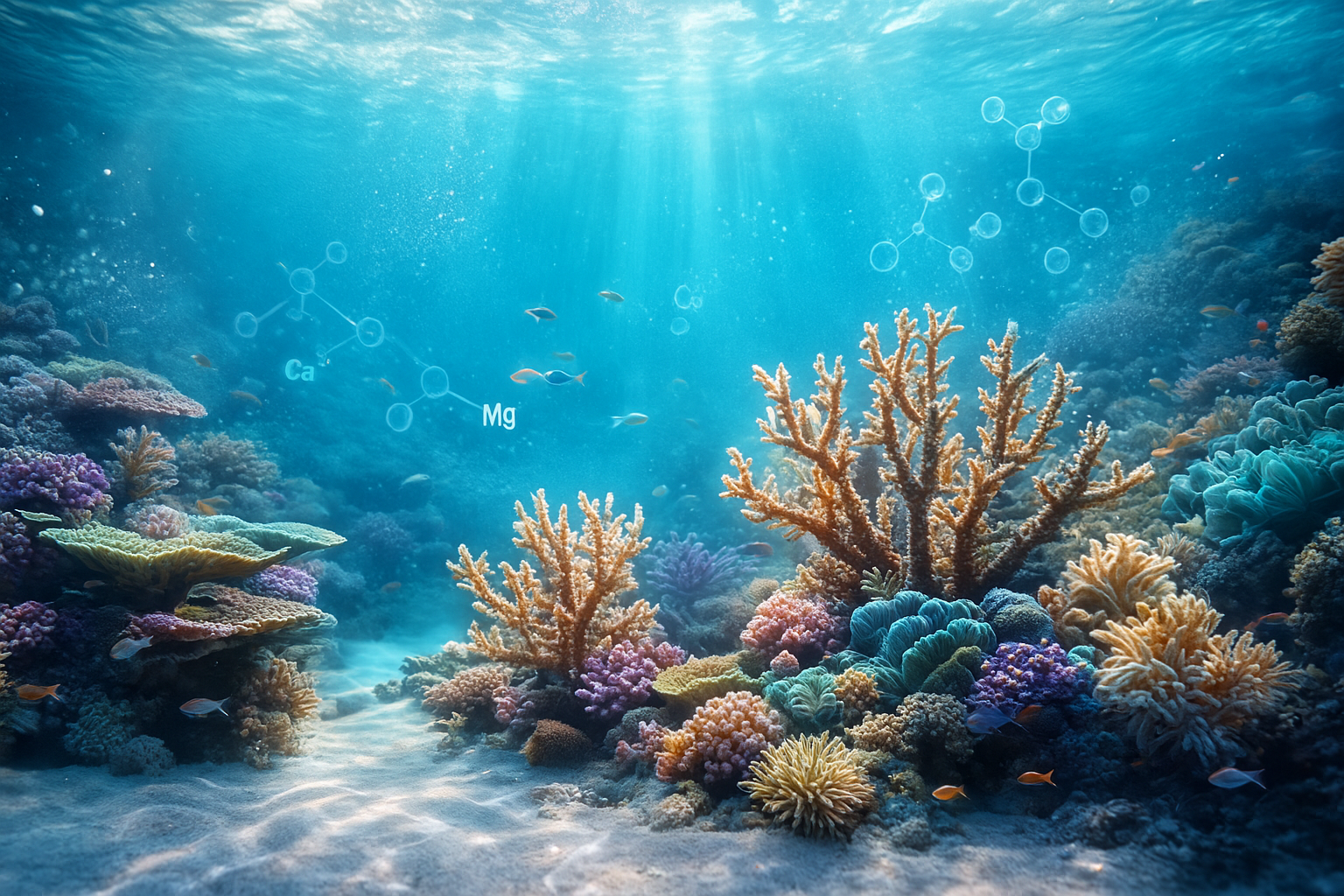
On the surface, a reef tank looks like a living tapestry of color and movement — corals unfurling their polyps, fish weaving through branching structures, subtle gradients of light shimmering across the sand. But beneath that beauty lies an invisible architecture: the chemistry of seawater. It is the foundation upon which every coral skeleton is laid, every photosynthetic reaction fires, and every biological process unfolds.
Marine aquarists quickly discover that saltwater isn’t simply freshwater with some salt added. It is a finely tuned chemical system, evolved over millions of years, and the ocean itself is astonishingly stable. Corals have adapted to that stability with a kind of biological rigidity. Their internal chemistry expects consistency, and when the water around them fluctuates, even slightly, their cellular machinery strains to compensate.
This article explores the core chemistry of a reef tank — the interactions of alkalinity, calcium, and magnesium, the deeper carbonate system that governs pH, the broader ionic balance of seawater, and how salt mixes shape all of these factors. More importantly, it explains why understanding chemistry matters far more than obsessing over numbers on a test kit.
The “Big Three”: Alkalinity, Calcium, and Magnesium
The backbone of reef chemistry is built around three major parameters. They are often tested together, often dosed together, and always consumed together — but their relationship runs deeper than simple co‑use. Each parameter directly influences the chemical behavior of the others because all three participate in the same biological and mineralization pathways. When corals pull carbonate from the water to build their skeletons, they simultaneously consume alkalinity and calcium, and the entire process is stabilized by the presence of adequate magnesium. Changes in one parameter can therefore shift the equilibrium of the others, sometimes subtly and sometimes dramatically. This interconnectedness is why the Big Three must be understood not as separate numbers, but as a single, dynamic chemical system that underpins coral health and reef stability.
1. Alkalinity — The Backbone of Coral Growth
Alkalinity is the measure of the water’s ability to neutralize acids — practically, it tells us how much bicarbonate (HCO₃⁻) and carbonate (CO₃²⁻) is available. These ions are the raw materials corals use to build their skeletons, and they lie at the heart of the carbonate system that defines seawater chemistry. When a coral grows, it doesn’t passively wait for carbonate to find calcium; instead, it actively pumps protons (H⁺) away from the calcification site to shift the chemical balance toward carbonate availability. This localized manipulation of chemistry is only possible when the surrounding water has sufficient alkalinity to buffer these reactions.
Because corals constantly consume bicarbonate and carbonate during calcification, alkalinity declines every hour of every day in a living reef tank. SPS corals, coralline algae, clams, and even some bacterial processes all draw from this same reservoir, making alkalinity one of the most rapidly depleted parameters in a mature system.
Alkalinity also serves a second, equally critical role: it stabilizes pH by resisting the natural tendency of dissolved CO₂ to convert into carbonic acid (H₂CO₃). Without enough alkalinity, this acidification pathway accelerates, pH begins to swing more dramatically, and the carbonate system becomes increasingly unstable. Such instability not only stresses corals but also alters how bicarbonate and carbonate distribute in the water, making calcification more difficult and energetically expensive for the organisms that rely on it.
Typical Target: 7.5–9 dKH (degrees of carbonate hardness) for stability, depending on coral type.
Natural Seawater: ~7 dKH.
Why Reef Tanks Often Run Higher Alkalinity Than Natural Seawater
It may seem counterintuitive that reefkeepers commonly target 8–9 dKH, even though natural seawater averages ~7 dKH. If the goal is to replicate the ocean, why not match it exactly? The answer lies in the fundamental differences between a closed aquarium and the vast, stable chemistry of the ocean.
The ocean’s alkalinity is incredibly stable. It does not swing by half a degree of hardness in a day — often not even in a month. In contrast, a reef tank is a small, high‑demand chemical environment where corals consume alkalinity far more rapidly and where CO₂ levels fluctuate constantly due to human activity.
Running alkalinity slightly higher than NSW creates a buffer against daily consumption and instability, reducing the risk of sudden drops that could stress corals. Higher dKH also supports the accelerated calcification rates seen in aquariums, where corals are often exposed to stronger lighting, heavier feeding, and optimized flow compared to natural reefs. In these high‑energy systems, elevated alkalinity ensures corals have a consistent supply of carbonate ions even during peak growth phases.
Additionally, most homes — especially during winter — contain elevated CO₂ levels, which depress pH. Because alkalinity and pH are intimately connected through the carbonate system, a slightly higher dKH helps maintain a more stable pH in these indoor conditions.
In summary:
We aim for alkalinity levels slightly above NSW not because it is more “natural,” but because it is more stable and safer in a closed aquarium. Elevated dKH provides a margin of error, improved pH stability, and more consistent conditions for coral calcification in the dynamic environment of a home reef tank.
2. Calcium — The Skeleton Builder
Calcium (Ca²⁺) is the foundational mineral of coral growth, forming the structural backbone of every stony coral, clam shell, and coralline algae deposit in a reef tank. While alkalinity governs the availability of carbonate and bicarbonate, calcium provides the other half of the calcium carbonate (CaCO₃) equation — and without it, calcification simply cannot occur.
Inside a coral polyp, calcification is a tightly controlled biological process. Corals draw dissolved calcium from the surrounding water and transport it to a specialized region known as the calcifying fluid, located just above the growing skeleton. Here, corals actively manipulate their internal chemistry by pumping out hydrogen ions (H⁺), shifting the chemical equilibrium toward higher carbonate availability. This microenvironment becomes supersaturated with respect to aragonite (the crystal form of CaCO₃ corals use), allowing new skeletal material to precipitate in a highly organized lattice.
The rate at which corals can do this depends heavily on the availability of calcium in the surrounding water. In reef tanks — particularly those dominated by SPS corals like Acropora and Montipora — calcium consumption can be astonishingly fast. Coralline algae, Tridacna clams, and certain bacteria also contribute to this demand, meaning that calcium depletion is a constant, ongoing process in any mature reef system.
Target Range: 400–450 ppm. This range provides a healthy buffer above NSW levels without risking precipitation or ion imbalance.
Natural Seawater: ~420 ppm — the evolutionary baseline for coral ecosystems.
Calcium levels below 380 ppm often result in reduced calcification rates, weaker skeletal structure, and poor polyp extension. On the other side of the spectrum, excessively high calcium (above 500 ppm) can lead to chemical precipitation, stripping the water of both calcium and alkalinity in a sudden crash of chalk-like deposits.
A critical relationship exists here: alkalinity cannot remain stable if calcium is insufficient. When calcium drops, the coral’s ability to use available carbonate is limited, causing imbalances that ripple through the entire carbonate system. Likewise, high alkalinity will not produce vibrant growth unless calcium is present in adequate amounts to match the increased demand.
In reefkeeping terms, calcium and alkalinity are partners — each depends on the other to maintain stability, support growth, and keep the reef’s chemistry functioning as a unified whole.
3. Magnesium — The Quiet Regulator
Magnesium (Mg²⁺) is the unsung hero of reef chemistry — a stabilizer, mediator, and silent architect working behind the scenes to keep calcium and alkalinity in solution. While alkalinity and calcium receive most of the attention due to their direct role in coral growth, magnesium is what makes that relationship possible.
In seawater, magnesium ions occupy vast chemical “real estate,” outnumbering calcium ions by roughly a factor of three. This abundance gives magnesium an extraordinary influence over the carbonate system. Its most important function is preventing premature precipitation of calcium carbonate (CaCO₃). Without adequate magnesium, dissolved calcium and carbonate ions combine too readily, falling out of solution as chalky deposits instead of remaining available for coral calcification.
Put simply:
Magnesium keeps the Big Two dissolved, stable, and usable.
How Magnesium Stabilizes the Reef’s Chemistry
Magnesium interferes with the crystal structure of aragonite (the form of CaCO₃ corals use). When magnesium ions attach to developing CaCO₃ nuclei, they disrupt the orderly stacking of calcium and carbonate, preventing runaway precipitation. This is why low magnesium levels often lead to unstable alkalinity and calcium — the water becomes chemically “itchy,” eager to bind Ca²⁺ and CO₃²⁻ together in ways that bypass coral biology.
When magnesium is within the proper range, it:
- Increases the solubility of calcium
- Prevents spontaneous CaCO₃ precipitation
- Stabilizes alkalinity consumption rates
- Helps maintain a balanced aragonite saturation state (Ωarag)
- Supports the correct ratio of bicarbonate to carbonate ions
Magnesium’s buffering role is subtle but essential. A tank with low magnesium often exhibits drifting alkalinity, stubborn calcium imbalances, and unexplained precipitation on heaters, pumps, and sand.
A Biological Perspective: Why Corals Need Consistent Magnesium
Corals themselves do not use magnesium in large quantities for skeleton building, but it plays a structural role in the formation of:
- Skeletal binding regions
- Growth tips and septa
- Micro‑accumulations within the calcifying fluid
Additionally, many cellular enzymes and ion‑transport mechanisms are magnesium‑dependent. When magnesium is deficient, corals struggle to regulate calcium at the tissue–skeleton interface, resulting in weaker growth and reduced coloration.
Target Range: 1280–1400 ppm — a slight buffer above NSW to maintain long‑term stability.
Natural Seawater: ~1280 ppm.
Signs of Magnesium Imbalance
- Difficulty maintaining stable alkalinity
- Calcium levels drifting despite dosing
- Dusty or chalky precipitation on pumps
- Slow coralline algae growth
- SPS corals showing thin tissue or pale coloration
These symptoms often masquerade as alkalinity problems when the true underlying issue is insufficient magnesium.
Why Magnesium Must Be Balanced With Calcium and Alkalinity
Because magnesium regulates carbonate behavior, its level determines how easily calcium carbonate forms. If magnesium drops too low:
- Alkalinity becomes harder to maintain
- Calcium dosing becomes unstable
- Ωarag decreases, slowing calcification
- Precipitation increases, stripping essential ions from the water
Low magnesium does not immediately kill corals — but it creates chronic chemical stress that destabilizes the entire reef system.
In reefkeeping terms:
Magnesium is the buffer of the buffer — the guardian that keeps the Big Two from fighting each other.
4. The Triangular Balance of the Big Three
Calcium, alkalinity, and magnesium form a chemical triangle where the stability of each element depends on the others, because each one controls a different aspect of the same underlying chemical process — the formation, dissolution, and bioavailability of calcium carbonate. Alkalinity dictates the supply of carbonate ions, calcium provides the mineral foundation for skeletal growth, and magnesium ensures that both remain dissolved and stable rather than precipitating out prematurely. Any shift in one corner of this triangle alters the chemical pressures on the other two, creating a tightly interwoven balance that defines whether a reef grows vigorously, stagnates, or destabilizes.
A simple way to visualize the relationship:
- Raise alkalinity too quickly → calcium may drop.
- Let magnesium fall → alkalinity and calcium become unstable.
- Raise calcium excessively → precipitation risk increases.
In reefkeeping terms, magnesium is often called the “buffer of the buffer,” because it regulates carbonate behavior, ensuring that the system can resist chemical swings.
Aragonite Saturation State (Ωarag) — The Real Engine of Coral Growth
Aragonite saturation state, written as Ωarag, is one of the most important — and least understood — chemical concepts in reefkeeping. It describes how favorable the water is for the formation of aragonite, the crystalline form of calcium carbonate that corals use to build their skeletons.
In simple terms:
Ωarag tells us whether seawater encourages corals to build skeletons or forces them to dissolve them.
What Ωarag Actually Measures
Ωarag is defined as the ratio between:
- The concentration of calcium ions (Ca²⁺) and carbonate ions (CO₃²⁻) in the water
vs. - The concentration needed for aragonite to be in equilibrium (neither forming nor dissolving)
The formula is:
Ωarag = ( [Ca²⁺] × [CO₃²⁻] ) / Ksp
Where Ksp is the solubility product of aragonite — essentially the threshold at which aragonite begins to dissolve.
How to Interpret Ωarag
- Ωarag < 1.0 → aragonite dissolves (corals lose skeletal mass)
- Ωarag = 1.0 → no net calcification
- Ωarag 2.5–3.5 → typical healthy tropical reef zone
- Ωarag 3.5–4.0+ → strong calcification conditions (common in high‑growth aquarium systems)
Corals do not calcify simply because calcium and alkalinity are “in range.” They calcify because Ωarag is high enough to create a favorable gradient for CaCO₃ to form.
What Controls Ωarag in Reef Tanks?
Three major factors:
- Alkalinity — controls carbonate availability
- Calcium — provides the other half of the equation
- pH — shifts the carbonate/bicarbonate balance
Because pH and alkalinity are directly linked through the carbonate system, increasing pH shifts more bicarbonate into carbonate, effectively raising Ωarag.
This is why corals often grow faster in tanks with:
- Higher pH (8.3–8.5)
- Stable or slightly elevated alkalinity
- Adequate calcium
Even if all values match NSW levels, a reef tank with depressed pH (7.7–7.9) may have a much lower Ωarag than the ocean, resulting in poor growth.
Why Ωarag Matters for Reefkeepers
Understanding Ωarag explains several real‑world observations:
- Corals grow faster at higher pH because Ωarag rises.
- Low magnesium destabilizes Ωarag by allowing premature precipitation of CaCO₃.
- High alkalinity systems often show explosive SPS growth because Ωarag increases disproportionately.
- CO₂ in the home is a hidden growth limiter — it lowers pH, decreasing Ωarag even if alkalinity and calcium are stable.
The Takeaway
Ωarag is the “true” reef growth parameter — calcium, alkalinity, and pH are just the controls that shape it.
A reef tank with balanced Big Three and high Ωarag will almost always outperform a tank with perfect numbers but low pH or CO₂ problems.
Carbonate Chemistry and pH Dynamics
If alkalinity, calcium, and magnesium are the pillars of reefkeeping chemistry, the carbonate system is the entire building they support. It is one of the most important chemical cycles in seawater, governing pH and controlling how corals access the building blocks of growth.
1. The Carbonate System: A Dynamic Equilibrium
The carbonate system is a series of interconnected chemical reactions involving carbon dioxide (CO₂):
CO₂ ⇌ H₂CO₃ ⇌ HCO₃⁻ ⇌ CO₃²⁻
This system determines:
- pH stability
- Alkalinity availability
- How corals access carbonate
Most corals use bicarbonate (HCO₃⁻), not carbonate (CO₃²⁻), so the balance between these forms is essential. Temperature, gas exchange, and CO₂ levels in your home all influence where this equilibrium sits.
2. pH in the Reef Tank
The ocean’s pH is remarkably stable — about 8.1–8.3. Reef tanks, however, often run lower, usually because homes contain much higher CO₂ levels than open ocean environments.
Factors that Lower pH:
- Human respiration in enclosed spaces
- Insufficient gas exchange
- Poor surface agitation
- Rooms with closed windows
3. Practical pH Management
Increasing pH safely should always focus on improving gas exchange or natural biological cycles.
Effective, stable approaches include:
- Running outside air lines to skimmers
- Improving aeration in the sump
- Growing macroalgae on a reverse light cycle
- Using kalkwasser for both alkalinity and pH support
What to avoid: bottled pH adjusters that create sharp, dangerous swings.
Ionic Balance: The Rest of the Ocean
While hobby test kits focus on alkalinity, calcium, magnesium, nitrate, and phosphate, these represent only a small portion of seawater’s chemistry. In reality, seawater is an extraordinarily complex ionic medium — an electrically balanced “soup” of dozens of major, minor, and trace elements that interact constantly through equilibrium reactions, biological uptake, and mineral processes. These ions contribute to everything from coral pigmentation to enzyme activation, osmotic balance, nutrient transport, cellular signaling, and skeletal mineralization. Even elements present in parts‑per‑billion concentrations can have outsized biological effects. When the ionic balance drifts from natural seawater ratios — even if the Big Three appear stable — corals may show stress, reduced coloration, or slowed calcification, illustrating just how deeply interconnected the full ionic spectrum of seawater truly is.
1. Major Ions
These include:
- Sodium (Na⁺)
- Chloride (Cl⁻)
- Sulfate (SO₄²⁻)
- Potassium (K⁺)
- Bromide (Br⁻)
These ions form the dominant composition of seawater and stay relatively stable — even in a reef tank. However, water changes and salt mix quality affect how balanced they remain.
2. Minor and Trace Elements
Minor and trace minerals such as iodine, strontium, iron, and manganese may be present in small quantities, but they are essential to various processes including pigmentation, enzyme function, and cellular health in corals.
Their stability is indirectly dependent on the Big Three. When alkalinity and calcium fluctuate, trace elements can drop out of solution or become biologically unavailable.
3. Why Ionic Ratios Matter
Modern reef tanks sometimes suffer from “ionic drift” — gradual changes in chemical ratios caused by dosing imbalances, evaporation top‑off that doesn’t replenish trace ions, preferential uptake by corals and bacteria, precipitation events, or salt mixes that deviate from true natural seawater composition. Over weeks and months, these shifts can subtly distort the proportions of major ions (like sodium, chloride, and sulfate) as well as trace elements. Even when the Big Three appear stable, ionic drift can alter electrical balance, skew mineral saturation states, and gradually constrain coral growth. Left uncorrected, it often manifests as unexplained coral dullness, slow calcification, or persistent nuisance algae, making long‑term monitoring and periodic correction crucial for maintaining a truly ocean‑like environment.
Signs of ionic imbalance:
- Persistent nuisance algae
- Poor coral coloration
- Reduced polyp extension
- Difficulty maintaining alkalinity or calcium
Maintaining proper ratios often requires either consistent water changes or periodic ICP testing to track long‑term trends.
Salt Mixes and Reef Chemistry
Ocean Water vs. Mixing Your Own
Before discussing the nuances of different synthetic salt mixes, it’s worth examining the most fundamental question: why not just use real ocean water? After all, it is the medium corals evolved in, the exact chemical blueprint of natural reefs, and the purest reference standard available.
Both approaches — collecting natural seawater (NSW) or mixing synthetic seawater (SSW) at home — have advantages and disadvantages that every reefer should understand.
Advantages of Using Natural Ocean Water (NSW)
- Perfect ionic balance: NSW contains the exact ratios of major, minor, and trace elements — no synthetic mix replicates it perfectly.
- Natural carbonate chemistry: pH, alkalinity, and dissolved organics match real reef conditions.
- Biological complexity: NSW carries natural plankton, beneficial bacteria, and dissolved organic compounds that can support coral microbiomes.
- Zero mixing error: There’s no risk of mismeasurement, bad batches, or uneven blending.
Disadvantages of Natural Ocean Water
- Potential contaminants: Near-shore water can contain pollutants, agricultural runoff, microplastics, or pathogens.
- Variability by location: Temperature, alkalinity, salinity, and nutrient levels can vary depending on tides, weather, and geography.
- Transport and storage challenges: NSW is heavy (8.5 lbs per gallon), requires sanitation, and can degrade if stored improperly.
- Limited access for inland reefkeepers: Collecting clean NSW is simply not feasible for most hobbyists.
While NSW can be phenomenal when harvested from pristine offshore sources, its risks and logistical challenges make it impractical for many. For reefers who live directly on clean coastlines, it can be a powerful tool — but it requires knowledge, testing, and caution.
Advantages of Mixing Synthetic Seawater (SSW)
- Consistency: High-quality salt mixes provide stable, predictable chemistry every batch.
- Control: You can tailor parameters (alkalinity, calcium, magnesium) to match your tank’s needs.
- Purity: When mixed with good RO/DI water, SSW is free of unwanted contaminants.
- Accessibility: Reefkeepers anywhere can produce reliable seawater on demand.
Disadvantages of Synthetic Salt Mixes
- Imperfect ionic replication: No commercial mix replicates every subtle detail of ocean chemistry.
- Batch variation: Some brands have occasional inconsistencies in alkalinity or trace elements.
- Mixing artifacts: Improper mixing can cause precipitation, clouding, or ionic imbalance.
- Trace element drift: Long-term use without water changes or ICP testing can lead to imbalances.
Practical Takeaway
For most reefkeepers — especially those far from the coastline — synthetic saltwater is the safer, more controllable, and more consistent option. NSW can be exceptional when sourced responsibly, but it introduces variables that not every system is prepared to handle. Both options can produce thriving reefs, but each has different requirements for quality control, testing, and consistency.
Not all salt mixes are created equal. In fact, the single biggest chemical difference between beginner reef tanks often comes down to the salt mix in use.
1. What’s Actually in a Salt Mix?
A salt mix is a dry reconstruction of the complex ionic balance of seawater, created by blending dozens of individual salts, minerals, and trace elements into a powdered form that dissolves into RO/DI water. High‑quality reef salts aim to replicate natural seawater as closely as possible, but every manufacturer makes specific formulation choices. Some intentionally elevate alkalinity, calcium, or magnesium to support accelerated coral growth in modern reef tanks, where consumption is often far higher than in the wild. Others design mixes tailored for SPS‑dominant systems, soft‑coral tanks, or ultra‑low‑nutrient environments, adjusting ion ratios, trace elements, and buffering capacity to match the demands of different husbandry styles.
2. How Salt Choice Affects Your Tank
Some reef salts replicate natural seawater as closely as possible, prioritizing balanced major ions and trace element ratios. Others intentionally elevate alkalinity, calcium, or magnesium to boost coral growth or meet the heavy demands of SPS‑dominated systems. Specialized blends exist for ultra‑low‑nutrient SPS tanks, providing higher buffering capacity and optimized trace profiles to support rapid calcification, while more forgiving, moderate‑parameter mixes are formulated for LPS and soft‑coral systems that prefer gentler chemistry and do not require aggressively elevated levels. Each formulation reflects a different philosophy of reefkeeping — from mimicking the ocean with precision to optimizing for accelerated aquarium growth — and selecting the right mix depends on the specific needs and metabolic demands of the livestock you keep.
3. Changing Salt Brands Safely
A crucial but often overlooked aspect of salt mix management is sticking with one brand and formulation once you’ve chosen it. Each salt mix has its own unique balance of major ions, buffering capacity, and trace element profile. Constantly switching brands forces corals — and the tank’s entire microbial and chemical system — to repeatedly adjust to new ionic ratios. These shifts, even when parameters remain “within range,” can create instability at the cellular level, resulting in slowed growth, muted coloration, or temporary stress responses. Consistency allows corals to acclimate to a predictable chemical environment, permitting their internal biology to stabilize and operate efficiently. In practical terms: choose a reputable salt that matches your reef style, then stay with it unless you have a strong, intentional reason to change.
Because salt mixes vary dramatically in alkalinity and ionic composition, switching abruptly can shock corals, even if the Big Three remain within reasonable ranges.
Safe transition approaches include:
- Blending old and new salt for several weeks
- Monitoring alkalinity closely during the switch
- Allowing corals to acclimate to new ionic ratios over time
Chasing Numbers vs Chasing Stability
One of the most common beginner mistakes is attempting to hit specific values exactly, often based on charts, online recommendations, or numbers copied from someone else’s tank. This leads to constant micro‑adjustments, daily chasing of test results, and sudden chemical swings that corals are poorly adapted to handle. In reality, reefs thrive on stability, not perfect numbers — a slightly imperfect parameter that remains rock‑steady is far healthier than one that fluctuates because a reefer is constantly trying to “correct” it. Stability allows coral physiology to settle into predictable rhythms, letting growth, coloration, and calcification proceed without interruption.
1. Why Chasing Numbers Fails
Overcorrecting alkalinity or calcium can create sudden swings that stress corals far more than a slightly imperfect value. Even a small, rapid adjustment can destabilize the delicate chemical gradients corals use for calcification, leading to tissue recession, reduced polyp extension, or temporary cessation of growth. Gradual corrections made over hours or days are always safer than abrupt changes.
2. Why Stability Wins Every Time
The ocean does not fluctuate daily. Corals evolved in a world where major parameters barely shift at all, often remaining unchanged over vast stretches of time. In contrast, reef aquariums are chemically dynamic environments where even small adjustments can reverberate through the entire system. A stable tank with slightly imperfect values is far healthier than a tank constantly adjusted with chemical supplements, because corals thrive on predictability, not precision. Consistency allows their metabolism, calcification machinery, and symbiotic relationships to function smoothly, without being forced to adapt to ever-changing chemistry.
3. Finding Your Tank’s Natural Equilibrium
Every reef tank develops its own consumption pattern based on coral density, growth rate, pH, lighting, nutrient levels, and even seasonal changes in room CO₂. Over time, this pattern becomes as characteristic as a fingerprint, reflecting the unique biology and chemistry of that system. Identifying this rhythm — understanding how much alkalinity, calcium, and magnesium your tank actually uses each day — is far more valuable than trying to hit a target number borrowed from another reefer’s setup.
Real Ocean Reference Values
Natural seawater values provide an excellent baseline:
- Alkalinity: ~7 dKH
- Calcium: ~420 ppm
- Magnesium: ~1280 ppm
- Salinity: 35 ppt (1.0264 SG)
- pH: 8.1–8.3
These values can vary slightly across different reef zones due to local biology, temperature shifts, and upwelling currents. Understanding these natural ranges helps reefkeepers embrace the importance of consistency over chasing any individual number.
Testing and Monitoring
Accurate testing is the bridge between understanding chemistry and keeping corals thriving. Reliable results transform raw numbers into meaningful insight, guiding dosing decisions, revealing consumption patterns, and catching subtle shifts before they affect coral health.
1. Test Kits vs Lab Testing
Good hobby test kits are reliable when used properly, but they do require correct technique, consistent methodology, and an understanding of each kit’s nuances — such as proper shaking, correct reagent order, syringe accuracy, and interpreting subtle color changes. Mastering these small details ensures consistent, trustworthy results.
2. ICP: What It Can Tell You — and What It Can’t
ICP testing (Inductively Coupled Plasma analysis) provides a full breakdown of trace elements and ionic balance by ionizing a water sample in extremely high‑temperature plasma and measuring the resulting light signatures. This allows detection of elements at parts‑per‑billion accuracy. However, ICP cannot directly measure alkalinity or give instantaneous feedback. It is a long‑term stability tool, best used for tracking trends, identifying ionic drift, and confirming the health of your trace element profile — not a day‑to‑day reference.
3. How Often to Test
New tanks or tanks undergoing change may require frequent testing, sometimes even daily, as parameters can shift rapidly during early biological development or after major adjustments. This is especially true during the initial cycling phase, when nitrification biology is unstable, and again during the first 6–24 months, as the tank matures, biofilms stabilize, and coral biomass increases. Smaller tanks experience faster chemical swings and typically require more frequent testing than large systems, simply because there is less water volume to buffer change. Mature, stable systems may only require periodic checks, such as weekly or monthly, to confirm that consumption patterns remain consistent and no slow chemical drifts are occurring beneath the surface.
4. Avoiding Testing Fatigue
Testing is vital, but it should not consume the joy of reefkeeping. Once stability is established, testing becomes routine rather than constant — a simple check‑in rather than a daily chore. Over time, most reefkeepers learn to trust the natural rhythm of their tank, using testing as a tool for confirmation rather than constant correction.
Water at Its Source: From Tap to RO/DI to Reef-Ready
Before any salt ever touches the water, the quality of the base water itself determines the stability and long‑term chemistry of a reef system. Freshwater is not a blank slate — it carries minerals, metals, disinfectants, and dissolved solids that directly influence seawater chemistry once salt mix is added. Understanding the differences between tap water, bottled water, and purified RO/DI water is one of the most foundational steps in successful reefkeeping.
1. Tap Water: What’s Actually in It?
Tap water varies dramatically from city to city — and even among different neighborhoods within the same city. It may contain:
- Chlorine (a disinfectant harmful to fish and corals)
- Chloramine (a more stable disinfectant that does not evaporate)
- Heavy metals such as copper, lead, or zinc
- Silicates, which fuel diatom outbreaks
- Phosphates from pipes or water treatment plants
- Nitrates, which contribute to algae blooms
- Hardness minerals (calcium, magnesium, carbonate)
- High TDS (Total Dissolved Solids) — often 100–500+ ppm
Even when tap water appears perfectly clear, these elements can destabilize reef chemistry. Metals interfere with coral enzymes. Silicates and phosphates feed algae. Chloramine can kill livestock outright.
Some hobbyists neutralize chlorine and chloramine with conditioners, but this does not remove dissolved solids, metals, or nutrients. Tap‑based water is always chemically unpredictable.
2. Bottled Water: Not the Safe Shortcut Many Assume
Many beginners assume bottled drinking water is “cleaner” than tap, but bottled water varies widely:
- Some brands are remineralized with calcium and magnesium.
- Others are simply filtered tap water.
- Spring water often contains high minerals and TDS.
Few bottled waters are appropriate for reef tanks because you cannot guarantee consistency — and the high long‑term cost far exceeds that of RO/DI filtration.
3. Why RO/DI Is the Gold Standard
RO/DI (Reverse Osmosis + Deionization) produces water with a TDS of 0 ppm, meaning the water has been stripped of virtually all measurable dissolved ions. In practice, RO physically removes the vast majority of contaminants through a semipermeable membrane, while the DI stage chemically captures what remains using ion‑exchange resins. By the time water reaches a true 0 TDS reading, it is free of the minerals, metals, disinfectants, nutrients, and organic impurities that would otherwise interfere with seawater chemistry or contribute to long‑term ionic drift. This ultra‑pure state provides an ideal blank canvas for mixing stable, predictable synthetic seawater.
This means:
- No metals
- No nutrients (nitrate, phosphate, silicate)
- No disinfectants (chlorine/chloramine)
- No minerals (hardness, carbonates)
- No organic contaminants
It is as close to pure H₂O as a hobbyist can reasonably obtain and provides a completely neutral canvas for creating stable synthetic seawater.
3.1. Chlorine and Chloramine Treatment — A Critical Step
One of the most important — and misunderstood — aspects of preparing safe reef water is properly removing chlorine and chloramine, which are added by municipal water systems to disinfect tap water.
These chemicals must be removed before the water reaches the RO membrane or the aquarium.
Chlorine
- Easily removed by a single high-quality carbon block.
- Breaks down quickly and does not persist.
- Most RO/DI systems handle chlorine without issue.
Chloramine (Chlorine + Ammonia)
- Significantly more stable than chlorine.
- Does not evaporate.
- Breaks down into ammonia, which is harmful to fish and corals.
- Requires special carbon blocks designed specifically for chloramine removal.
Standard carbon blocks cannot reliably break down chloramine — and any leftover chloramine will damage the RO membrane, shorten its life, and allow ammonia to contaminate the product water.
If your city uses chloramine (and many do), a chloramine-rated carbon block is an absolute requirement. Without it, the RO/DI system cannot produce safe water.
3.2. The Chemistry of Chloramine Breakdown — Why It Matters in Reef Systems
To understand why chloramine is so dangerous to reef tanks, it helps to look at the actual chemistry involved. Chloramine is typically present as monochloramine (NH₂Cl) — a bonded molecule containing both chlorine and ammonia.
When chloramine is exposed to activated carbon, the following reaction occurs:
NH₂Cl + C (activated carbon) → NH₃ (ammonia) + Cl⁻ (chloride ion)
This reaction eliminates the chlorine portion (which becomes harmless chloride), but it releases free ammonia into the water.
In reef systems, ammonia is toxic to fish, corals, invertebrates, and beneficial bacteria even at extremely low levels. If chloramine is not fully removed before the RO membrane, this ammonia passes through and overwhelms the DI resin.
Why This Is a Problem:
- RO membranes remove ~90–95% of dissolved solids — but only a small percentage of ammonia.
- DI resin can neutralize ammonia, but only up to its capacity — chloramine-treated tap water rapidly exhausts DI resin, leading to rising TDS.
- “TDS creep” from ammonia breakthrough introduces unpredictable contaminants into the tank.
Ammonia’s Impact on Reef Chemistry
Once released, even trace ammonia disrupts seawater chemistry:
- It converts to ammonium (NH₄⁺) in saltwater, altering ionic balance.
- Ammonium can be oxidized to nitrite and nitrate, disrupting nutrient stability.
- Coral tissue is extremely sensitive to ammonia, particularly SPS species.
- Ammonia interferes with enzyme function in corals and invertebrates.
The result: corals show stress, receded tissue, browned-out polyps, or slowed calcification.
Why Proper Carbon Blocks Are Mandatory
To prevent these issues, reef-grade RO/DI systems use:
- Catalytic carbon (far more effective for chloramine)
- Multiple carbon stages in high-chloramine municipalities
- Slow-flow configurations to ensure complete reaction time
This ensures chloramine is broken down fully before reaching the RO membrane, and the released ammonia is minimized enough for DI resin to neutralize it without premature exhaustion.
In short: chloramine is not dangerous because of the chlorine — it is dangerous because of the ammonia it releases.
4. How RO/DI Systems Work (4-, 5-, and 6-Stage Systems)
RO/DI (Reverse Osmosis + Deionization) is the process of stripping water down to its purest possible form before salt is added. Unlike tap or bottled water—which contain varying amounts of minerals, disinfectants, nutrients, and metals—RO/DI water begins as a completely neutral, contaminant‑free foundation. By removing dissolved solids at every stage of filtration, RO/DI ensures that the final seawater mix reflects only the ingredients intentionally added through the salt mix, not the unpredictable chemistry of the water source.
Most reefkeepers use one of the following configurations:
4‑Stage RO/DI
- Sediment filter
- Carbon block (removes chlorine/chloramine)
- RO membrane
- DI resin
5‑Stage RO/DI
- An additional carbon block or
- A second DI chamber for polishing
6‑Stage RO/DI
- Dual carbon blocks (for high‑chloramine cities)
- Dual DI stages (cation and anion resin separation)
- Specialty filters (chloramine‑focused or heavy‑metal filters)
The more stages included, the longer the system remains effective and the more reliably it produces pure, reef‑safe water.
5. TDS: Total Dissolved Solids — Why It Matters
TDS measures all dissolved ions in the water. Even small amounts can affect reef chemistry. For example:
- 20 TDS could be mostly harmless calcium… or mostly copper.
- 60 TDS could contain enough silicate to create months of diatom blooms.
- 150 TDS could introduce nitrate and phosphate that destabilize nutrient levels.
Only 0 TDS ensures predictable, controllable seawater.
6. Why Some Fish‑Only Tanks Survive on Tap Water — And Why Reefs Do Not
Some saltwater fish‑only (FO) systems successfully use tap water for years. This is possible because:
- Fish are far more tolerant of metals and impurities.
- Fish do not calcify skeletons or require precise ionic ratios.
- Fish‑only tanks do not rely on delicate symbiotic relationships.
- Algae and microbes present in FO tanks often absorb excess nutrients.
But reef tanks are an entirely different chemical environment.
Corals require:
- Stable alkalinity, calcium, and magnesium
- Low nutrients
- No metals that inhibit calcification
- Extremely consistent trace elements
- Zero chlorine or chloramine
Impure water interferes directly with coral biology:
- Heavy metals block enzyme pathways.
- Phosphates inhibit calcification.
- Silicates fuel diatoms that smother coral tissue.
- Treated tap water often contains carbonates and hardness that alter salt mix chemistry.
In short: Fish‑only tanks tolerate impurities; coral reefs do not.
7. The Bottom Line: Your Reef Is Only as Good as Your Source Water
Salt mix cannot compensate for poor source water. No additive can remove metals, silicates, or disinfectants once they enter the system. Starting with pure RO/DI ensures that every gallon of seawater has predictable chemistry and that every coral receives the stable environment it evolved for.
Conclusion: Patterns, Not Panic
Mastering seawater chemistry is not about hitting perfect numbers or endlessly correcting every minor fluctuation. It is about recognizing that your reef tank is a living, evolving chemical ecosystem with its own rhythms, demands, and seasonal variations. Stability comes not from constant intervention, but from understanding those rhythms and responding with patience and intention.
Once you grasp how your system consumes alkalinity, how pH moves through day–night cycles, how calcium and magnesium balance each other, and how your salt mix and source water shape the ionic landscape, reefkeeping becomes far less stressful — and far more rewarding. The goal is not to match the ocean on paper, but to create an environment where your corals experience the same constancy they evolved to expect.
When reefkeepers stop chasing perfection and start observing patterns, their tanks become more resilient, their corals more vibrant, and their interventions more precise. In the end, the secret to reef chemistry is simple: Stability is the true currency of coral health, and understanding is the path to achieving it.
References
Alkalinity, Carbonate Chemistry, and pH
- Millero, F. J. (1995). Thermodynamics of the carbon dioxide system in the oceans. Geochimica et Cosmochimica Acta, 59(4), 661–677.
- Zeebe, R. E., & Wolf-Gladrow, D. (2001). CO₂ in Seawater: Equilibrium, Kinetics, Isotopes. Elsevier Oceanography Series.
- Dickson, A. G. (1990). Standardizing pH measurements in seawater. Marine Chemistry, 30, 241–247.
Calcium, Magnesum, and Calcification Science
- Allemand, D., Tambutté, E., Zoccola, D., & Tambutté, S. (2011). Coral calcification, cells to reefs. Coral Reefs: An Ecosystem in Transition.
- Ries, J. B. (2011). A physicochemical framework for interpreting the biological calcification response to CO₂-induced ocean acidification. Geochimica et Cosmochimica Acta, 75(14), 4053–4064.
- Mucci, A. (1983). The solubility of calcite and aragonite in seawater. American Journal of Science, 283(7), 780–799.
Aragonite Saturation & Coral Growth
- Kleypas, J. A., Buddemeier, R. W., & Gattuso, J. P. (2001). Potential climate change impacts on coral reefs. American Zoologist, 41(1), 73–89.
- Langdon, C., & Atkinson, M. J. (2005). Effect of elevated pCO₂ on photosynthesis and calcification of corals and algae. Global Change Biology, 11(1), 1930–1937.
- Jokiel, P. L. (2011). Ocean acidification and its potential impact on calcifying marine organisms. Annals of the New York Academy of Sciences.
Ionic Balance and Seawater Composition
- Pilson, M. E. Q. (2013). An Introduction to the Chemistry of the Sea. Cambridge University Press.
- Bruland, K. W., & Lohan, M. C. (2004). The control of trace metals in seawater. Treatise on Geochemistry.
- Byrne, R. H. (2011). Measuring ocean acidification: new technology for a new era of ocean chemistry. Environmental Science & Technology, 45(23), 10627–10633.
RO/DI Filtration, Chloramine, and Water Treatment
- U.S. Environmental Protection Agency. (2009). Alternative Disinfectants and Oxidants Guidance Manual. EPA Office of Water.
- Valentine, R. L., et al. (2007). Chloramine decay in various water qualities. Journal of the American Water Works Association (AWWA).
- Howe, K. J., & Clark, M. M. (2002). Coagulation and membrane filtration: interactions affecting NOM removal. Journal of Environmental Engineering.
Salt Mixes, Ionic Drift, and Reef Tank Chemistry
- Holmes-Farley, R. (2002–2006). Reef Chemistry Articles. Advanced Aquarist.
- Spotte, S. (1992). Captive Seawater Fishes: Science and Technology. Wiley-Interscience.
- Atkinson, M. J., & Bingman, C. (1999). Elemental composition of commercial seasalts. Aquarium Frontiers.